
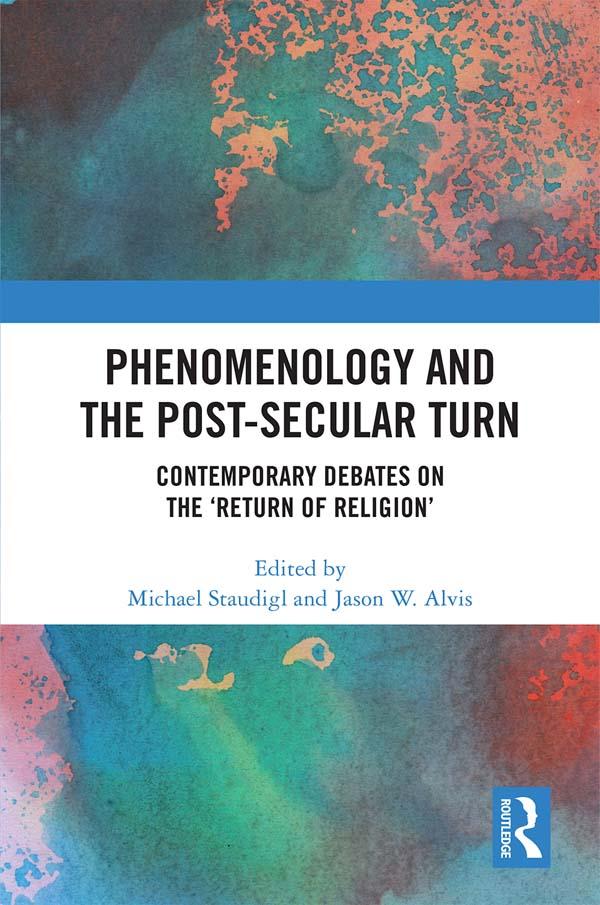
Are we living in a ‘post-secular age’, and can phenomenology help us better understand the discontents of secularism? From Habermas’ claim that the secular hypothesis has failed for democratic reasons to the fact that religion, far from its predicted dwindling, is as strong as ever (or even stronger than before), some have concluded that secularism as we know it is over. Others have questioned whether we have ever truly been secular, if the concept applies only to European societies, or whether the very notion of religiosity is merely a weapon of pacification in the hands of Western universalism. The post-secular notion thus lingers between sociological fact and philosophical theory, and it is the latter that we need to investigate if we want to confront the challenges that any ‘return of religion’ entails.
Although phenomenology has furnished manifold devices to rethink religious experience in a post-metaphysical way, its investigations often remain individualistic and beholden to unproductive dichotomies. This volume assembles investigations into secularism’s discontents by addressing religion’s role in forming the fabric of contemporary societies and unveiling new constellations of faith and reason beyond many beloved modernist dichotomies (e.g. theism/atheism, myth/Enlightenment, fundamentalism/tolerance) that often go under-investigated.
This book was originally published as a special issue of the International Journal of Philosophical Studies.
Płać wygodnie kartą, Klarną, Apple Pay lub Google Pay. Nie jesteś zadowolony? Zawsze masz 14-dniową gwarancję zwrotu pieniędzy. Więcej przeczytasz w naszych warunkach. Masz pytania? Napisz do nas na hello@memmo.org.
Memmo ułatwia naukę – gdziekolwiek jesteś na świecie. U nas znajdziesz podręczniki i sprytne narzędzia do nauki w jednym miejscu: streszczenia, quizy, podcasty i fiszki. A do tego Ted, Twój kumpel do nauki, który odpowie na wszystko, co Cię nurtuje. Ponad 50 000 studentów już tu się uczy – stworzone, byś uczył się szybciej i mniej stresował.