
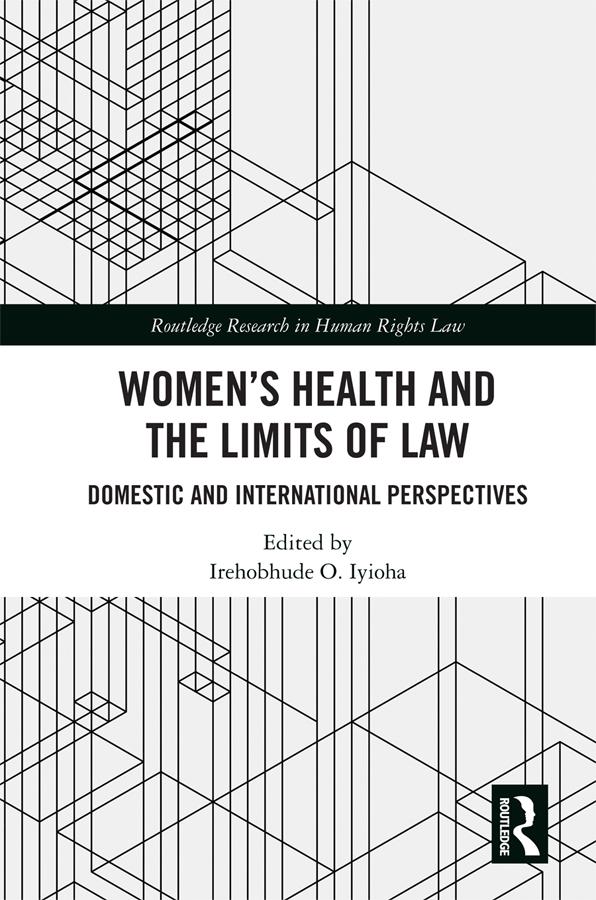
Despite some significant advances in the creation and protection of rights affecting women’s health, these do not always translate into actual health benefits for women. This collection asks: 'What is an effective law and what influences law’s effectiveness or ineffectiveness? What dynamics, elements, and conditions come together to limit law’s capacity to achieve instrumental goals for women’s health and the advancement of women’s health rights?' The book presents an integrated, co-referential and sustained critical discussion of the normative and constitutive reasons for law’s limited effectiveness in the field of women’s health. It offers comprehensive and cohesive explanatory accounts of law’s limits and for the first time in the field, introduces a distinction between formal and substantive effectiveness of laws. Its approach is trans-systemic, multi-jurisdictional and comparative, with a focus on six countries in North America, Europe, Asia, and Africa and international human rights case law based on matters arising from Hungary, Portugal, Spain, Slovakia, the Czech Republic, Peru and Bolivia.
The book will be a valuable resource for educators, students, lawyers, rights advocates and policymakers working in women’s health, socio-legal studies, human rights, feminist legal studies, and legal philosophy more broadly.
Płać wygodnie kartą, Klarną, Apple Pay lub Google Pay. Nie jesteś zadowolony? Zawsze masz 14-dniową gwarancję zwrotu pieniędzy. Więcej przeczytasz w naszych warunkach. Masz pytania? Napisz do nas na hello@memmo.org.
Memmo ułatwia naukę – gdziekolwiek jesteś na świecie. U nas znajdziesz podręczniki i sprytne narzędzia do nauki w jednym miejscu: streszczenia, quizy, podcasty i fiszki. A do tego Ted, Twój kumpel do nauki, który odpowie na wszystko, co Cię nurtuje. Ponad 50 000 studentów już tu się uczy – stworzone, byś uczył się szybciej i mniej stresował.