
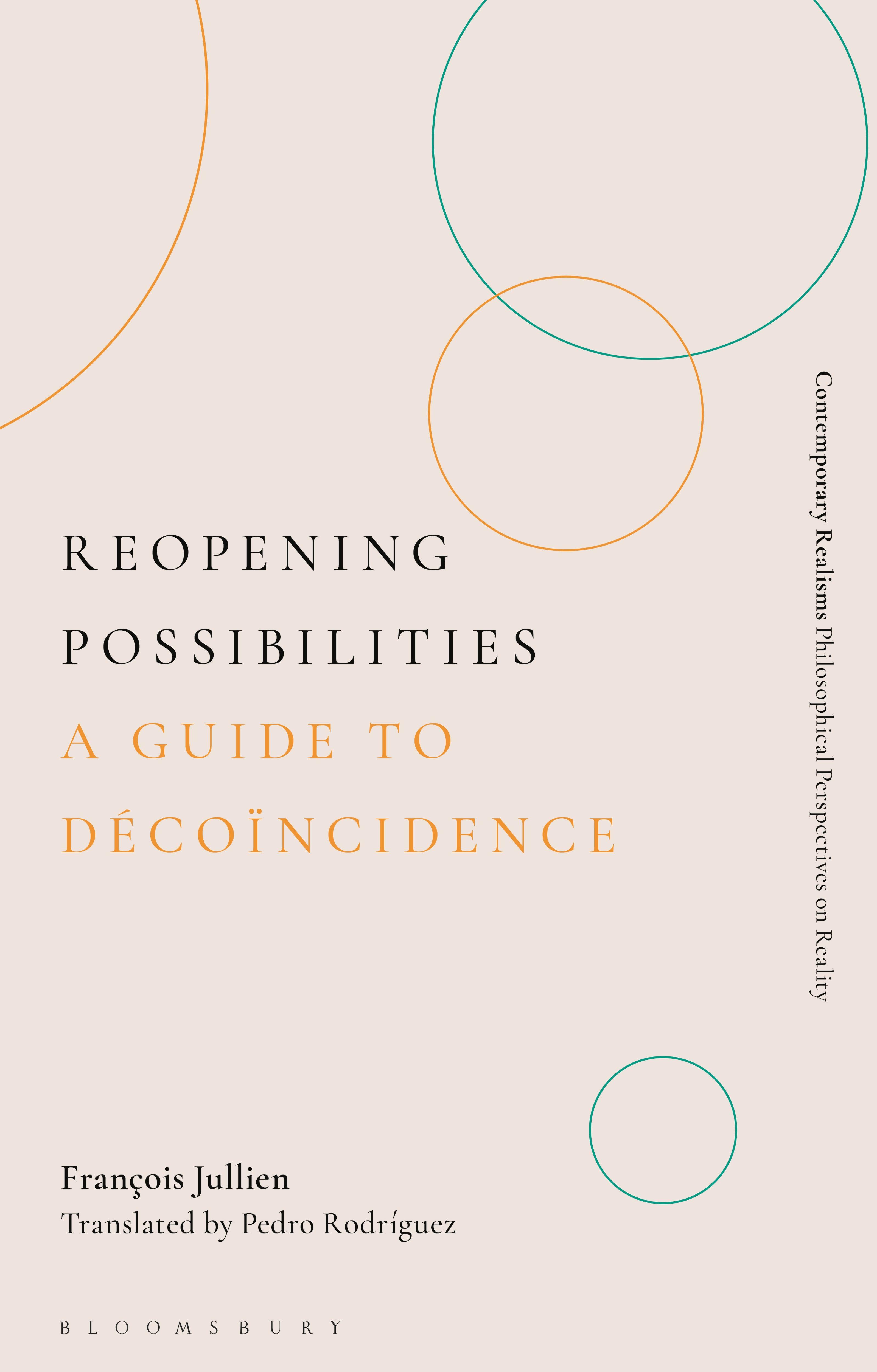
How can collective action, based on clear-set ideals and goals, respond to our contemporary reality in which uncertainty and precarity reign?
In this bold new interpretation of the politics of the collective, François Jullien plots a way through the challenges brought about by AI, digital communication and individualisation. He reimagines the political event – not as a causal link or premeditated action, but as a moment that opens fissures and cracks within the current situation, leading, in turn, to a new set of possibilities.
The history of Western thought has been largely characterised by an insistence on models and ends; eidos and telos, which have caused us to fixate on the future as a knowable, finite entity. But in our global, interconnected world, where the future remains uncertain, models idealism and empiricism have become obsolete. Julien proposes a third, alternative path: decoincidence. This turns away from the tired normativity of coinciding ideas, from imposed structures or teleology, and asks what happens when we look again at reality on its own terms. Can we rediscover the immanent possibility hidden within the present? The notion of decoincidence is not, then, intended to be explanatory nor offer a model for the future, but rather a reconceptualization of the event itself.
As the world seems bound to repeat itself, Reopening Possibilities diverts us from mere agreement and disagreement, and instead offers a way out of stagnation, into something wholly new and unexpected.
In this bold new interpretation of the politics of the collective, François Jullien plots a way through the challenges brought about by AI, digital communication and individualisation. He reimagines the political event – not as a causal link or premeditated action, but as a moment that opens fissures and cracks within the current situation, leading, in turn, to a new set of possibilities.
The history of Western thought has been largely characterised by an insistence on models and ends; eidos and telos, which have caused us to fixate on the future as a knowable, finite entity. But in our global, interconnected world, where the future remains uncertain, models idealism and empiricism have become obsolete. Julien proposes a third, alternative path: decoincidence. This turns away from the tired normativity of coinciding ideas, from imposed structures or teleology, and asks what happens when we look again at reality on its own terms. Can we rediscover the immanent possibility hidden within the present? The notion of decoincidence is not, then, intended to be explanatory nor offer a model for the future, but rather a reconceptualization of the event itself.
As the world seems bound to repeat itself, Reopening Possibilities diverts us from mere agreement and disagreement, and instead offers a way out of stagnation, into something wholly new and unexpected.
Płać wygodnie kartą, Klarną, Apple Pay lub Google Pay. Nie jesteś zadowolony? Zawsze masz 14-dniową gwarancję zwrotu pieniędzy. Więcej przeczytasz w naszych warunkach. Masz pytania? Napisz do nas na hello@memmo.org.
Memmo ułatwia naukę – gdziekolwiek jesteś na świecie. U nas znajdziesz podręczniki i sprytne narzędzia do nauki w jednym miejscu: streszczenia, quizy, podcasty i fiszki. A do tego Ted, Twój kumpel do nauki, który odpowie na wszystko, co Cię nurtuje. Ponad 50 000 studentów już tu się uczy – stworzone, byś uczył się szybciej i mniej stresował.