
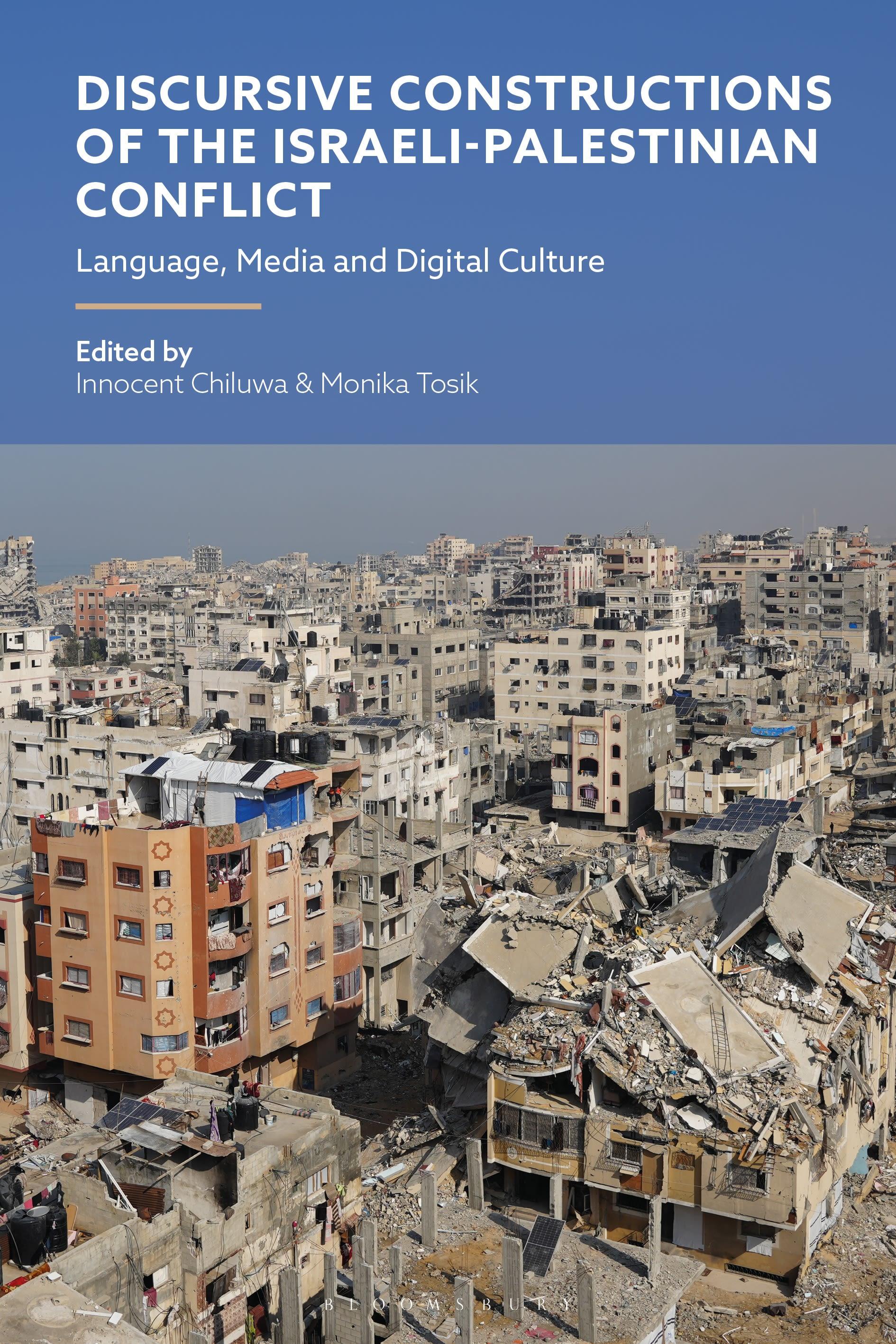
This important volume tackles the discourse of the Israeli-Palestinian conflict from an interdisciplinary perspective with a focus on language and communication, constituting a novel approach in the literature on the topic. By drawing on methods from linguistics, media studies, digital culture, journalism, and literature, it explores new pathways for analysing how narratives are constructed, contested, and disseminated across multiple platforms and contexts. Offering a contemporary, interdisciplinary approach rooted in critical discourse analysis, digital activism, and cultural symbolism, the book represents an important evolution in the field by extending traditional conflict analysis into the digital age, highlighting how social media, memes, hashtags, and global digital networks shape public perception and activism around the Israeli-Palestinian conflict.
Part One examines linguistic and literary constructions reflected in embodied resistance (of and in solidarity with the Palestinians) through cultural symbols and artefacts. Part Two comprises critical evaluations of how journalism and film mediate the conflict, and Part Three critiques the impact of social media and hashtag activism in the conflict. The final part considers three concepts that have dominated the debate in the latest conflict – colonialism, genocide and antisemitism.
This multi-disciplinary approach to discourse analysis in the study of the Israeli-Palestinian conflict not only examines the linguistic landscapes of protest but also serves researchers, students, and practitioners seeking a deeper understanding of how language shapes perceptions of conflict, resistance, victimhood, and power.
Part One examines linguistic and literary constructions reflected in embodied resistance (of and in solidarity with the Palestinians) through cultural symbols and artefacts. Part Two comprises critical evaluations of how journalism and film mediate the conflict, and Part Three critiques the impact of social media and hashtag activism in the conflict. The final part considers three concepts that have dominated the debate in the latest conflict – colonialism, genocide and antisemitism.
This multi-disciplinary approach to discourse analysis in the study of the Israeli-Palestinian conflict not only examines the linguistic landscapes of protest but also serves researchers, students, and practitioners seeking a deeper understanding of how language shapes perceptions of conflict, resistance, victimhood, and power.
Strony: 312
Kategoria: Film- & Medievetenskap
e-ISBN: 9781350589834
Waga przesyłki: 1.2 kg
Wysyłka w ciągu: 1-2 dni
Płać wygodnie kartą, Klarną, Apple Pay lub Google Pay. Nie jesteś zadowolony? Zawsze masz 14-dniową gwarancję zwrotu pieniędzy. Więcej przeczytasz w naszych warunkach. Masz pytania? Napisz do nas na hello@memmo.org.
Memmo ułatwia naukę – gdziekolwiek jesteś na świecie. U nas znajdziesz podręczniki i sprytne narzędzia do nauki w jednym miejscu: streszczenia, quizy, podcasty i fiszki. A do tego Ted, Twój kumpel do nauki, który odpowie na wszystko, co Cię nurtuje. Ponad 50 000 studentów już tu się uczy – stworzone, byś uczył się szybciej i mniej stresował.