
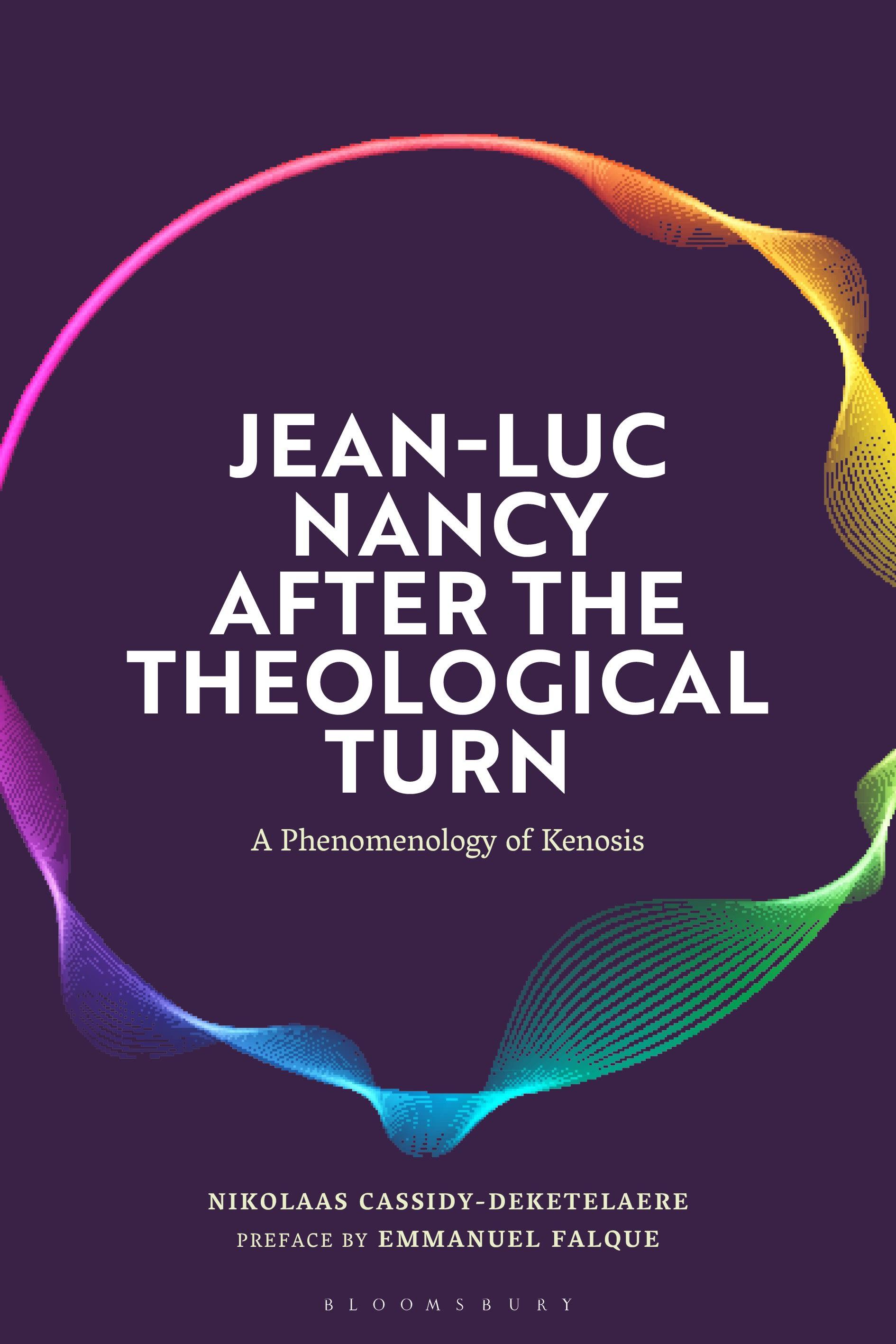
Nikolaas Cassidy-Deketelaere provides a novel and profound reading of Jean-Luc Nancy's deconstruction of Christianity in the context of French phenomenology's 'theological turn'.
Deftly exploring Nancy's work alongside major contemporary phenomenologists including Jean-Luc Marion, Michel Henry, Jean-Louis Chrétien and Emmanuel Falque, Jean-Luc Nancy after the Theological Turn argues that only by turning to theology can phenomenology come into its own as philosophy. Following Derrida's treatment of Nancy, Cassidy-Deketelaere thinks 'after' the theological turn by deconstructing phenomenology's inherent theological structure which made that turn possible; starting from the theological turn, this book seeks to move beyond it, that is, to 'de-theologise' phenomenology. This approach parallels Nancy's engagement with Christianity: drawing on Paul's kenosis – according to which God empties himself of his divinity in the Incarnation – Nancy understands Christianity as deconstructing or de-theologising itself.
Written in elegant and clear prose, this volume clarifies the phenomenological and theological consequences of one the most influential modern thinkers' philosophy.
Deftly exploring Nancy's work alongside major contemporary phenomenologists including Jean-Luc Marion, Michel Henry, Jean-Louis Chrétien and Emmanuel Falque, Jean-Luc Nancy after the Theological Turn argues that only by turning to theology can phenomenology come into its own as philosophy. Following Derrida's treatment of Nancy, Cassidy-Deketelaere thinks 'after' the theological turn by deconstructing phenomenology's inherent theological structure which made that turn possible; starting from the theological turn, this book seeks to move beyond it, that is, to 'de-theologise' phenomenology. This approach parallels Nancy's engagement with Christianity: drawing on Paul's kenosis – according to which God empties himself of his divinity in the Incarnation – Nancy understands Christianity as deconstructing or de-theologising itself.
Written in elegant and clear prose, this volume clarifies the phenomenological and theological consequences of one the most influential modern thinkers' philosophy.
Płać wygodnie kartą, Klarną, Apple Pay lub Google Pay. Nie jesteś zadowolony? Zawsze masz 14-dniową gwarancję zwrotu pieniędzy. Więcej przeczytasz w naszych warunkach. Masz pytania? Napisz do nas na hello@memmo.org.
Memmo ułatwia naukę – gdziekolwiek jesteś na świecie. U nas znajdziesz podręczniki i sprytne narzędzia do nauki w jednym miejscu: streszczenia, quizy, podcasty i fiszki. A do tego Ted, Twój kumpel do nauki, który odpowie na wszystko, co Cię nurtuje. Ponad 50 000 studentów już tu się uczy – stworzone, byś uczył się szybciej i mniej stresował.