
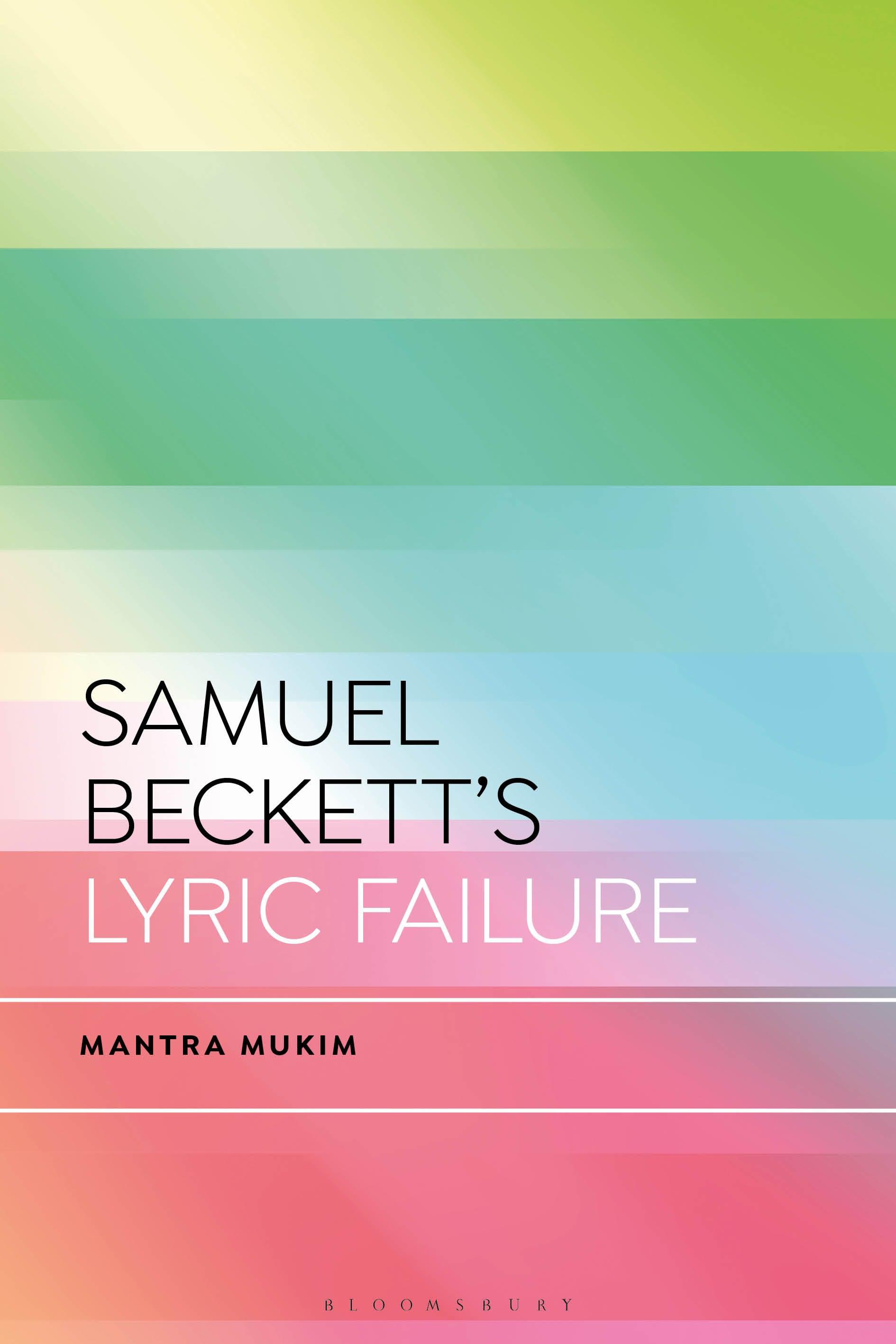
Providing one of the first book-length accounts of Samuel Beckett's poetry, this work illustrates how Beckett's poetry, and its failures, reconfigure the lyric form. Reading Beckett alongside nineteenth and twentieth century European poets such as Hölderlin, Mallarmé, Rimbaud, Montale, and Apollinaire, the book situates failure in the triangulation of the lyric impulse, subjectivity, and the human voice.
Beckett, in his poems, employs lyric tactics that range from deixis, parataxis, and caesura to specific kinds of timbre, resonances, and punctuations. These tactics situate the poetic voice in the liminal points between life and death, event and non-event, beginning and ending, and more broadly, between expression and failure. The book frames these liminalities under the rubric of 'lyric failure'.
Moving beyond the usual comparisons with his prose and drama, the study highlights failure as a generative force that structures Beckett's anti-expressive poetics.
Beckett, in his poems, employs lyric tactics that range from deixis, parataxis, and caesura to specific kinds of timbre, resonances, and punctuations. These tactics situate the poetic voice in the liminal points between life and death, event and non-event, beginning and ending, and more broadly, between expression and failure. The book frames these liminalities under the rubric of 'lyric failure'.
Moving beyond the usual comparisons with his prose and drama, the study highlights failure as a generative force that structures Beckett's anti-expressive poetics.
Płać wygodnie kartą, Klarną, Apple Pay lub Google Pay. Nie jesteś zadowolony? Zawsze masz 14-dniową gwarancję zwrotu pieniędzy. Więcej przeczytasz w naszych warunkach. Masz pytania? Napisz do nas na hello@memmo.org.
Memmo ułatwia naukę – gdziekolwiek jesteś na świecie. U nas znajdziesz podręczniki i sprytne narzędzia do nauki w jednym miejscu: streszczenia, quizy, podcasty i fiszki. A do tego Ted, Twój kumpel do nauki, który odpowie na wszystko, co Cię nurtuje. Ponad 50 000 studentów już tu się uczy – stworzone, byś uczył się szybciej i mniej stresował.