
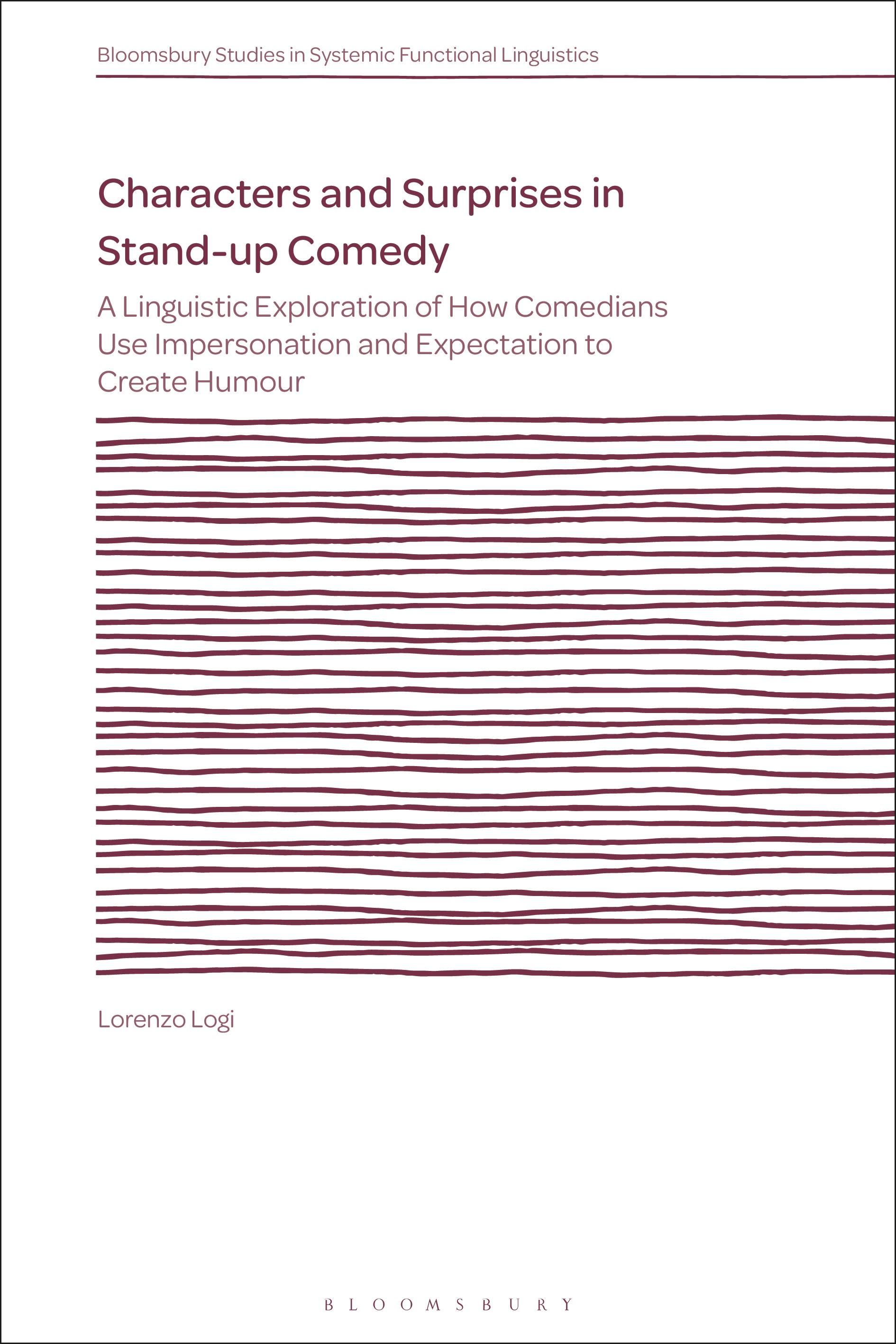
This book employs a social semiotic methodology to investigate how comedians use impersonation and expectation to create humour in stand-up comedy.
It advances the linguistic cartography of how meaning-making resources contribute to humour in interactive humour genres. Systemic Functional Linguistics (SFL) underpins the book's approach and is integrated with recent work on multimodality and paralanguage as well as humour studies.
The author develops a consolidated analytical framework for identifying and analysing the intermodal semiotic resources that contribute to impersonation and expectation in humour including gesture and voice quality – paralinguistic resources vital but underexplored in humorous texts. The framework is then applied through close discourse analysis of excerpts from three stand-up comedy texts by different comedians: Ricky Gervais, Eddie Izzard and Michelle Wolf. The findings outline typical and more complex realisations of intermodal impersonation, differentiate categories in how comedians employ impersonation to create humour, and describe how linguistic expectation can be established and subverted for humorous effect. These findings will be of interest to readers across the disciplines of linguistics, humour studies and multi/intermodality who are interested in the interaction between paralanguage, expectation and the negotiation of values so as to establish and maintain social relationships.
It advances the linguistic cartography of how meaning-making resources contribute to humour in interactive humour genres. Systemic Functional Linguistics (SFL) underpins the book's approach and is integrated with recent work on multimodality and paralanguage as well as humour studies.
The author develops a consolidated analytical framework for identifying and analysing the intermodal semiotic resources that contribute to impersonation and expectation in humour including gesture and voice quality – paralinguistic resources vital but underexplored in humorous texts. The framework is then applied through close discourse analysis of excerpts from three stand-up comedy texts by different comedians: Ricky Gervais, Eddie Izzard and Michelle Wolf. The findings outline typical and more complex realisations of intermodal impersonation, differentiate categories in how comedians employ impersonation to create humour, and describe how linguistic expectation can be established and subverted for humorous effect. These findings will be of interest to readers across the disciplines of linguistics, humour studies and multi/intermodality who are interested in the interaction between paralanguage, expectation and the negotiation of values so as to establish and maintain social relationships.
Strony: 280
Kategoria: Drama, Teater & Scenkonst
e-ISBN: 9781350448414
Waga przesyłki: 1.2 kg
Wysyłka w ciągu: 1-2 dni
Płać wygodnie kartą, Klarną, Apple Pay lub Google Pay. Nie jesteś zadowolony? Zawsze masz 14-dniową gwarancję zwrotu pieniędzy. Więcej przeczytasz w naszych warunkach. Masz pytania? Napisz do nas na hello@memmo.org.
Memmo ułatwia naukę – gdziekolwiek jesteś na świecie. U nas znajdziesz podręczniki i sprytne narzędzia do nauki w jednym miejscu: streszczenia, quizy, podcasty i fiszki. A do tego Ted, Twój kumpel do nauki, który odpowie na wszystko, co Cię nurtuje. Ponad 50 000 studentów już tu się uczy – stworzone, byś uczył się szybciej i mniej stresował.