
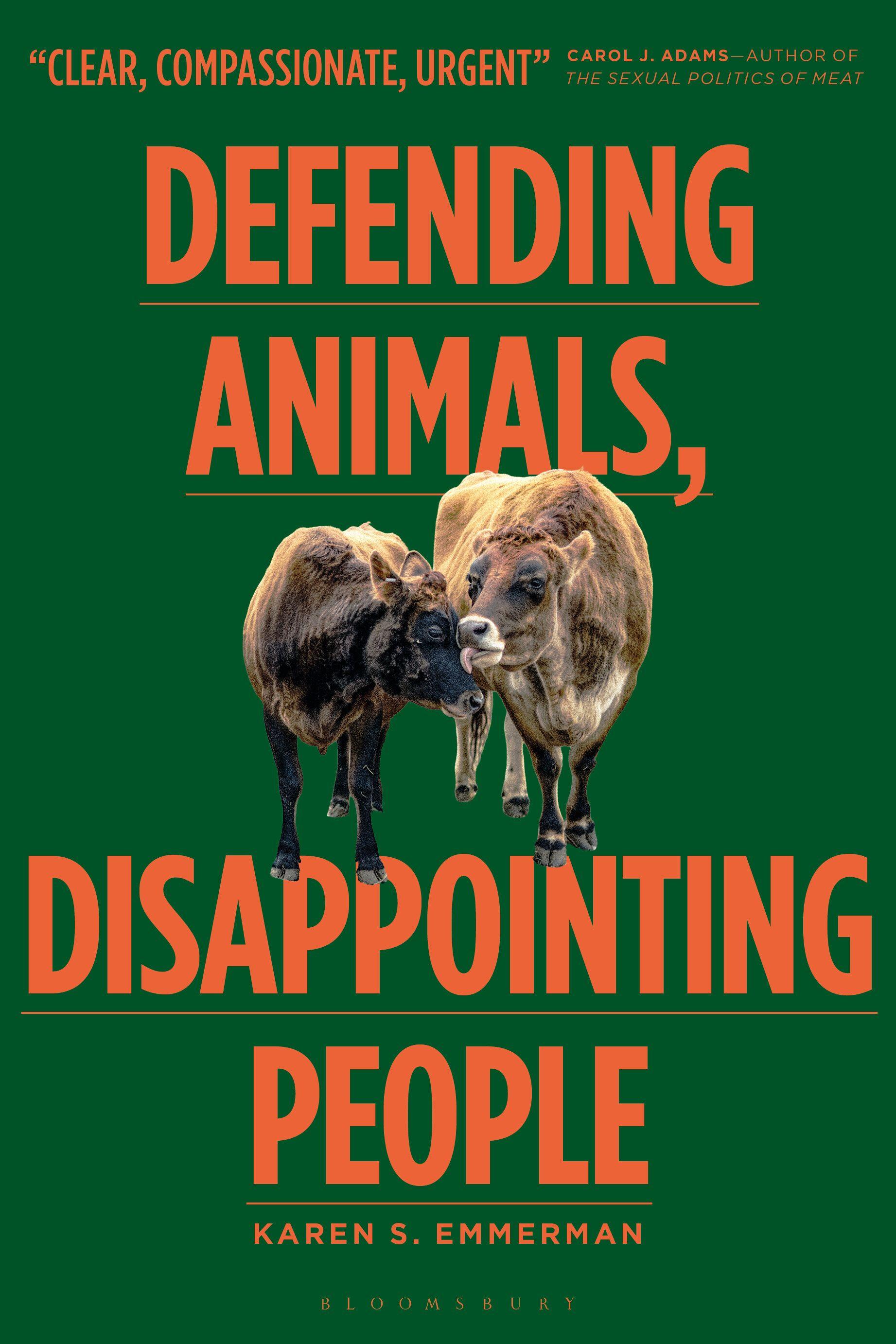
Defending Animals, Disappointing People offers a ground-breaking exploration of what happens when caring deeply about animals places us in conflict with the people we love.
Drawing on care ethics and relational philosophy, Karen S. Emmerman develops relational vegan ecofeminism, a framework that takes animals' moral standing seriously while also acknowledging the emotional, cultural, and familial stakes woven into human traditions. Rather than treating veganism as a simple matter of ethical prioritization, Emmerman shows that refusing a grandmother's lovingly prepared chicken soup, or rejecting a family hunting tradition, carries profound relational weight. These moments produce “moral remainders” of lingering hurt, regret, or estrangement that persists even when we make the best ethical choice.
Through richly contextual analysis, Emmerman argues that ethical life requires more than clear principles: it requires relational moral attention, a practice of empathy, repair, curiosity, and mutual recognition. Balancing philosophical rigor with narrative warmth, the book illuminates the tensions, grief, and possibilities at the heart of living ethically in a speciesist world. Defending Animals, Disappointing People sets out a hopeful yet honest path for navigating both inter-animal and intra-cultural conflicts – one that neither abandons animals nor dismisses the humans with whom we form our deepest connections.
Drawing on care ethics and relational philosophy, Karen S. Emmerman develops relational vegan ecofeminism, a framework that takes animals' moral standing seriously while also acknowledging the emotional, cultural, and familial stakes woven into human traditions. Rather than treating veganism as a simple matter of ethical prioritization, Emmerman shows that refusing a grandmother's lovingly prepared chicken soup, or rejecting a family hunting tradition, carries profound relational weight. These moments produce “moral remainders” of lingering hurt, regret, or estrangement that persists even when we make the best ethical choice.
Through richly contextual analysis, Emmerman argues that ethical life requires more than clear principles: it requires relational moral attention, a practice of empathy, repair, curiosity, and mutual recognition. Balancing philosophical rigor with narrative warmth, the book illuminates the tensions, grief, and possibilities at the heart of living ethically in a speciesist world. Defending Animals, Disappointing People sets out a hopeful yet honest path for navigating both inter-animal and intra-cultural conflicts – one that neither abandons animals nor dismisses the humans with whom we form our deepest connections.
Płać wygodnie kartą, Klarną, Apple Pay lub Google Pay. Nie jesteś zadowolony? Zawsze masz 14-dniową gwarancję zwrotu pieniędzy. Więcej przeczytasz w naszych warunkach. Masz pytania? Napisz do nas na hello@memmo.org.
Memmo ułatwia naukę – gdziekolwiek jesteś na świecie. U nas znajdziesz podręczniki i sprytne narzędzia do nauki w jednym miejscu: streszczenia, quizy, podcasty i fiszki. A do tego Ted, Twój kumpel do nauki, który odpowie na wszystko, co Cię nurtuje. Ponad 50 000 studentów już tu się uczy – stworzone, byś uczył się szybciej i mniej stresował.