
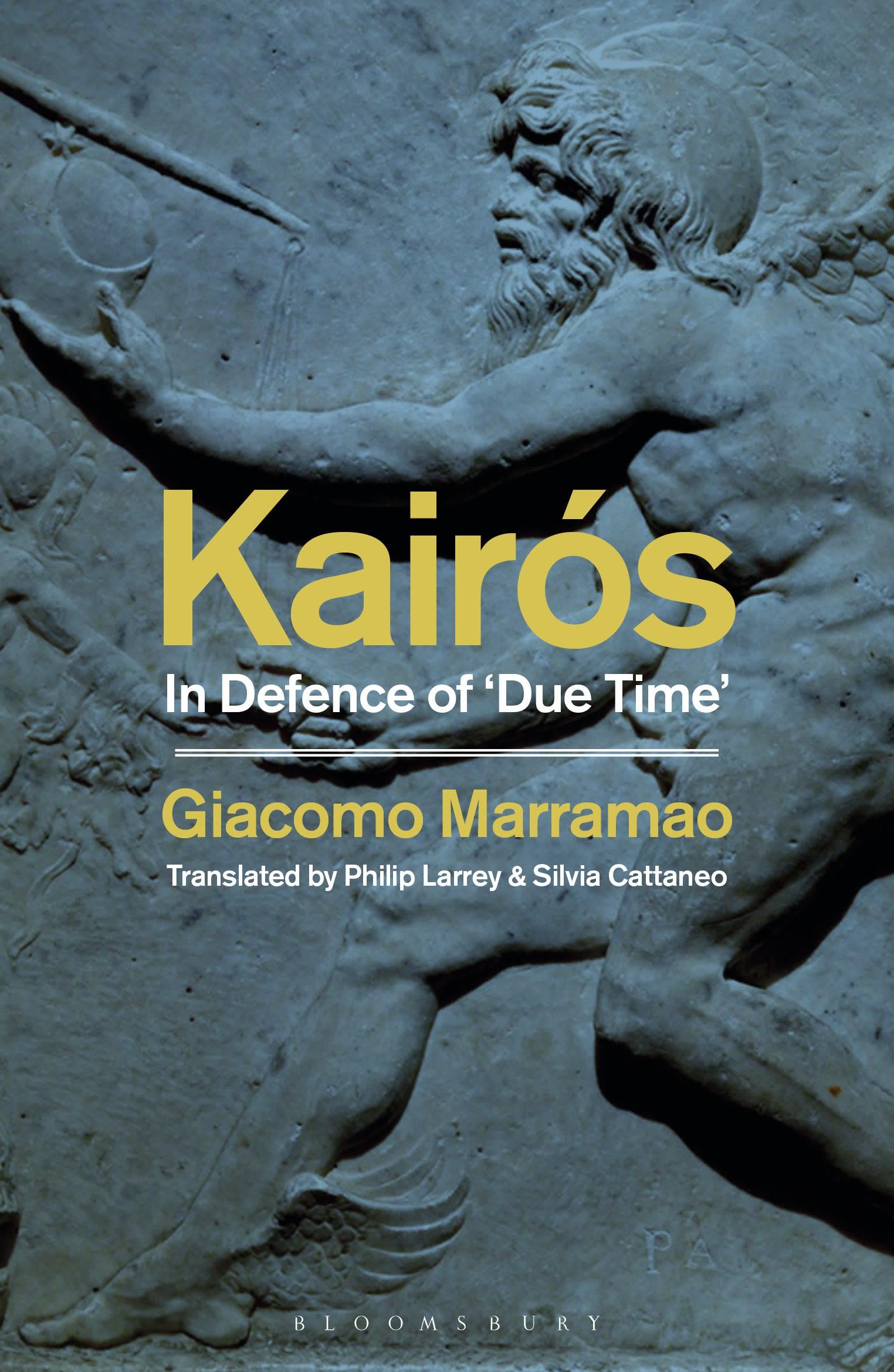
Shedding new light on the fundamental philosophical problem of time, leading Italian philosopher Giacomo Marramao offers a solution to today's 24/7 culture.
If we were asked to name the social syndrome of our age under capitalism, it would no doubt be “rush”. Intentional animals as we are, we experience the meaningless acceleration of time, which devours instants and misses its target just like its opposite, undue hesitation. For Marramao, rush and slowness or rashness and hesitation are two mirror forms of untimeliness: two unsuitable ways of seizing time.
Through engagement with sources including Heidegger, Bergson, Saint Paul the Apostle, Newtonian physics, and postmodern theory, Marramao calls for a change to how we perceive time. Delving into the Greek and Roman concepts of tempus, chronos, and aión, he argues that there should be no opposition between the scientific-objective time and the existential-subjective one. As such, he introduces his own theory of kairós, or “due time”, as the notion of fertile and decisive timeliness. A timely decision, Marramao advances, is generated by the productive tension between opposites: a tension created equally by swiftness and caution, promptness and conformity with the action's purpose.
Originally published in 1992, this updated edition of Kairós: In Defence of “Due Time'' includes a new preface speaking to today's social and political climate, as well as an introduction by Marramao himself, in which he reflects on his long engagement with temporality from Power and Secularization up until today.
If we were asked to name the social syndrome of our age under capitalism, it would no doubt be “rush”. Intentional animals as we are, we experience the meaningless acceleration of time, which devours instants and misses its target just like its opposite, undue hesitation. For Marramao, rush and slowness or rashness and hesitation are two mirror forms of untimeliness: two unsuitable ways of seizing time.
Through engagement with sources including Heidegger, Bergson, Saint Paul the Apostle, Newtonian physics, and postmodern theory, Marramao calls for a change to how we perceive time. Delving into the Greek and Roman concepts of tempus, chronos, and aión, he argues that there should be no opposition between the scientific-objective time and the existential-subjective one. As such, he introduces his own theory of kairós, or “due time”, as the notion of fertile and decisive timeliness. A timely decision, Marramao advances, is generated by the productive tension between opposites: a tension created equally by swiftness and caution, promptness and conformity with the action's purpose.
Originally published in 1992, this updated edition of Kairós: In Defence of “Due Time'' includes a new preface speaking to today's social and political climate, as well as an introduction by Marramao himself, in which he reflects on his long engagement with temporality from Power and Secularization up until today.
Płać wygodnie kartą, Klarną, Apple Pay lub Google Pay. Nie jesteś zadowolony? Zawsze masz 14-dniową gwarancję zwrotu pieniędzy. Więcej przeczytasz w naszych warunkach. Masz pytania? Napisz do nas na hello@memmo.org.
Memmo ułatwia naukę – gdziekolwiek jesteś na świecie. U nas znajdziesz podręczniki i sprytne narzędzia do nauki w jednym miejscu: streszczenia, quizy, podcasty i fiszki. A do tego Ted, Twój kumpel do nauki, który odpowie na wszystko, co Cię nurtuje. Ponad 50 000 studentów już tu się uczy – stworzone, byś uczył się szybciej i mniej stresował.