
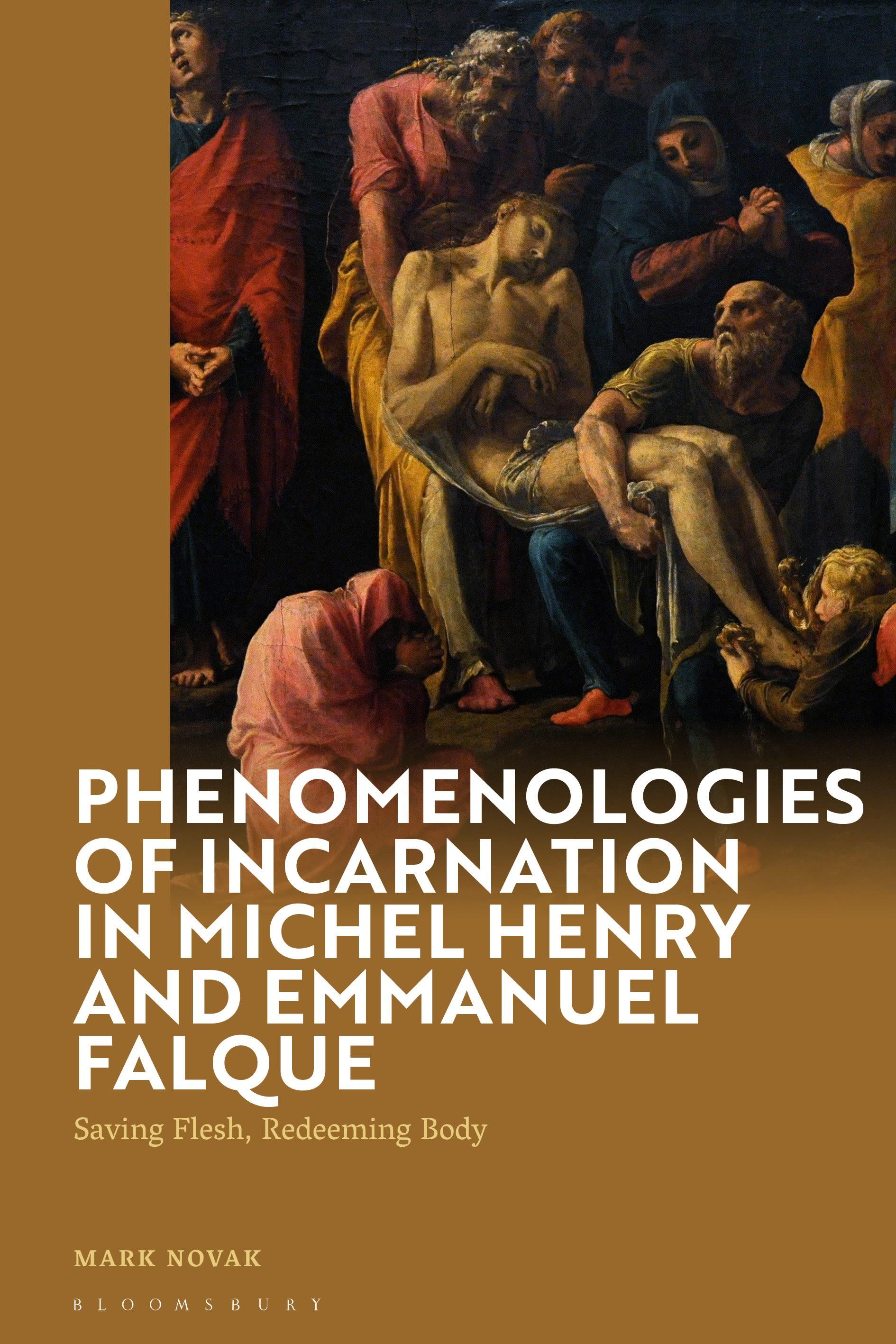
Bringing Michel Henry and Emmanuel Falque into dialogue, Mark Novak explores how they both articulate a phenomenology of the body and flesh in relation to incarnation.
As key proponents of the 'theological turn' in phenomenology, this volume illustrates how philosophical foundations inform Henry and Falque's theological views and uncovers the differences, and in some cases, surprising similarities between the two thinkers' positions on this central Christian tenet.
Beginning with a succinct overview of the origins of phenomenology and the shift towards embodiment, Novak surveys a number of different theories from Husserl's foundational distinction between flesh (Leib) and body (Körper) to Heidegger, Merleau-Ponty and Dominique Janicaud. With this, focus turns to Henry and Falque. Methodically examining each thinker's key texts on flesh and the body, Novak proposes that their views on incarnation are not as different as philosophers might think. Even despite Falque's claim that Henry's views on the incarnation neglect materiality by understanding the human being as flesh, Novak demonstrates how Falque's critical response to Henry's idea ironically mirrors it. By turning to material forces to better describe the body in his recent work, Falque recapitulates Henry's understanding of flesh.
Phenomenologies of Incarnation in Michel Henry and Emmanuel Falque provides a much-needed introduction to the phenomenology of embodiment and its important implications for philosophical theology.
As key proponents of the 'theological turn' in phenomenology, this volume illustrates how philosophical foundations inform Henry and Falque's theological views and uncovers the differences, and in some cases, surprising similarities between the two thinkers' positions on this central Christian tenet.
Beginning with a succinct overview of the origins of phenomenology and the shift towards embodiment, Novak surveys a number of different theories from Husserl's foundational distinction between flesh (Leib) and body (Körper) to Heidegger, Merleau-Ponty and Dominique Janicaud. With this, focus turns to Henry and Falque. Methodically examining each thinker's key texts on flesh and the body, Novak proposes that their views on incarnation are not as different as philosophers might think. Even despite Falque's claim that Henry's views on the incarnation neglect materiality by understanding the human being as flesh, Novak demonstrates how Falque's critical response to Henry's idea ironically mirrors it. By turning to material forces to better describe the body in his recent work, Falque recapitulates Henry's understanding of flesh.
Phenomenologies of Incarnation in Michel Henry and Emmanuel Falque provides a much-needed introduction to the phenomenology of embodiment and its important implications for philosophical theology.
Płać wygodnie kartą, Klarną, Apple Pay lub Google Pay. Nie jesteś zadowolony? Zawsze masz 14-dniową gwarancję zwrotu pieniędzy. Więcej przeczytasz w naszych warunkach. Masz pytania? Napisz do nas na hello@memmo.org.
Memmo ułatwia naukę – gdziekolwiek jesteś na świecie. U nas znajdziesz podręczniki i sprytne narzędzia do nauki w jednym miejscu: streszczenia, quizy, podcasty i fiszki. A do tego Ted, Twój kumpel do nauki, który odpowie na wszystko, co Cię nurtuje. Ponad 50 000 studentów już tu się uczy – stworzone, byś uczył się szybciej i mniej stresował.