
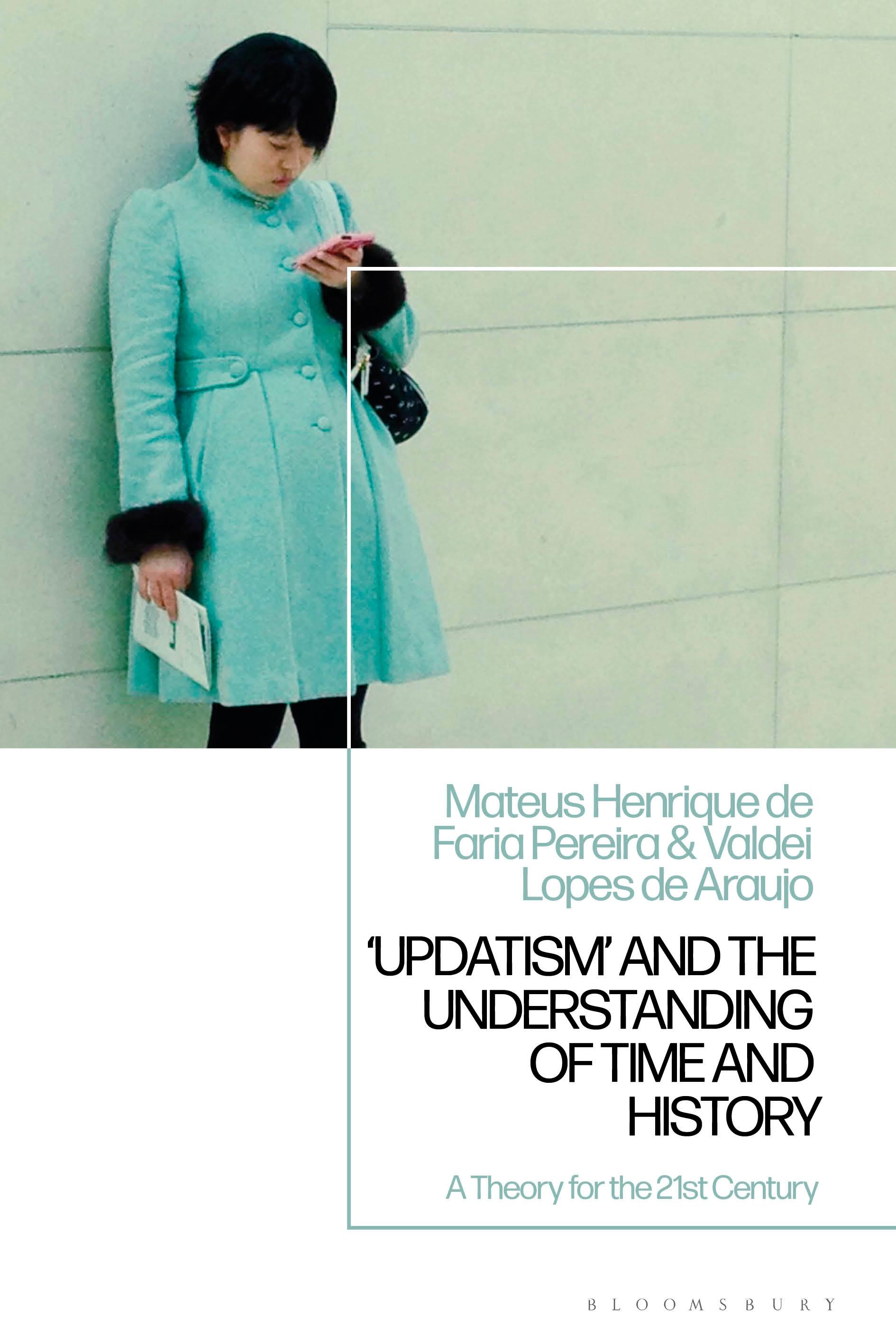
This book enables us to understand the current transformations in the experience of time that have been taking place in recent decades. Mateus Henrique de Faria Pereira and Valdei Lopes de Araujo convincingly argue that we live in a time of 'Updatism', the temporal dimension that emerges in those societies imprisoned by the structures of infinite expansion, and that this Updatism has profound consequences for how we think about the past, the present and the future.
Using the theoretical works of Lyotard and Heidegger as its foundation, 'Updatism' and the Understanding of Time and History analyses our digital modernity and the significance of key themes, such as updating, solitude, democracy, internet, exposure, postmodernism and historicism. It discusses aspects of our present time that reveal substantial differences between the historicist-modern time, usually located in the 19th century, and an emergent 'chronotope' or 'regime of historicity' understood and explained here as Updatism.
The book is effective in mapping the ubiquity of Updatism and the anxiety-inducing insistence of being constantly updated, as well as exploring some searching questions: If our reality is constantly being updated, and its previous versions are deleted or inaccessible, what does this mean for memory and our understanding of history? And what does this tell us about the world we live in today and the one we may update to in the future?
Using the theoretical works of Lyotard and Heidegger as its foundation, 'Updatism' and the Understanding of Time and History analyses our digital modernity and the significance of key themes, such as updating, solitude, democracy, internet, exposure, postmodernism and historicism. It discusses aspects of our present time that reveal substantial differences between the historicist-modern time, usually located in the 19th century, and an emergent 'chronotope' or 'regime of historicity' understood and explained here as Updatism.
The book is effective in mapping the ubiquity of Updatism and the anxiety-inducing insistence of being constantly updated, as well as exploring some searching questions: If our reality is constantly being updated, and its previous versions are deleted or inaccessible, what does this mean for memory and our understanding of history? And what does this tell us about the world we live in today and the one we may update to in the future?
Płać wygodnie kartą, Klarną, Apple Pay lub Google Pay. Nie jesteś zadowolony? Zawsze masz 14-dniową gwarancję zwrotu pieniędzy. Więcej przeczytasz w naszych warunkach. Masz pytania? Napisz do nas na hello@memmo.org.
Memmo ułatwia naukę – gdziekolwiek jesteś na świecie. U nas znajdziesz podręczniki i sprytne narzędzia do nauki w jednym miejscu: streszczenia, quizy, podcasty i fiszki. A do tego Ted, Twój kumpel do nauki, który odpowie na wszystko, co Cię nurtuje. Ponad 50 000 studentów już tu się uczy – stworzone, byś uczył się szybciej i mniej stresował.