
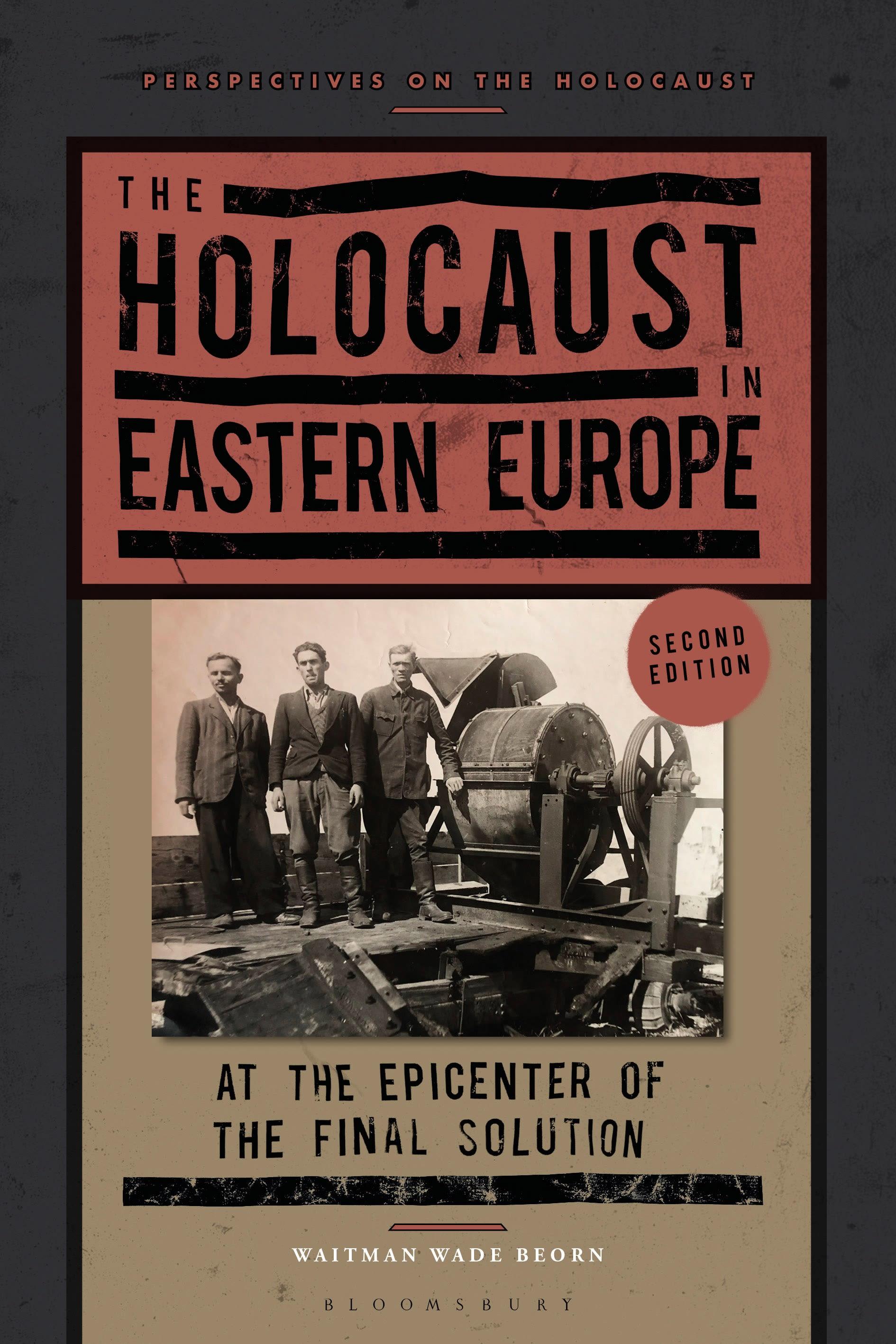
This book provides an authoritative history of the Holocaust in Eastern Europe and makes a compelling case for why the region can be considered 'the epicentre of the final solution'.
Waitman Wade Beorn introduces us to pre-war Jewish life in Eastern Europe, before tracing the escalating nature of Nazi policies in the area during the Second World War. Beorn crucially reflects on the German obsession with the East and its impact on the Nazi genocidal project there. The Holocaust in Eastern Europe also examines Soviet occupation and its consequences for the Shoah, while offering vital coverage of key themes like ghettoization, the Final Solution, rescue, collaboration, resistance, and many others. The book considers the commonalities and differences of regional Holocaust experiences from the perspectives of perpetrators, witnesses, collaborators, and victims/survivors.
Adeptly incorporating material on challenging subjects like sexual violence, the use of slave labour, the treatment of Soviet POWs, and profiteering, this 2nd edition includes two brand new chapters that enhance the scope and usefulness of the text even further; one addresses sources, methods, historiographical debates in the field, and the other focuses on non-Jewish victims of the Nazi genocidal project, such as Soviet prisoners of war, the mental and physically handicapped, Sinti and Roma, and other civilians.
Waitman Wade Beorn introduces us to pre-war Jewish life in Eastern Europe, before tracing the escalating nature of Nazi policies in the area during the Second World War. Beorn crucially reflects on the German obsession with the East and its impact on the Nazi genocidal project there. The Holocaust in Eastern Europe also examines Soviet occupation and its consequences for the Shoah, while offering vital coverage of key themes like ghettoization, the Final Solution, rescue, collaboration, resistance, and many others. The book considers the commonalities and differences of regional Holocaust experiences from the perspectives of perpetrators, witnesses, collaborators, and victims/survivors.
Adeptly incorporating material on challenging subjects like sexual violence, the use of slave labour, the treatment of Soviet POWs, and profiteering, this 2nd edition includes two brand new chapters that enhance the scope and usefulness of the text even further; one addresses sources, methods, historiographical debates in the field, and the other focuses on non-Jewish victims of the Nazi genocidal project, such as Soviet prisoners of war, the mental and physically handicapped, Sinti and Roma, and other civilians.
Płać wygodnie kartą, Klarną, Apple Pay lub Google Pay. Nie jesteś zadowolony? Zawsze masz 14-dniową gwarancję zwrotu pieniędzy. Więcej przeczytasz w naszych warunkach. Masz pytania? Napisz do nas na hello@memmo.org.
Memmo ułatwia naukę – gdziekolwiek jesteś na świecie. U nas znajdziesz podręczniki i sprytne narzędzia do nauki w jednym miejscu: streszczenia, quizy, podcasty i fiszki. A do tego Ted, Twój kumpel do nauki, który odpowie na wszystko, co Cię nurtuje. Ponad 50 000 studentów już tu się uczy – stworzone, byś uczył się szybciej i mniej stresował.