
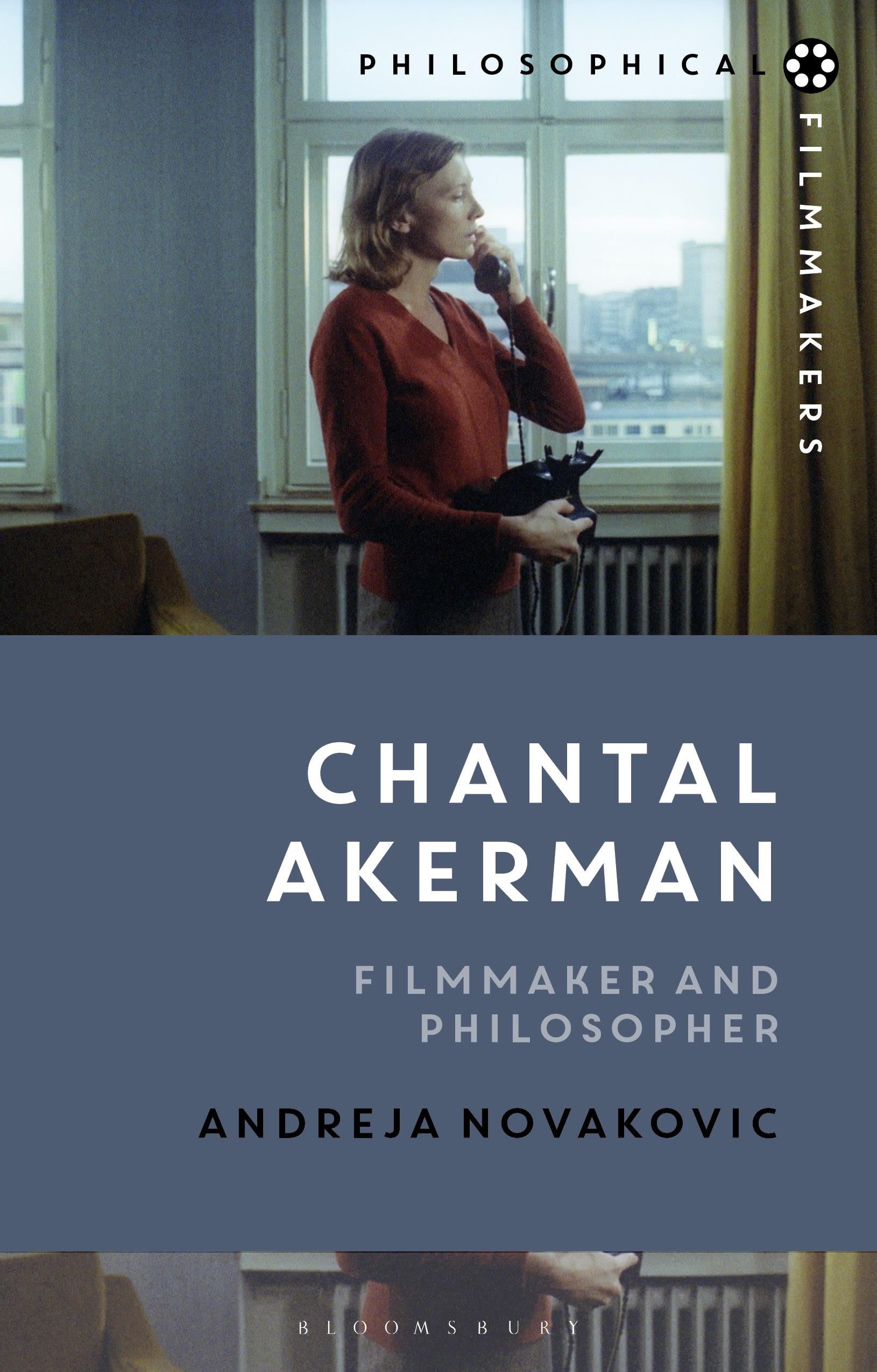
Chantal Akerman turns her pioneering camera on neglected contexts from transitional spaces like hotel lobbies and street corners, to domestic spaces like kitchens and bedrooms.
Through her wide ranging films, Akerman addresses subjects such as home and homelessness, work and social reproduction, self and identity, and desire in its many forms. This book is the first philosophical study of Akerman's oeuvre. Andreja Novakovic looks at patterns of staying put and moving on in the Belgian auteur's deeply personal body of work, drawing on writers from Cavell to Beauvoir, and Federici. It is an absorbing reinterpretation of one of the most important directors of European cinema, whose Jeanne Dielman was recently selected as Sight and Sound's Greatest Film of All Time
Through her wide ranging films, Akerman addresses subjects such as home and homelessness, work and social reproduction, self and identity, and desire in its many forms. This book is the first philosophical study of Akerman's oeuvre. Andreja Novakovic looks at patterns of staying put and moving on in the Belgian auteur's deeply personal body of work, drawing on writers from Cavell to Beauvoir, and Federici. It is an absorbing reinterpretation of one of the most important directors of European cinema, whose Jeanne Dielman was recently selected as Sight and Sound's Greatest Film of All Time
Płać wygodnie kartą, Klarną, Apple Pay lub Google Pay. Nie jesteś zadowolony? Zawsze masz 14-dniową gwarancję zwrotu pieniędzy. Więcej przeczytasz w naszych warunkach. Masz pytania? Napisz do nas na hello@memmo.org.
Memmo ułatwia naukę – gdziekolwiek jesteś na świecie. U nas znajdziesz podręczniki i sprytne narzędzia do nauki w jednym miejscu: streszczenia, quizy, podcasty i fiszki. A do tego Ted, Twój kumpel do nauki, który odpowie na wszystko, co Cię nurtuje. Ponad 50 000 studentów już tu się uczy – stworzone, byś uczył się szybciej i mniej stresował.