
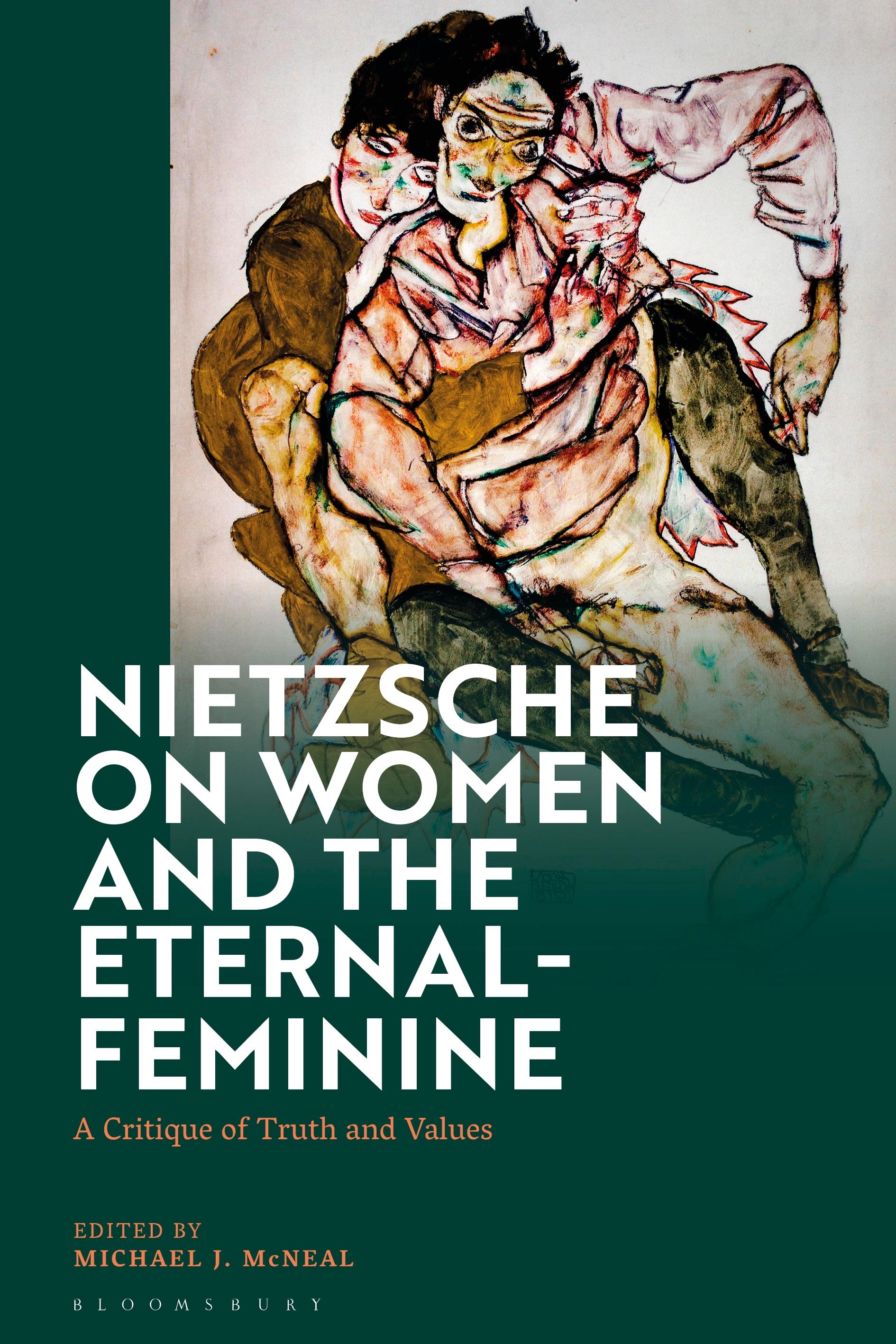
By re-examining Nietzsche's notion of the “eternal-feminine” and his views on women and feminism, this volume offers new perspectives on some of his key ideas. It brings together a diverse group of scholars to critically engage with Nietzsche's use of late-19th-century gender stereotypes and the ways in which they served his critique of values, including his use of “woman” as a trope for truth.
Among other subjects, the contributors consider the role of psychology in Nietzsche's thought, his concern with style, self-creation, and advocacy of perfectionism, his views on romantic love and marriage, and his aim of revaluing all values to instigate a distant philosophy of the future. They investigate parallels between Nietzsche's thought and Shaktism, his relation to Goethe and Stendahl, and his influence on Beauvoir, Butler, and Dohm. With the inclusion of two seminal essays on Nietzsche and women by Lawrence J. Hatab and Kelly Oliver, the volume also illustrates some of the ways in which scholarship on these subjects has evolved over the last four decades.
Providing fresh insights into these inter-related subjects, Nietzsche on Women and the Eternal-Feminine highlights the enduring relevance of his thought and its still-underappreciated potential for re-thinking both the bases for and aims of feminism and other emancipatory movements.
Among other subjects, the contributors consider the role of psychology in Nietzsche's thought, his concern with style, self-creation, and advocacy of perfectionism, his views on romantic love and marriage, and his aim of revaluing all values to instigate a distant philosophy of the future. They investigate parallels between Nietzsche's thought and Shaktism, his relation to Goethe and Stendahl, and his influence on Beauvoir, Butler, and Dohm. With the inclusion of two seminal essays on Nietzsche and women by Lawrence J. Hatab and Kelly Oliver, the volume also illustrates some of the ways in which scholarship on these subjects has evolved over the last four decades.
Providing fresh insights into these inter-related subjects, Nietzsche on Women and the Eternal-Feminine highlights the enduring relevance of his thought and its still-underappreciated potential for re-thinking both the bases for and aims of feminism and other emancipatory movements.
Płać wygodnie kartą, Klarną, Apple Pay lub Google Pay. Nie jesteś zadowolony? Zawsze masz 14-dniową gwarancję zwrotu pieniędzy. Więcej przeczytasz w naszych warunkach. Masz pytania? Napisz do nas na hello@memmo.org.
Memmo ułatwia naukę – gdziekolwiek jesteś na świecie. U nas znajdziesz podręczniki i sprytne narzędzia do nauki w jednym miejscu: streszczenia, quizy, podcasty i fiszki. A do tego Ted, Twój kumpel do nauki, który odpowie na wszystko, co Cię nurtuje. Ponad 50 000 studentów już tu się uczy – stworzone, byś uczył się szybciej i mniej stresował.