
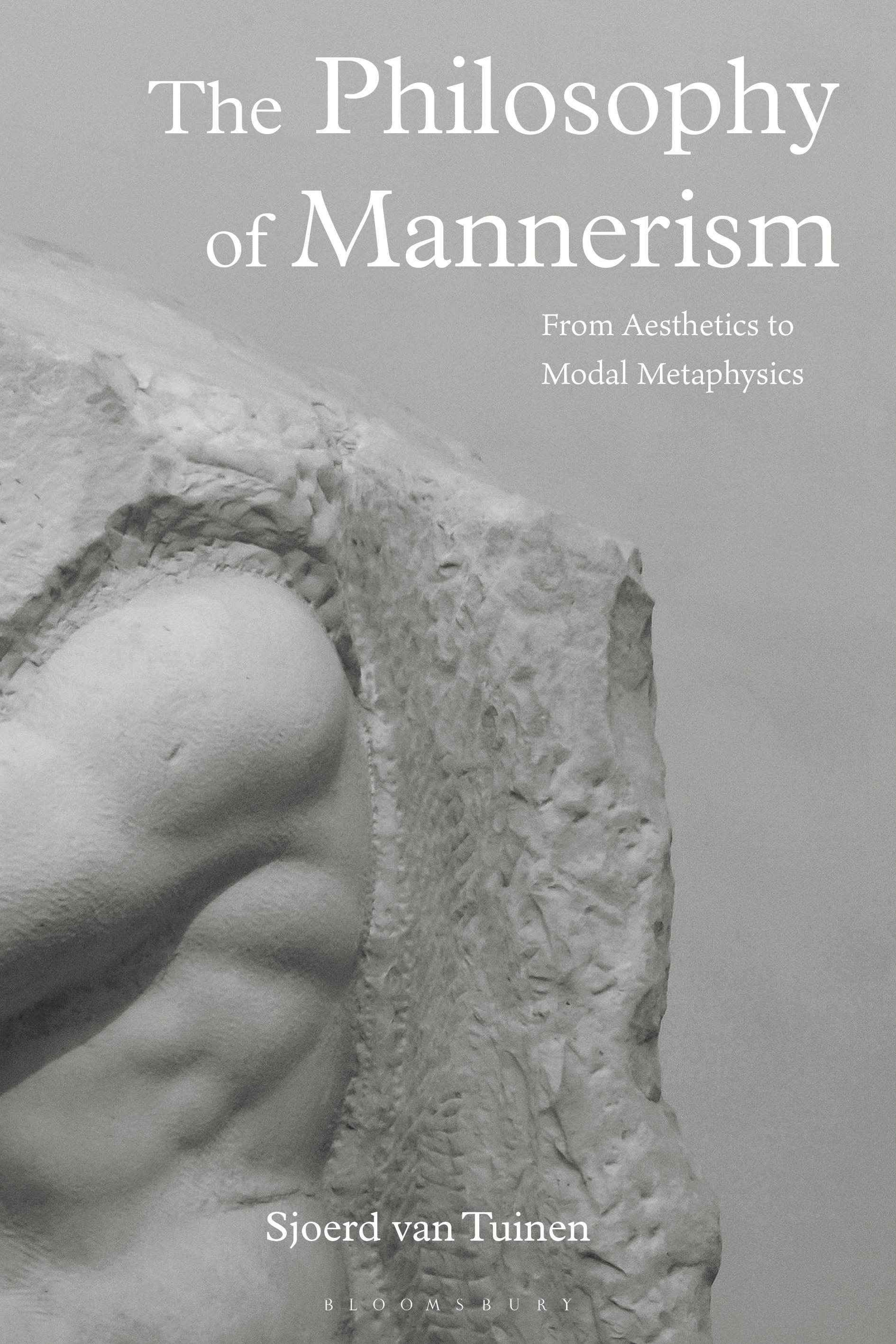
Sjoerd van Tuinen argues for the inseparability of matter and manner in the form of a group portrait of Leibniz, Bergson, Whitehead, Souriau, Simondon, Deleuze, Stengers, and Agamben. Examining afresh the 16th-century style of mannerism, this book synthesizes philosophy and aesthetics to demonstrate not only the contemporary relevance of artists such as Michelangelo or Arcimboldo but their broader significance as incorporating a form of modal thinking and perceiving.
While looking at mannerism as a style that spurned the balance and proportion of earlier Renaissance models in favour of compositional instability and tension, this book also conceives of mannerism a-historically to investigate what it can tell us about continental modal metaphysics. Whereas analytical metaphysics privileges logical essence and asks whether something is possible, real, contingent, or necessary, continental philosophy privileges existence and counts as many modes as there are ways of coming-into-being.
In three main parts, van Tuinen first explores the ontological, aesthetic, and ethical ramifications of this distinction. He then develops this through an extended study of Leibniz as a modal and indeed mannerist philosopher, before outlining in the final part a (neo)-mannerist aesthetics that incorporates diagrammatics, alchemy, and contemporary technologies of speculative design.
While looking at mannerism as a style that spurned the balance and proportion of earlier Renaissance models in favour of compositional instability and tension, this book also conceives of mannerism a-historically to investigate what it can tell us about continental modal metaphysics. Whereas analytical metaphysics privileges logical essence and asks whether something is possible, real, contingent, or necessary, continental philosophy privileges existence and counts as many modes as there are ways of coming-into-being.
In three main parts, van Tuinen first explores the ontological, aesthetic, and ethical ramifications of this distinction. He then develops this through an extended study of Leibniz as a modal and indeed mannerist philosopher, before outlining in the final part a (neo)-mannerist aesthetics that incorporates diagrammatics, alchemy, and contemporary technologies of speculative design.
Płać wygodnie kartą, Klarną, Apple Pay lub Google Pay. Nie jesteś zadowolony? Zawsze masz 14-dniową gwarancję zwrotu pieniędzy. Więcej przeczytasz w naszych warunkach. Masz pytania? Napisz do nas na hello@memmo.org.
Memmo ułatwia naukę – gdziekolwiek jesteś na świecie. U nas znajdziesz podręczniki i sprytne narzędzia do nauki w jednym miejscu: streszczenia, quizy, podcasty i fiszki. A do tego Ted, Twój kumpel do nauki, który odpowie na wszystko, co Cię nurtuje. Ponad 50 000 studentów już tu się uczy – stworzone, byś uczył się szybciej i mniej stresował.