
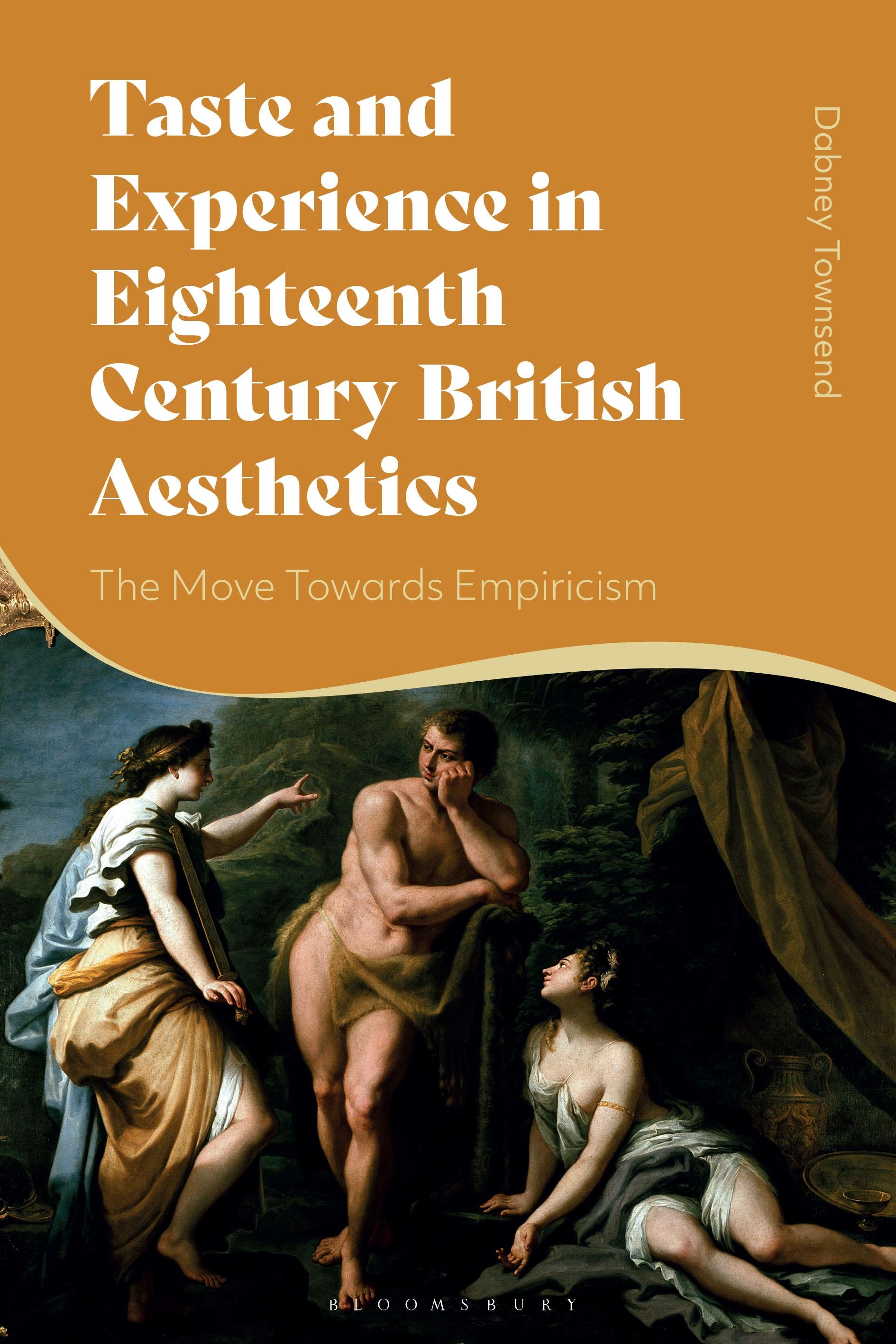
Taste and Experience in Eighteenth Century Aesthetics acknowledges theories of taste, beauty, the fine arts, genius, expression, the sublime and the picturesque in their own right, distinct from later theories of an exclusively aesthetic kind of experience. By drawing on a wealth of thinkers, including several marginalised philosophers, Dabney Townsend presents a novel reading of the century to challenge our understanding of art and move towards a unique way of thinking about aesthetics.
Speaking of a proto-aesthetic, Townsend surveys theories of taste and beauty arising from the empiricist shift in philosophy. A proto-aesthetic was shaped by the philosophers who followed Locke and accepted that theories of taste and beauty must be products of experience alone. Francis Hutcheson, David Hume, Alexander Gerard and Thomas Reid were among the most important advocates, joined by others who re-thought traditional topics.
Featuring chapters tracing its philosophical principles, issues raised by the subjectivity of the empiricist approach and the more academic proto-aesthetic formed toward the end of the century, Townsend argues that Lockean empiricism laid the foundations for what we now call aesthetics.
Speaking of a proto-aesthetic, Townsend surveys theories of taste and beauty arising from the empiricist shift in philosophy. A proto-aesthetic was shaped by the philosophers who followed Locke and accepted that theories of taste and beauty must be products of experience alone. Francis Hutcheson, David Hume, Alexander Gerard and Thomas Reid were among the most important advocates, joined by others who re-thought traditional topics.
Featuring chapters tracing its philosophical principles, issues raised by the subjectivity of the empiricist approach and the more academic proto-aesthetic formed toward the end of the century, Townsend argues that Lockean empiricism laid the foundations for what we now call aesthetics.
Płać wygodnie kartą, Klarną, Apple Pay lub Google Pay. Nie jesteś zadowolony? Zawsze masz 14-dniową gwarancję zwrotu pieniędzy. Więcej przeczytasz w naszych warunkach. Masz pytania? Napisz do nas na hello@memmo.org.
Memmo ułatwia naukę – gdziekolwiek jesteś na świecie. U nas znajdziesz podręczniki i sprytne narzędzia do nauki w jednym miejscu: streszczenia, quizy, podcasty i fiszki. A do tego Ted, Twój kumpel do nauki, który odpowie na wszystko, co Cię nurtuje. Ponad 50 000 studentów już tu się uczy – stworzone, byś uczył się szybciej i mniej stresował.