
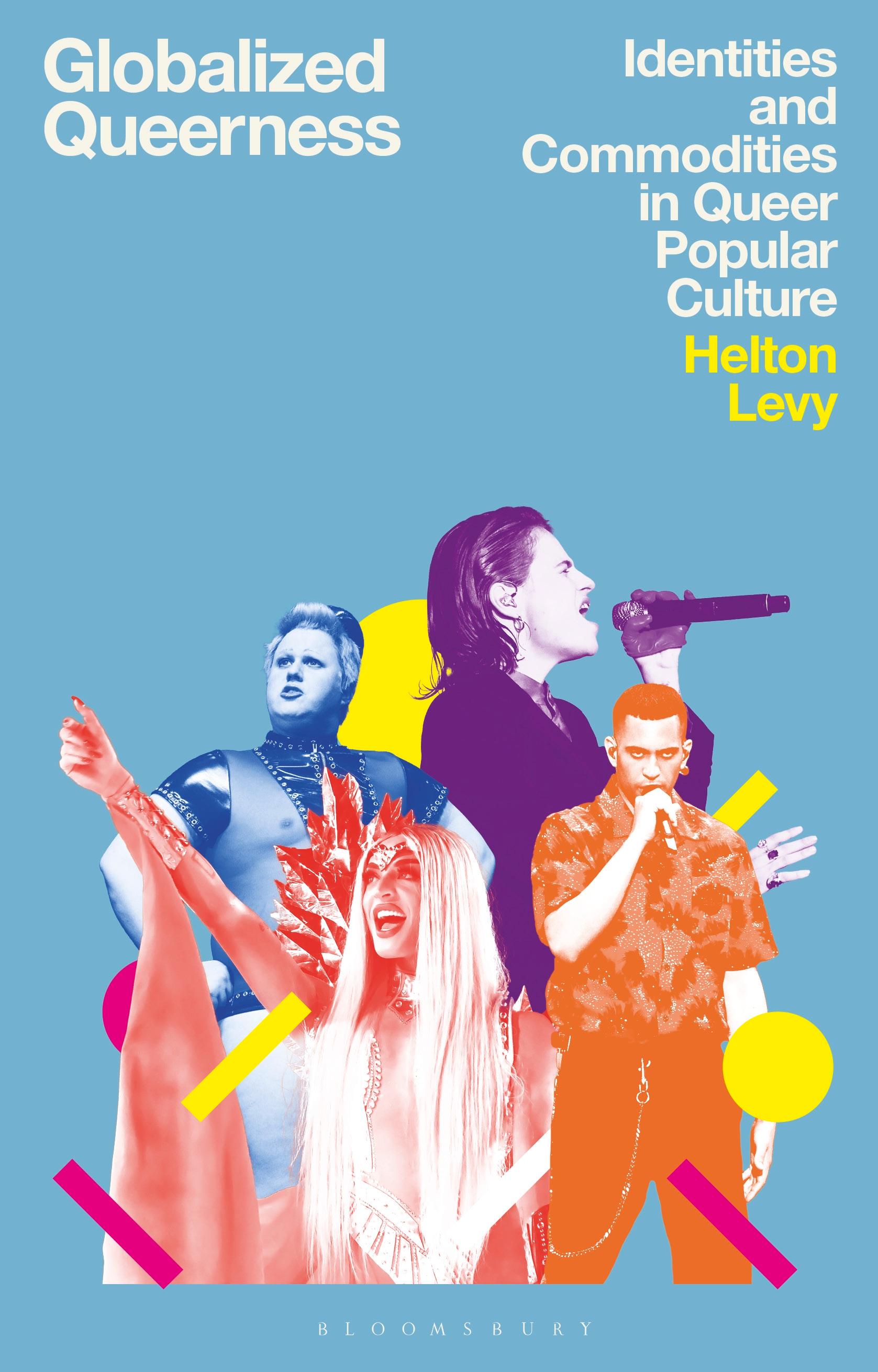
Has a global queer popular culture emerged at the expense of local queer artists? In this book, Helton Levy argues that global queer culture is indebted to specific, local references that artists carry from their early experiences in life, which then become homogenized by contemporary media markets. The assumption that queer publics live and consume only through a global set of references, including gay parades and rainbow flags, for example, erases many personal complexities.
Levy revisits media characters that have caught the attention of the broader public – such as Calamity Jane (1953), the Daffyd Thomas character from the BBC comedy Little Britain (2003-2007), Brazilian drag queen Pabblo Vittar, French singer Christine and the Queens, and the Italian-Egyptian rapper Mahmood – and argues that they have gradually blended in the public's perception. This has often obscured the individual struggles faced by these characters, such as immigration, homophobia, poverty and societal exclusion. Levy also questions what happens when global media flows take queer culture to regions wherein the notion of LGBTQ+ rights are not entirely acceptable.
Utilizing insights from media reports published across the world's ten biggest media markets, Levy argues that there are a series of conditions which artists and cultural actors negotiate once they achieve any kind of success in mainstream media, while local queer references remain unseen in the wider media world. For that reason, he argues for stronger incentives for communities to accept and acknowledge the work of queer people before and after commoditization.
Levy revisits media characters that have caught the attention of the broader public – such as Calamity Jane (1953), the Daffyd Thomas character from the BBC comedy Little Britain (2003-2007), Brazilian drag queen Pabblo Vittar, French singer Christine and the Queens, and the Italian-Egyptian rapper Mahmood – and argues that they have gradually blended in the public's perception. This has often obscured the individual struggles faced by these characters, such as immigration, homophobia, poverty and societal exclusion. Levy also questions what happens when global media flows take queer culture to regions wherein the notion of LGBTQ+ rights are not entirely acceptable.
Utilizing insights from media reports published across the world's ten biggest media markets, Levy argues that there are a series of conditions which artists and cultural actors negotiate once they achieve any kind of success in mainstream media, while local queer references remain unseen in the wider media world. For that reason, he argues for stronger incentives for communities to accept and acknowledge the work of queer people before and after commoditization.
Płać wygodnie kartą, Klarną, Apple Pay lub Google Pay. Nie jesteś zadowolony? Zawsze masz 14-dniową gwarancję zwrotu pieniędzy. Więcej przeczytasz w naszych warunkach. Masz pytania? Napisz do nas na hello@memmo.org.
Memmo ułatwia naukę – gdziekolwiek jesteś na świecie. U nas znajdziesz podręczniki i sprytne narzędzia do nauki w jednym miejscu: streszczenia, quizy, podcasty i fiszki. A do tego Ted, Twój kumpel do nauki, który odpowie na wszystko, co Cię nurtuje. Ponad 50 000 studentów już tu się uczy – stworzone, byś uczył się szybciej i mniej stresował.