
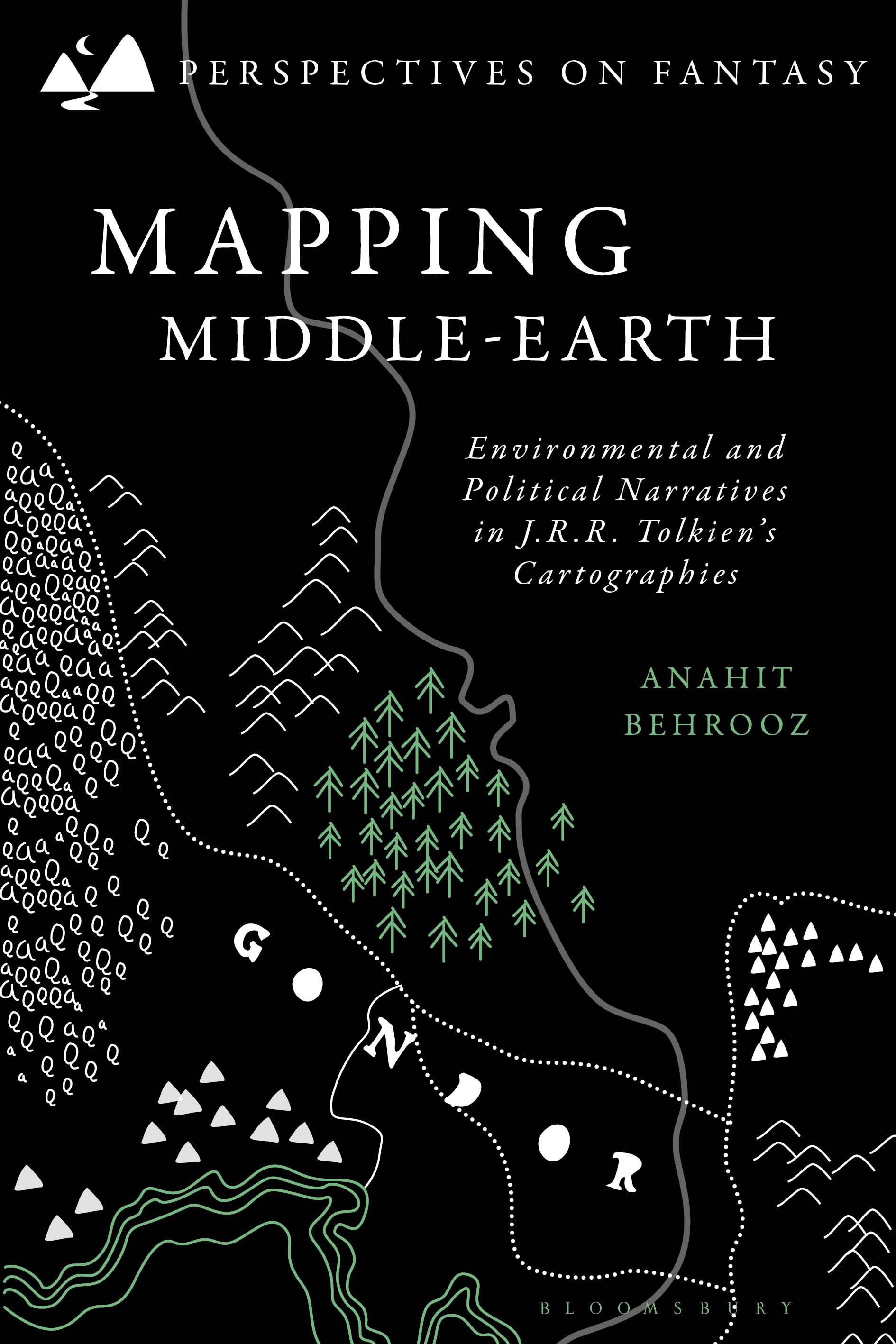
In this cutting-edge study of Tolkien's most critically neglected maps, Anahit Behrooz examines how cartography has traditionally been bound up in facilitating power.
Far more than just illustrations to aid understanding of the story, Tolkien's corpus of maps are crucial to understanding the broader narratives between humans and their political and environmental landscapes within his legendarium. Undertaking a diegetic literary analysis of the maps as examples of Middle-earth's own cultural output, Behrooz reveals a sub-created tradition of cartography that articulates specific power dynamics between mapmaker, map reader, and what is being mapped, as well as the human/nonhuman binary that represents human's control over the natural world.
Mapping Middle-earth surveys how Tolkien frames cartography as an inherently political act that embodies a desire for control of that which it maps. In turn, it analyses harmful contemporary engagements with land that intersect with, but also move beyond, cartography such as environmental damage; human-induced geological change; and the natural and bodily costs of political violence and imperialism. Using historical, eco-critical, and postcolonial frameworks, and such theorists as Michel Foucault, Donna Haraway and Edward Said, this book explores Tolkien's employment of particular generic tropes including medievalism, fantasy, and the interplay between image and text to highlight, and at times correct, his contemporary socio-political epoch and its destructive relationship with the wider world.
Far more than just illustrations to aid understanding of the story, Tolkien's corpus of maps are crucial to understanding the broader narratives between humans and their political and environmental landscapes within his legendarium. Undertaking a diegetic literary analysis of the maps as examples of Middle-earth's own cultural output, Behrooz reveals a sub-created tradition of cartography that articulates specific power dynamics between mapmaker, map reader, and what is being mapped, as well as the human/nonhuman binary that represents human's control over the natural world.
Mapping Middle-earth surveys how Tolkien frames cartography as an inherently political act that embodies a desire for control of that which it maps. In turn, it analyses harmful contemporary engagements with land that intersect with, but also move beyond, cartography such as environmental damage; human-induced geological change; and the natural and bodily costs of political violence and imperialism. Using historical, eco-critical, and postcolonial frameworks, and such theorists as Michel Foucault, Donna Haraway and Edward Said, this book explores Tolkien's employment of particular generic tropes including medievalism, fantasy, and the interplay between image and text to highlight, and at times correct, his contemporary socio-political epoch and its destructive relationship with the wider world.
Strony: 200
Kategoria: Litteraturvetenskap & Teori
e-ISBN: 9781350290785
Waga przesyłki: 1.2 kg
Wysyłka w ciągu: 1-2 dni
Płać wygodnie kartą, Klarną, Apple Pay lub Google Pay. Nie jesteś zadowolony? Zawsze masz 14-dniową gwarancję zwrotu pieniędzy. Więcej przeczytasz w naszych warunkach. Masz pytania? Napisz do nas na hello@memmo.org.
Memmo ułatwia naukę – gdziekolwiek jesteś na świecie. U nas znajdziesz podręczniki i sprytne narzędzia do nauki w jednym miejscu: streszczenia, quizy, podcasty i fiszki. A do tego Ted, Twój kumpel do nauki, który odpowie na wszystko, co Cię nurtuje. Ponad 50 000 studentów już tu się uczy – stworzone, byś uczył się szybciej i mniej stresował.