
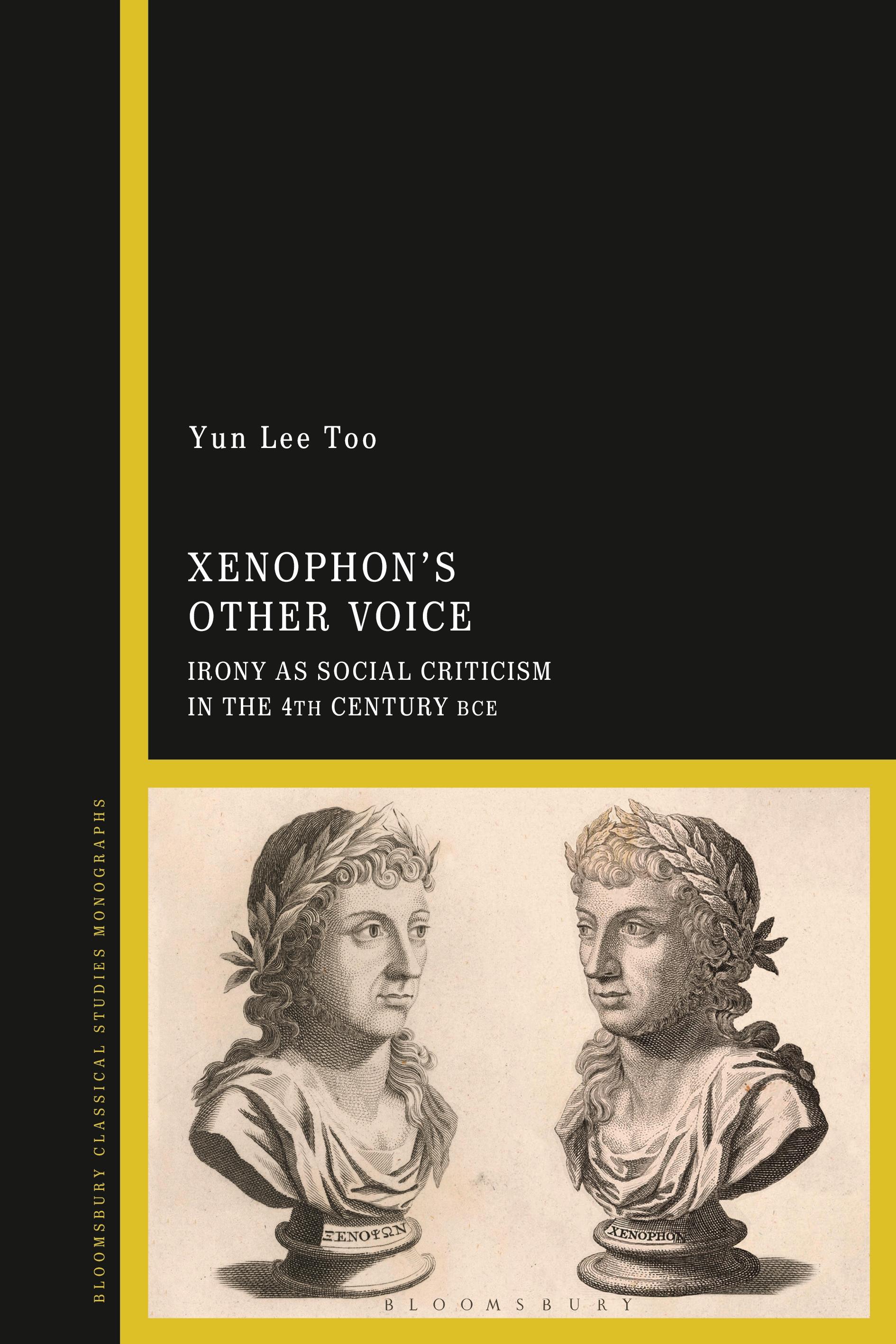
This volume explores irony – in its essence, saying other than one actually means – in the collected works of Xenophon. Xenophon's Other Voice argues that there are two voices in the author: one ostensible at the level of the literal text, which is available to everyone, while the sub-title designates the other voice, which is less obvious to the reader and indeed, an ironic one. It presents a unified view of the author's entire corpus and argues that the function of Xenophontic irony is to offer critiques of the societies in which he finds himself.
Rejecting both non-ironic and Straussian interpretations of Xenophon's writings, Yun Lee Too offers a wholly original perspective on the contemporary debate of how he should be read, which is underpinned by a series of incisive readings of the individual works. Beginning with Xenophon's representation of an ironic Socrates, who condemns the contemporary city and its more prominent citizens, the book moves on to consider how the author develops his own approach to irony. He deploys irony to criticize aspects of Athenian society, such as its understanding of wealth, its armed forces and sophistic education. The book then turns to his treatment of other Hellenic societies, including the Spartan city-state and laws, kingship in Syracuse and war amongst the Greek states. It finally considers Persia, covering Xenophon's depiction of Cyrus the Great and the expedition with Cyrus the Younger.
Rejecting both non-ironic and Straussian interpretations of Xenophon's writings, Yun Lee Too offers a wholly original perspective on the contemporary debate of how he should be read, which is underpinned by a series of incisive readings of the individual works. Beginning with Xenophon's representation of an ironic Socrates, who condemns the contemporary city and its more prominent citizens, the book moves on to consider how the author develops his own approach to irony. He deploys irony to criticize aspects of Athenian society, such as its understanding of wealth, its armed forces and sophistic education. The book then turns to his treatment of other Hellenic societies, including the Spartan city-state and laws, kingship in Syracuse and war amongst the Greek states. It finally considers Persia, covering Xenophon's depiction of Cyrus the Great and the expedition with Cyrus the Younger.
Płać wygodnie kartą, Klarną, Apple Pay lub Google Pay. Nie jesteś zadowolony? Zawsze masz 14-dniową gwarancję zwrotu pieniędzy. Więcej przeczytasz w naszych warunkach. Masz pytania? Napisz do nas na hello@memmo.org.
Memmo ułatwia naukę – gdziekolwiek jesteś na świecie. U nas znajdziesz podręczniki i sprytne narzędzia do nauki w jednym miejscu: streszczenia, quizy, podcasty i fiszki. A do tego Ted, Twój kumpel do nauki, który odpowie na wszystko, co Cię nurtuje. Ponad 50 000 studentów już tu się uczy – stworzone, byś uczył się szybciej i mniej stresował.