
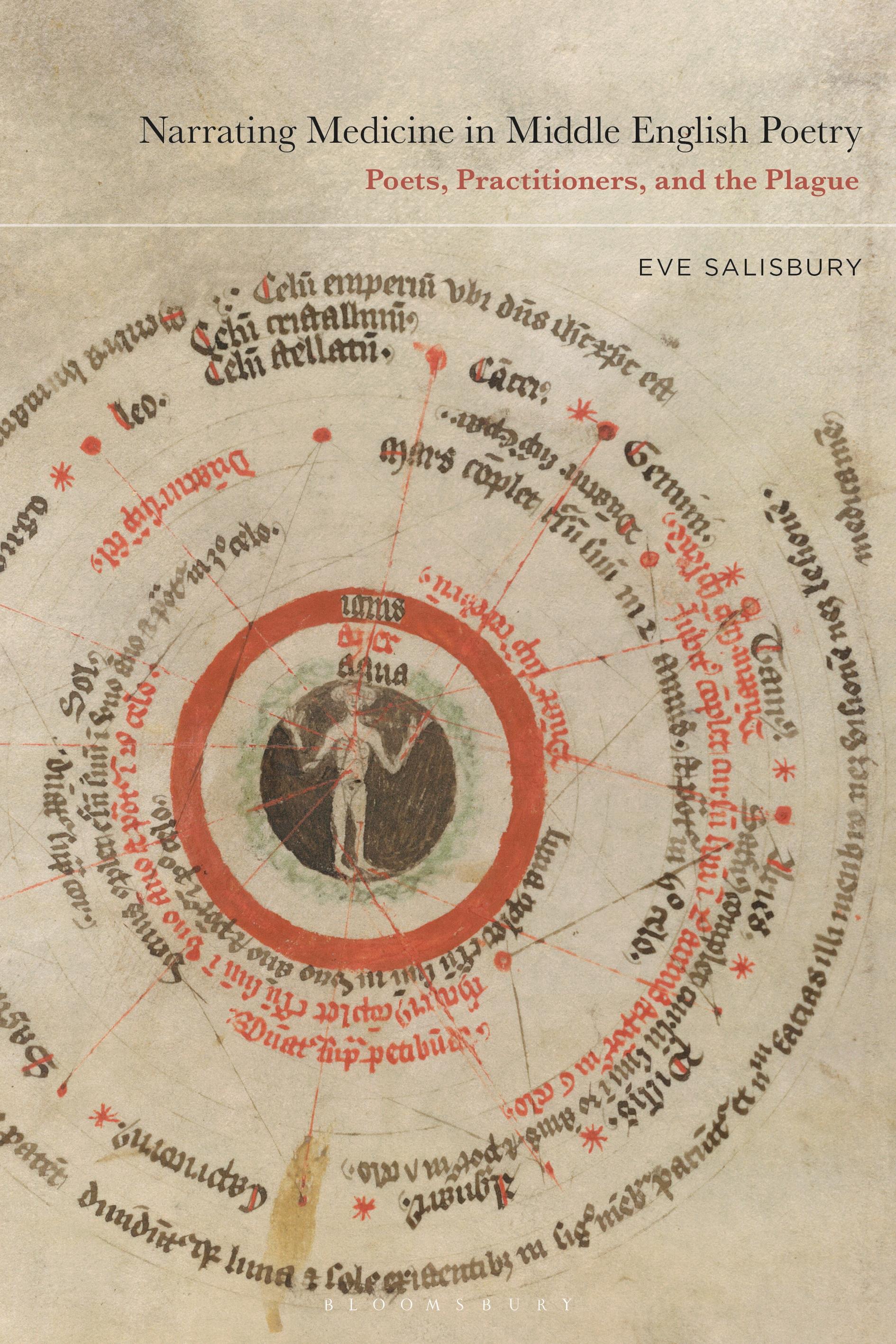
Exploring medical writing in England in the 100+ years after the advent of the “Great Mortality”, this book examines the storytelling practices of poets, patients, and physicians in the midst of a medieval public health crisis and demonstrates how literary narratives enable us to see a kinship between poetry and the healing arts.
Looking at how we can learn to diagnose a text as if we were diagnosing a body, Salisbury provides new insights into how we can recuperate the voices of those afflicted by illness in medieval texts when we have no direct testimony.
She considers how we interpret stories told by patients in narratives mediated by others, ways that women factor into the shaping of a medical canon, how medical writing intersects with religious belief and memorial practices governed by the Church, and ways that regimens of health benefit a population in the throes of an epidemic.
Looking at how we can learn to diagnose a text as if we were diagnosing a body, Salisbury provides new insights into how we can recuperate the voices of those afflicted by illness in medieval texts when we have no direct testimony.
She considers how we interpret stories told by patients in narratives mediated by others, ways that women factor into the shaping of a medical canon, how medical writing intersects with religious belief and memorial practices governed by the Church, and ways that regimens of health benefit a population in the throes of an epidemic.
Płać wygodnie kartą, Klarną, Apple Pay lub Google Pay. Nie jesteś zadowolony? Zawsze masz 14-dniową gwarancję zwrotu pieniędzy. Więcej przeczytasz w naszych warunkach. Masz pytania? Napisz do nas na hello@memmo.org.
Memmo ułatwia naukę – gdziekolwiek jesteś na świecie. U nas znajdziesz podręczniki i sprytne narzędzia do nauki w jednym miejscu: streszczenia, quizy, podcasty i fiszki. A do tego Ted, Twój kumpel do nauki, który odpowie na wszystko, co Cię nurtuje. Ponad 50 000 studentów już tu się uczy – stworzone, byś uczył się szybciej i mniej stresował.