
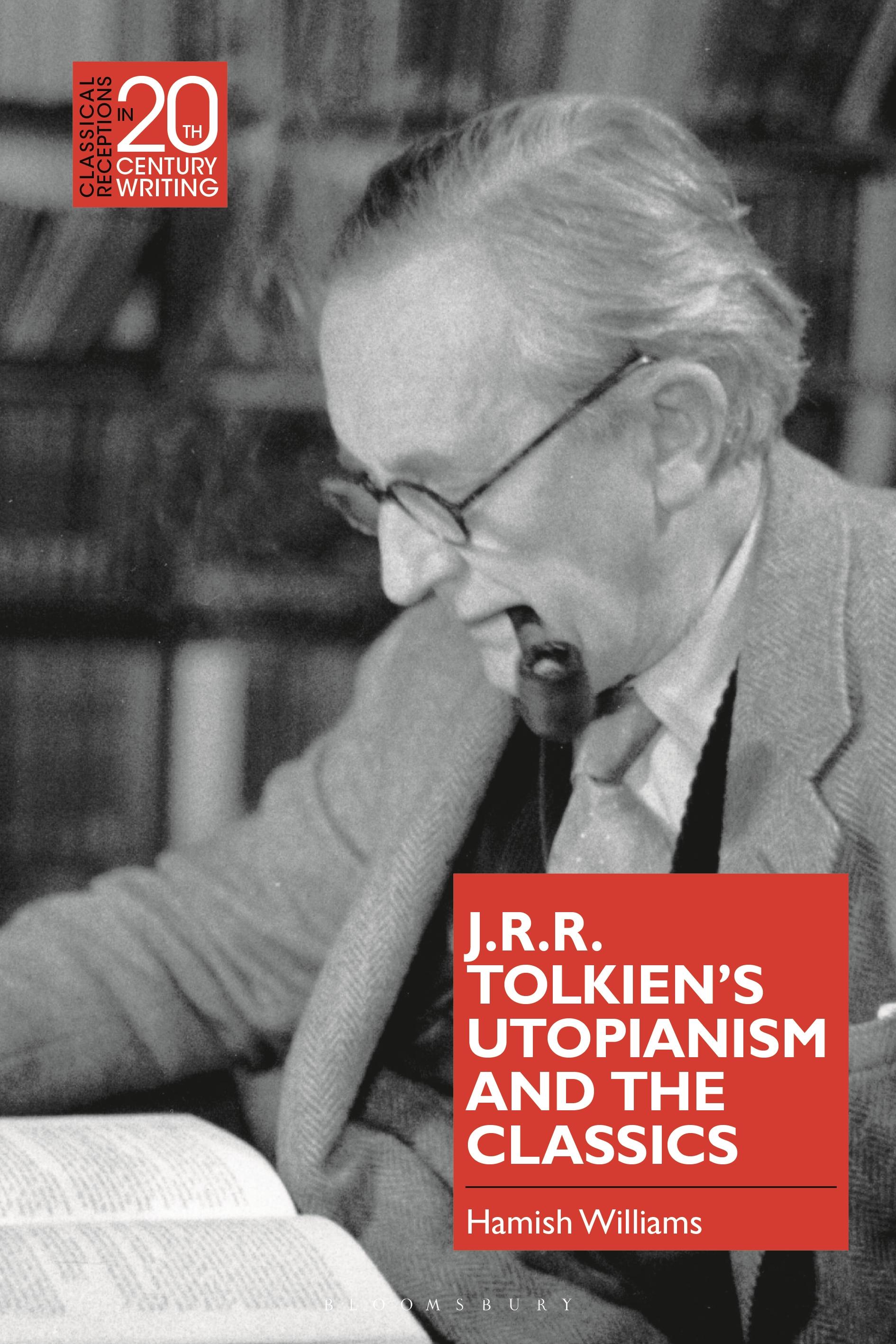
This book opens up new perspectives on the English fantasy writer J.R.R. Tolkien, arguing that he was an influential thinker of utopianism in 20th-century fiction and that his scrutiny of utopias can be assessed through his dialogue with antiquity. Tolkien's engagement with the ancient world often reflects an interest in retrotopianism: his fictional places – cities, forests, homes – draw on a rich (post-)classical narrative imagination of similar spaces.
Importantly for Tolkien, such narratives entail 'eutopian' thought experiments: the decline and fall of distinctly 'classical' communities provide an utopian blueprint for future political restorations; the home as oikos becomes a space where an ideal ethical reciprocity between host and guest can be sought; the 'ancient forest' is an ambiguous, unsettling site where characters can experience necessary forms of awakening. From these perspectives, tokens of Platonic moderation, Augustan restoration, Homeric xenophilia, and the Ovidian material sublime are evident in Tolkien's writing. Likewise, his retrotopianism also always entails a rewriting of ancient narratives in post-classical and modern terms. This study then explores how Tolkien's use of the classical past can help us to align classical and utopian studies, and thus to reflect on the ranges and limits of utopianism in classical literature and thought.
Importantly for Tolkien, such narratives entail 'eutopian' thought experiments: the decline and fall of distinctly 'classical' communities provide an utopian blueprint for future political restorations; the home as oikos becomes a space where an ideal ethical reciprocity between host and guest can be sought; the 'ancient forest' is an ambiguous, unsettling site where characters can experience necessary forms of awakening. From these perspectives, tokens of Platonic moderation, Augustan restoration, Homeric xenophilia, and the Ovidian material sublime are evident in Tolkien's writing. Likewise, his retrotopianism also always entails a rewriting of ancient narratives in post-classical and modern terms. This study then explores how Tolkien's use of the classical past can help us to align classical and utopian studies, and thus to reflect on the ranges and limits of utopianism in classical literature and thought.
Strony: 224
Kategoria: Litteraturvetenskap & Teori
e-ISBN: 9781350241480
Waga przesyłki: 1.2 kg
Wysyłka w ciągu: 1-2 dni
Płać wygodnie kartą, Klarną, Apple Pay lub Google Pay. Nie jesteś zadowolony? Zawsze masz 14-dniową gwarancję zwrotu pieniędzy. Więcej przeczytasz w naszych warunkach. Masz pytania? Napisz do nas na hello@memmo.org.
Memmo ułatwia naukę – gdziekolwiek jesteś na świecie. U nas znajdziesz podręczniki i sprytne narzędzia do nauki w jednym miejscu: streszczenia, quizy, podcasty i fiszki. A do tego Ted, Twój kumpel do nauki, który odpowie na wszystko, co Cię nurtuje. Ponad 50 000 studentów już tu się uczy – stworzone, byś uczył się szybciej i mniej stresował.