
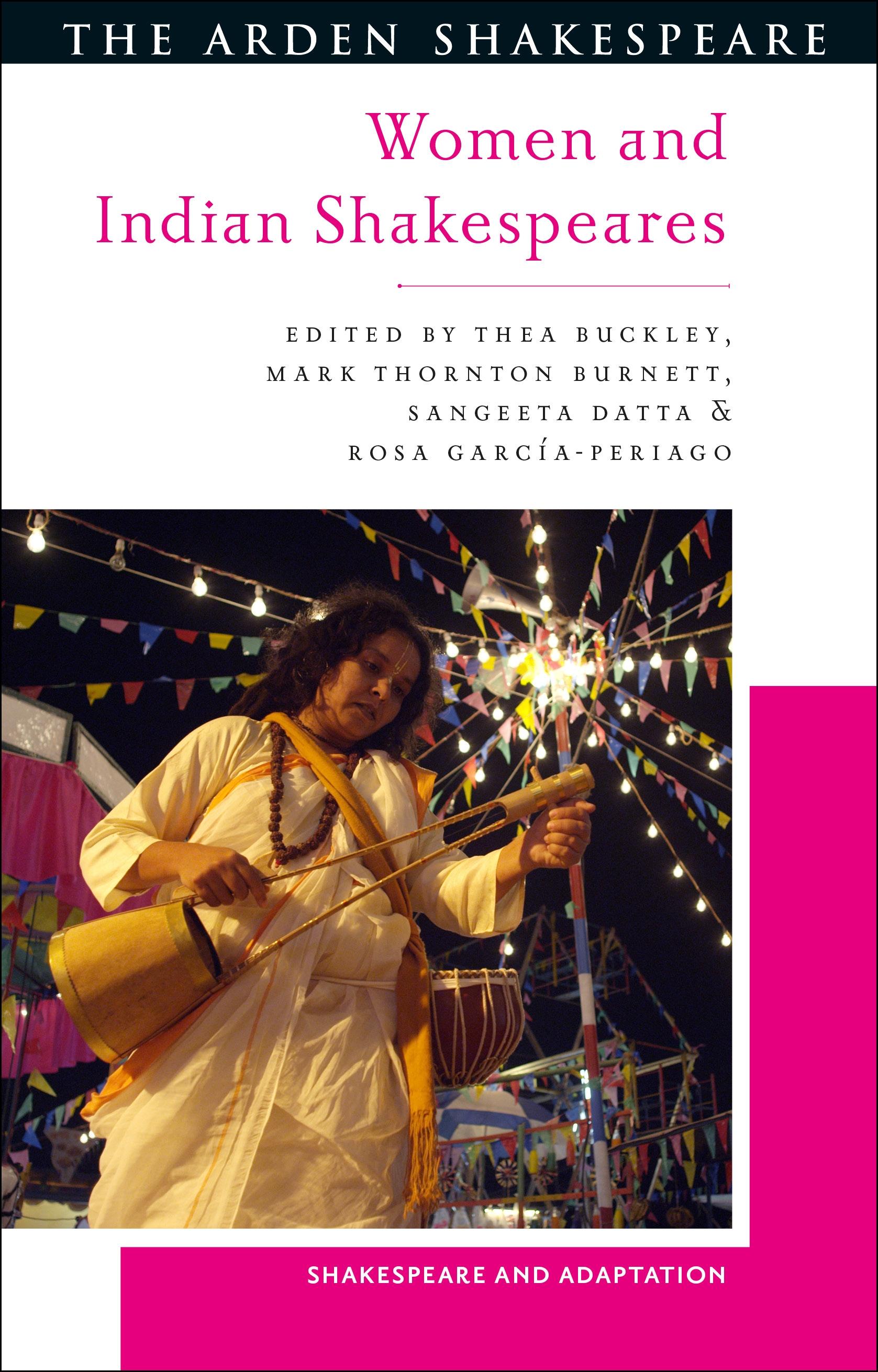
Women and Indian Shakespeares explores the multiple ways in which women are, and have been, engaged with Shakespeare in India. Women's engagements encompass the full range of media, from translation to cinematic adaptation and from early colonial performance to contemporary theatrical experiment. Simultaneously, Women and Indian Shakespeares makes visible the ways in which women are figured in various representational registers as resistant agents, martial seductresses, redemptive daughters, victims of caste discrimination, conflicted spaces and global citizens. In so doing, the collection reorients existing lines of investigation, extends the disciplinary field, brings into visibility still occluded subjects and opens up radical readings. More broadly, the collection identifies how, in Indian Shakespeares on page, stage and screen, women increasingly possess the ability to shape alternative futures across patriarchal and societal barriers of race, caste, religion and class.
In repeated iterations, the collection turns our attention to localized modes of adaptation that enable opportunities for women while celebrating Shakespeare's gendered interactions in India's rapidly changing, and increasingly globalized, cultural, economic and political environment. In the contributions, we see a transformed Shakespeare, a playwright who appears differently when seen through the gendered eyes of a new Indian, diasporic and global generation of critics, historians, archivists, practitioners and directors. Radically imagining Indian Shakespeares with women at the centre, Women and Indian Shakespeares interweaves history, regional geography/regionality, language and the present day to establish a record of women as creators and adapters of Shakespeare in Indian contexts.
In repeated iterations, the collection turns our attention to localized modes of adaptation that enable opportunities for women while celebrating Shakespeare's gendered interactions in India's rapidly changing, and increasingly globalized, cultural, economic and political environment. In the contributions, we see a transformed Shakespeare, a playwright who appears differently when seen through the gendered eyes of a new Indian, diasporic and global generation of critics, historians, archivists, practitioners and directors. Radically imagining Indian Shakespeares with women at the centre, Women and Indian Shakespeares interweaves history, regional geography/regionality, language and the present day to establish a record of women as creators and adapters of Shakespeare in Indian contexts.
Płać wygodnie kartą, Klarną, Apple Pay lub Google Pay. Nie jesteś zadowolony? Zawsze masz 14-dniową gwarancję zwrotu pieniędzy. Więcej przeczytasz w naszych warunkach. Masz pytania? Napisz do nas na hello@memmo.org.
Memmo ułatwia naukę – gdziekolwiek jesteś na świecie. U nas znajdziesz podręczniki i sprytne narzędzia do nauki w jednym miejscu: streszczenia, quizy, podcasty i fiszki. A do tego Ted, Twój kumpel do nauki, który odpowie na wszystko, co Cię nurtuje. Ponad 50 000 studentów już tu się uczy – stworzone, byś uczył się szybciej i mniej stresował.