
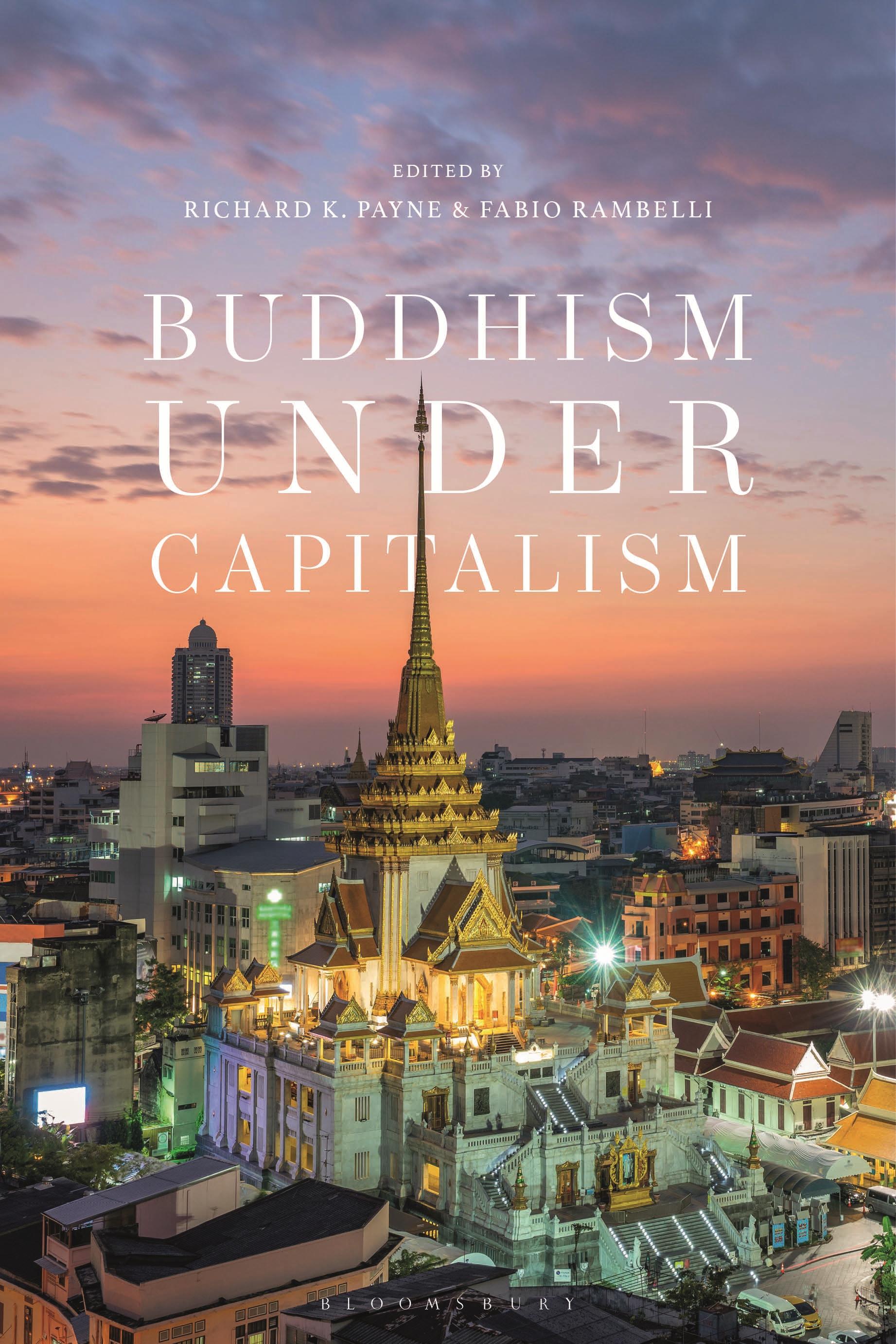
This book argues that Buddhism has spread due to globalized capitalism, and explores how capitalism is also impacting Buddhists and Buddhism today.
Edited by two leading scholars in Buddhist studies, the book examines how capitalism and neo-liberalism have shaped global perceptions of Buddhism, as well as specific local practices and attitudes. It examines the institutional practices that sustained the spread of Buddhism for two and a half millennia, and the adaptation of Buddhist institutions in contemporary, global economic systems-particularly in Europe and the United States over the last century and half.
These innovative essays on the interfaces between Buddhism and capitalism will prompt readers to rethink the connection between Buddhism and secular society. Case studies include digital capitalism, tourism, and monasticism, and are drawn from the USA, Tibet, China, Japan, and Thailand.
Edited by two leading scholars in Buddhist studies, the book examines how capitalism and neo-liberalism have shaped global perceptions of Buddhism, as well as specific local practices and attitudes. It examines the institutional practices that sustained the spread of Buddhism for two and a half millennia, and the adaptation of Buddhist institutions in contemporary, global economic systems-particularly in Europe and the United States over the last century and half.
These innovative essays on the interfaces between Buddhism and capitalism will prompt readers to rethink the connection between Buddhism and secular society. Case studies include digital capitalism, tourism, and monasticism, and are drawn from the USA, Tibet, China, Japan, and Thailand.
Płać wygodnie kartą, Klarną, Apple Pay lub Google Pay. Nie jesteś zadowolony? Zawsze masz 14-dniową gwarancję zwrotu pieniędzy. Więcej przeczytasz w naszych warunkach. Masz pytania? Napisz do nas na hello@memmo.org.
Memmo ułatwia naukę – gdziekolwiek jesteś na świecie. U nas znajdziesz podręczniki i sprytne narzędzia do nauki w jednym miejscu: streszczenia, quizy, podcasty i fiszki. A do tego Ted, Twój kumpel do nauki, który odpowie na wszystko, co Cię nurtuje. Ponad 50 000 studentów już tu się uczy – stworzone, byś uczył się szybciej i mniej stresował.