
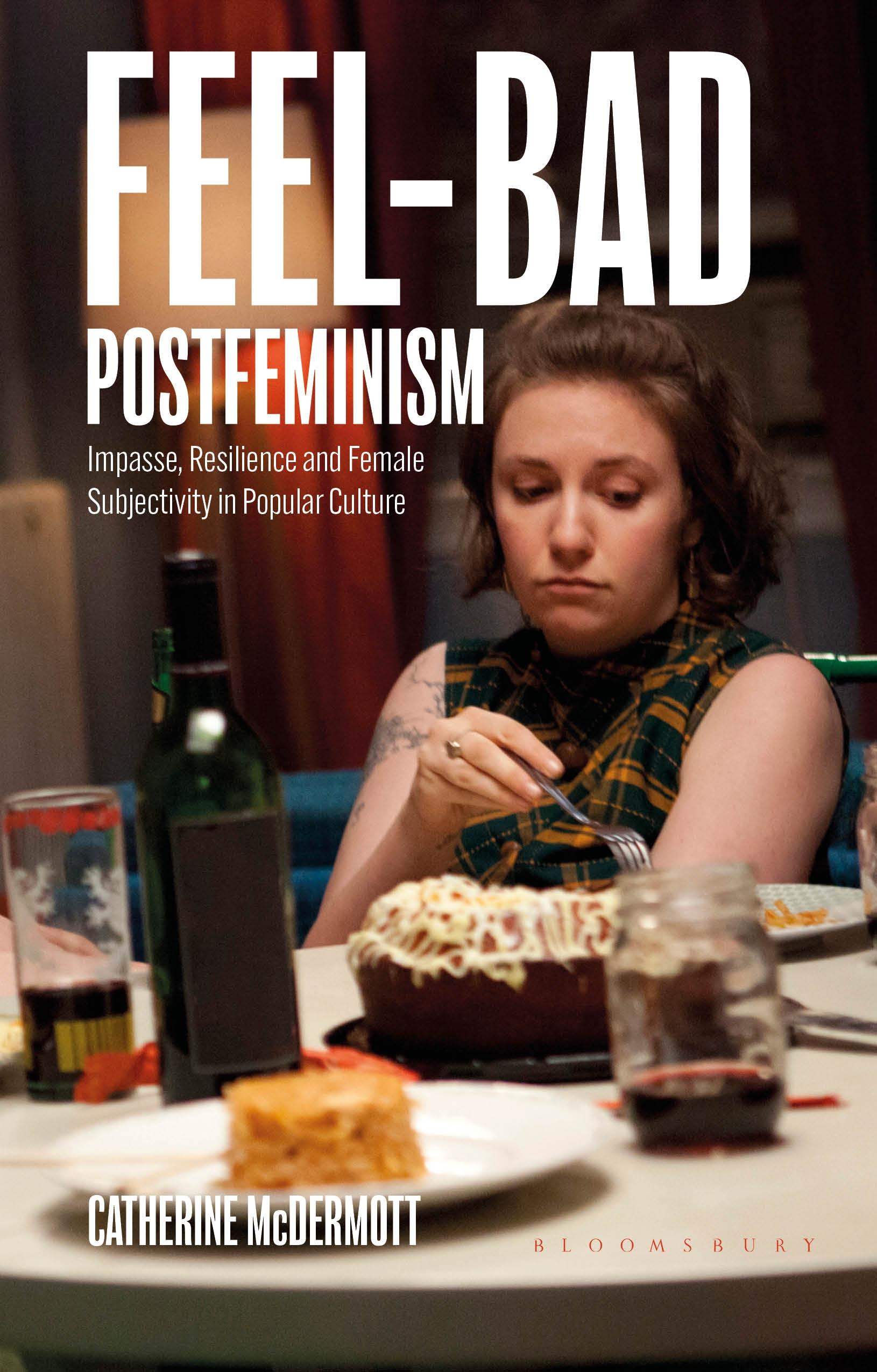
In Feel-Bad Postfeminism, Catherine McDermott provides crucial insight into what growing up during empowerment postfeminism feels like, and outlines the continuing postfeminist legacy of resilience in girlhood coming-of-age narratives.
McDermott's analysis of Gone Girl (2012), Girls (2012–2017) and Appropriate Behaviour (2012) illuminates a major cultural turn in which the pleasures of postfeminist empowerment curdle into a profound sense of rage and resentment. By contrast, close examination of The Hunger Games (2008–2010), Girlhood (2014) and Catch Me Daddy (2014) reveals that contemporary genres are increasingly constructing girls as uniquely capable of resiliently overcoming and adapting to unforgiving social conditions.
She develops an affective vocabulary to better understand contemporary modes of defiant, transformative and relational resilience, as well as a framework through which to expand on further modes that are specific to the genres they emerge within. Overall, the book suggests that exploration of the affective dimensions of girls' and women's culture can offer new insights into how coming-of-age, girlhood and femininity are culturally produced in the aftermath of postfeminism.
McDermott's analysis of Gone Girl (2012), Girls (2012–2017) and Appropriate Behaviour (2012) illuminates a major cultural turn in which the pleasures of postfeminist empowerment curdle into a profound sense of rage and resentment. By contrast, close examination of The Hunger Games (2008–2010), Girlhood (2014) and Catch Me Daddy (2014) reveals that contemporary genres are increasingly constructing girls as uniquely capable of resiliently overcoming and adapting to unforgiving social conditions.
She develops an affective vocabulary to better understand contemporary modes of defiant, transformative and relational resilience, as well as a framework through which to expand on further modes that are specific to the genres they emerge within. Overall, the book suggests that exploration of the affective dimensions of girls' and women's culture can offer new insights into how coming-of-age, girlhood and femininity are culturally produced in the aftermath of postfeminism.
Płać wygodnie kartą, Klarną, Apple Pay lub Google Pay. Nie jesteś zadowolony? Zawsze masz 14-dniową gwarancję zwrotu pieniędzy. Więcej przeczytasz w naszych warunkach. Masz pytania? Napisz do nas na hello@memmo.org.
Memmo ułatwia naukę – gdziekolwiek jesteś na świecie. U nas znajdziesz podręczniki i sprytne narzędzia do nauki w jednym miejscu: streszczenia, quizy, podcasty i fiszki. A do tego Ted, Twój kumpel do nauki, który odpowie na wszystko, co Cię nurtuje. Ponad 50 000 studentów już tu się uczy – stworzone, byś uczył się szybciej i mniej stresował.