
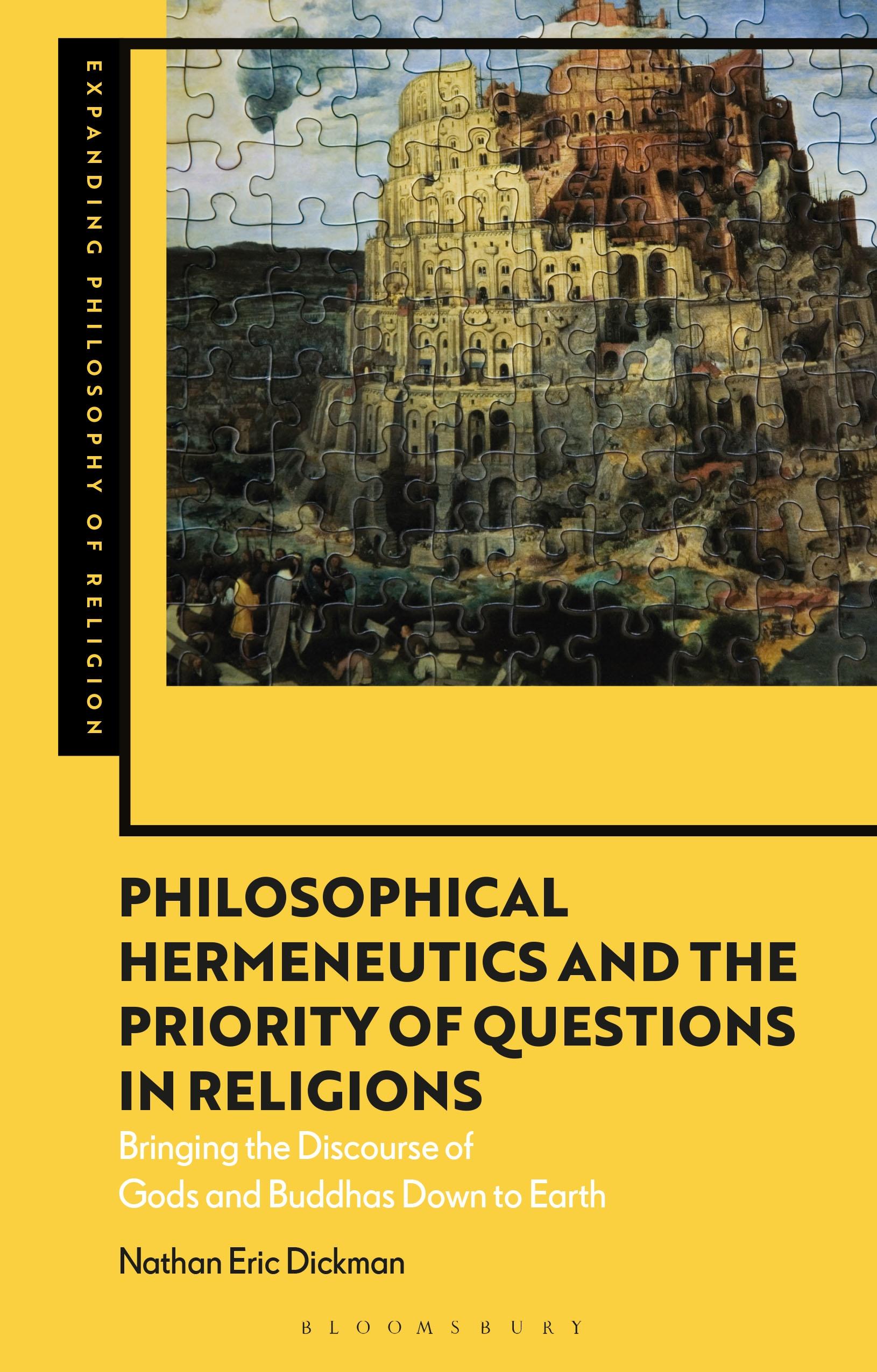
Buddhas, gods, prophets and oracles are often depicted as asking questions. But what are we to understand when Jesus asks “Who do you say that I am?”, or Mazu, the Classical Zen master asks, “Why do you seek outside?" Is their questioning a power or weakness? Is it something human beings are only capable of due to our finitude? Is there any kind of question that is a power?
Focusing on three case studies of questions in divine discourse on the level of story - the god depicted in the Jewish Bible, the master Mazu in his recorded sayings literature, and Jesus as he is depicted in canonized Christian Gospels - Nathan Eric Dickman meditates on human responses to divine questions. He considers the purpose of interreligious dialogue and the provocative kind of questions that seem to purposefully decenter us, drawing on methods from confessionally-oriented hermeneutics and skills from critical thinking.
He allows us to see alternative ways of interpreting religious texts through approaches that look beyond reading a text for the improvement of our own religion or for access to some metaphysically transcendent reality. This is the first step in a phenomenology of religions that is inclusive, diverse, relevant and grounded in the world we live in.
Focusing on three case studies of questions in divine discourse on the level of story - the god depicted in the Jewish Bible, the master Mazu in his recorded sayings literature, and Jesus as he is depicted in canonized Christian Gospels - Nathan Eric Dickman meditates on human responses to divine questions. He considers the purpose of interreligious dialogue and the provocative kind of questions that seem to purposefully decenter us, drawing on methods from confessionally-oriented hermeneutics and skills from critical thinking.
He allows us to see alternative ways of interpreting religious texts through approaches that look beyond reading a text for the improvement of our own religion or for access to some metaphysically transcendent reality. This is the first step in a phenomenology of religions that is inclusive, diverse, relevant and grounded in the world we live in.
Płać wygodnie kartą, Klarną, Apple Pay lub Google Pay. Nie jesteś zadowolony? Zawsze masz 14-dniową gwarancję zwrotu pieniędzy. Więcej przeczytasz w naszych warunkach. Masz pytania? Napisz do nas na hello@memmo.org.
Memmo ułatwia naukę – gdziekolwiek jesteś na świecie. U nas znajdziesz podręczniki i sprytne narzędzia do nauki w jednym miejscu: streszczenia, quizy, podcasty i fiszki. A do tego Ted, Twój kumpel do nauki, który odpowie na wszystko, co Cię nurtuje. Ponad 50 000 studentów już tu się uczy – stworzone, byś uczył się szybciej i mniej stresował.