
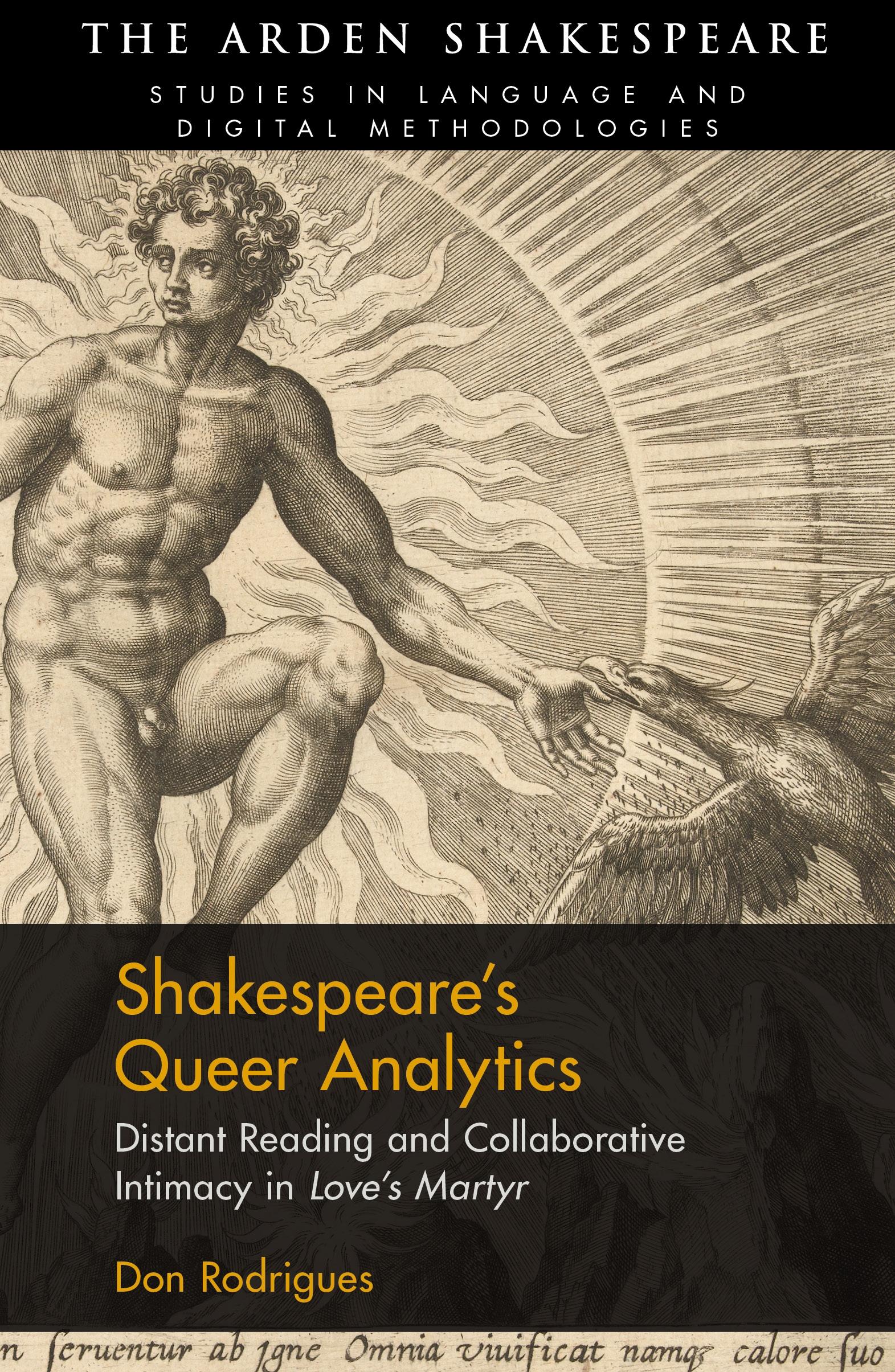
What led Shakespeare to write his most cryptic poem, 'The Phoenix and Turtle'? Could the Phoenix represent Queen Elizabeth, on the verge of death as Shakespeare wrote? Is the Earl of Essex, recently executed for treason, the Turtledove lover of the Phoenix? Questions such as these dominate scholarship of both Shakespeare's poem and the book in which it first appeared: Robert Chester's enigmatic collection of verse, Love's Martyr (1601), where Shakespeare's allegory sits next to erotic love lyrics by Ben Jonson, George Chapman and John Marston, as well as work by the much lesser-known Chester.
Don Rodrigues critiques and revises traditional computational attribution studies by integrating the insights of queer theory to a study of Love's Martyr. A book deeply engaged in current debates in computational literary studies, it is particularly attuned to questions of non-normativity, deviation and departures from style when assessing stylistic patterns. Gathering insights from decades of computational and traditional analyses, it presents, most radically, data that supports the once-outlandish theory that Shakespeare may have had a significant hand in editing works signed by Chester. At the same time, this book insists on the fundamentally collaborative nature of production in Love's Martyr.
Developing a compelling account of how collaborative textual production could work among early modern writers, Shakespeare's Queer Analytics is a much-needed methodological intervention in computational attribution studies. It articulates what Rodrigues describes as 'queer analytics': an approach to literary analysis that joins the non-normative close reading of queer theory to the distant attention of computational literary studies – highlighting patterns that traditional readings often overlook or ignore.
Don Rodrigues critiques and revises traditional computational attribution studies by integrating the insights of queer theory to a study of Love's Martyr. A book deeply engaged in current debates in computational literary studies, it is particularly attuned to questions of non-normativity, deviation and departures from style when assessing stylistic patterns. Gathering insights from decades of computational and traditional analyses, it presents, most radically, data that supports the once-outlandish theory that Shakespeare may have had a significant hand in editing works signed by Chester. At the same time, this book insists on the fundamentally collaborative nature of production in Love's Martyr.
Developing a compelling account of how collaborative textual production could work among early modern writers, Shakespeare's Queer Analytics is a much-needed methodological intervention in computational attribution studies. It articulates what Rodrigues describes as 'queer analytics': an approach to literary analysis that joins the non-normative close reading of queer theory to the distant attention of computational literary studies – highlighting patterns that traditional readings often overlook or ignore.
Strony: 296
Kategoria: Litteraturvetenskap & Teori
e-ISBN: 9781350178830
Waga przesyłki: 1.2 kg
Wysyłka w ciągu: 1-2 dni
Płać wygodnie kartą, Klarną, Apple Pay lub Google Pay. Nie jesteś zadowolony? Zawsze masz 14-dniową gwarancję zwrotu pieniędzy. Więcej przeczytasz w naszych warunkach. Masz pytania? Napisz do nas na hello@memmo.org.
Memmo ułatwia naukę – gdziekolwiek jesteś na świecie. U nas znajdziesz podręczniki i sprytne narzędzia do nauki w jednym miejscu: streszczenia, quizy, podcasty i fiszki. A do tego Ted, Twój kumpel do nauki, który odpowie na wszystko, co Cię nurtuje. Ponad 50 000 studentów już tu się uczy – stworzone, byś uczył się szybciej i mniej stresował.