
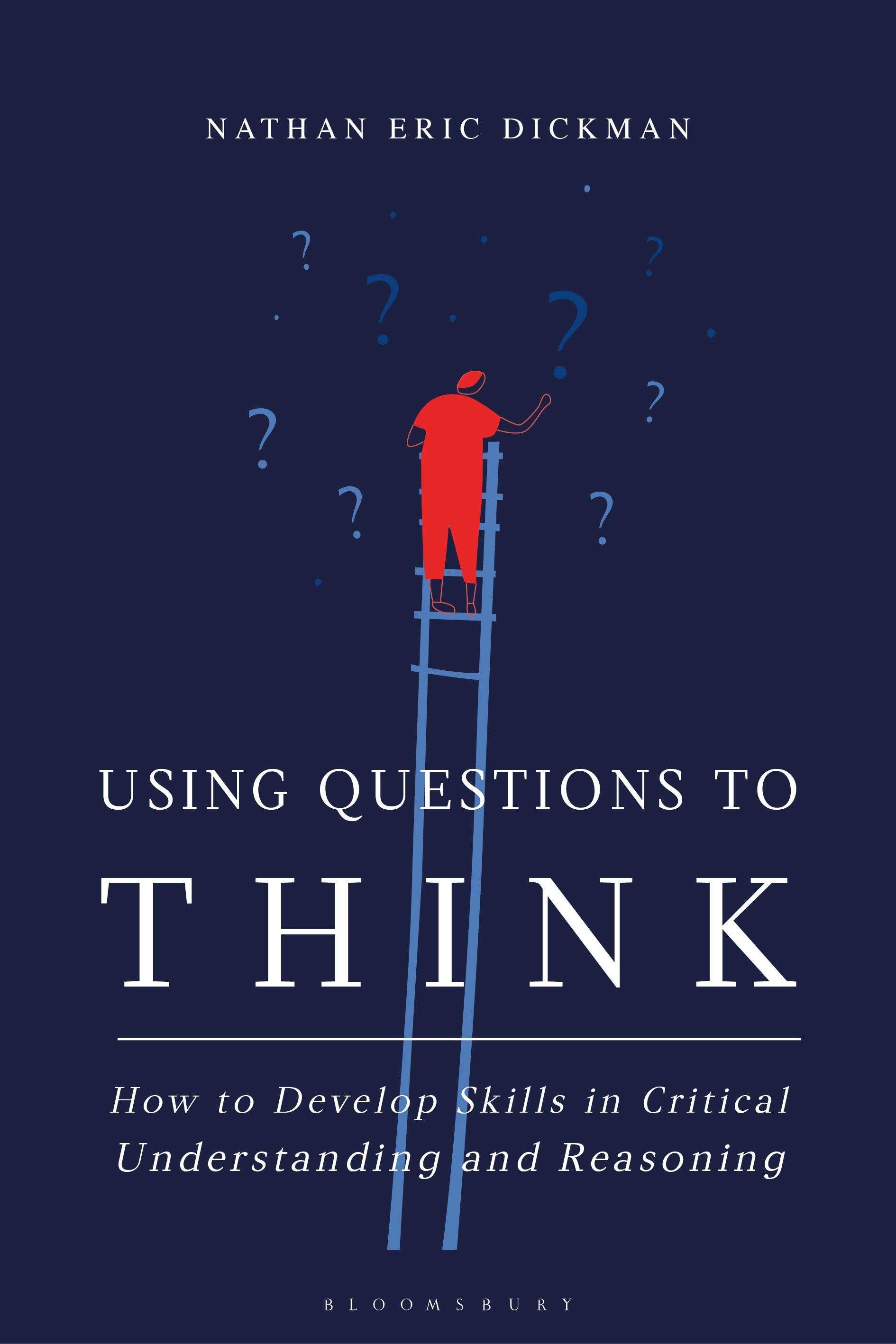
Our ability to think, argue and reason is determined by our ability to question. Questions are a vital component of critical thinking, yet we underestimate the role they play. Using Questions to Think puts questioning back in the spotlight.
Naming the parts of questions at the same time as we name parts of thought, this one-of-a-kind introduction allows us to see how questions relate to the definitions of propositions, premises, conclusions, and the validity of arguments. Why is this important? Making the role of questions visible in thinking reasoning and dialogue, allows us to:
- Ask better questions
- Improve our capability to understand an argument
- Exercise vigilance in the act of questioning
- Make explicit what you already know implicitly
- Engage with ideas that contradict our own
- See ideas in broader context
Breathing new life into our current approach to critical thinking, this practical, much-needed textbook moves us away from the traditional focus on formal argument and fallacy identification, combines the Kantian critique of reason with Hans-Georg Gadamer's hermeneutics and reminds us why thinking can only be understood as an answer to a question.
Naming the parts of questions at the same time as we name parts of thought, this one-of-a-kind introduction allows us to see how questions relate to the definitions of propositions, premises, conclusions, and the validity of arguments. Why is this important? Making the role of questions visible in thinking reasoning and dialogue, allows us to:
- Ask better questions
- Improve our capability to understand an argument
- Exercise vigilance in the act of questioning
- Make explicit what you already know implicitly
- Engage with ideas that contradict our own
- See ideas in broader context
Breathing new life into our current approach to critical thinking, this practical, much-needed textbook moves us away from the traditional focus on formal argument and fallacy identification, combines the Kantian critique of reason with Hans-Georg Gadamer's hermeneutics and reminds us why thinking can only be understood as an answer to a question.
Płać wygodnie kartą, Klarną, Apple Pay lub Google Pay. Nie jesteś zadowolony? Zawsze masz 14-dniową gwarancję zwrotu pieniędzy. Więcej przeczytasz w naszych warunkach. Masz pytania? Napisz do nas na hello@memmo.org.
Memmo ułatwia naukę – gdziekolwiek jesteś na świecie. U nas znajdziesz podręczniki i sprytne narzędzia do nauki w jednym miejscu: streszczenia, quizy, podcasty i fiszki. A do tego Ted, Twój kumpel do nauki, który odpowie na wszystko, co Cię nurtuje. Ponad 50 000 studentów już tu się uczy – stworzone, byś uczył się szybciej i mniej stresował.