
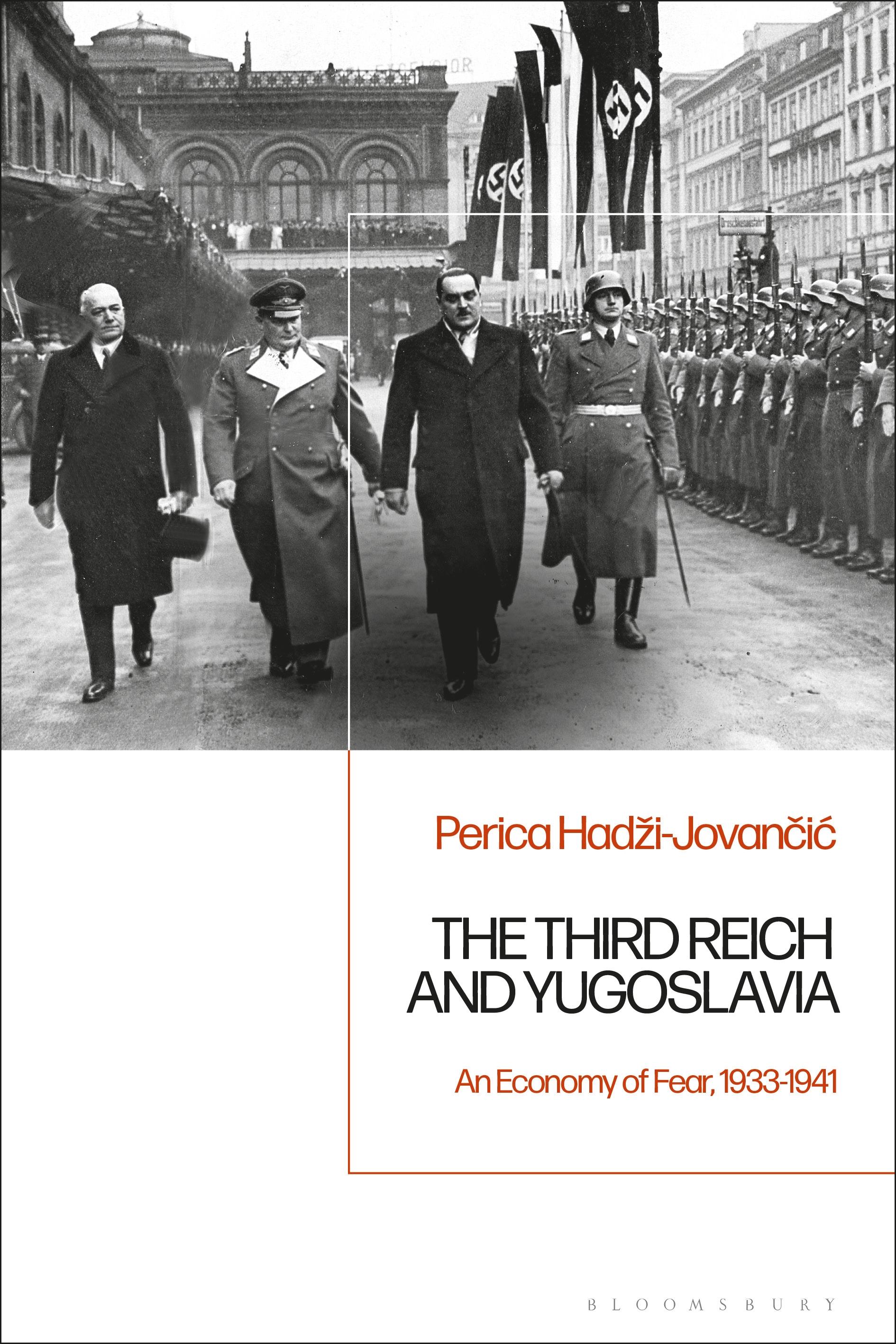
The Third Reich and Yugoslavia focuses on economic and political affairs between the Third Reich and Yugoslavia before Germany attacked in April 1941. It observes the relations between the two countries primarily from an economic perspective, with the political dimension forming a backdrop within which the economy operated.
Perica Hadzi-Jovancic challenges the conventional scholarly wisdom which recognises economics as mainly being a tool of German foreign policy towards Yugoslavia. Instead, he successfully places economic dealings on both sides within the broader context of both the German economic and financial plans and policies of the 1930s, as well as the existing trading ties between the two countries as they had been developing since the 1920s. At the same time, through detailed analysis of unpublished archival material, Hadzi-Jovancic explores the shared political relations from a new perspective; one from which there is a much deeper understanding of Yugoslavia's motives and the resulting implications for the other great powers and the wider regional framework. The book concludes that, contrary to the traditional view in historiography and despite the dependency of Yugoslavia's foreign trade on the German market at the dawn of the Second World War, Yugoslavia maintained both its economic and political agency in the shadow of the Third Reich. It was only international political developments beyond Yugoslavia's control in the years ahead that lead to a more receptive stance towards German demands.
Perica Hadzi-Jovancic challenges the conventional scholarly wisdom which recognises economics as mainly being a tool of German foreign policy towards Yugoslavia. Instead, he successfully places economic dealings on both sides within the broader context of both the German economic and financial plans and policies of the 1930s, as well as the existing trading ties between the two countries as they had been developing since the 1920s. At the same time, through detailed analysis of unpublished archival material, Hadzi-Jovancic explores the shared political relations from a new perspective; one from which there is a much deeper understanding of Yugoslavia's motives and the resulting implications for the other great powers and the wider regional framework. The book concludes that, contrary to the traditional view in historiography and despite the dependency of Yugoslavia's foreign trade on the German market at the dawn of the Second World War, Yugoslavia maintained both its economic and political agency in the shadow of the Third Reich. It was only international political developments beyond Yugoslavia's control in the years ahead that lead to a more receptive stance towards German demands.
Płać wygodnie kartą, Klarną, Apple Pay lub Google Pay. Nie jesteś zadowolony? Zawsze masz 14-dniową gwarancję zwrotu pieniędzy. Więcej przeczytasz w naszych warunkach. Masz pytania? Napisz do nas na hello@memmo.org.
Memmo ułatwia naukę – gdziekolwiek jesteś na świecie. U nas znajdziesz podręczniki i sprytne narzędzia do nauki w jednym miejscu: streszczenia, quizy, podcasty i fiszki. A do tego Ted, Twój kumpel do nauki, który odpowie na wszystko, co Cię nurtuje. Ponad 50 000 studentów już tu się uczy – stworzone, byś uczył się szybciej i mniej stresował.