
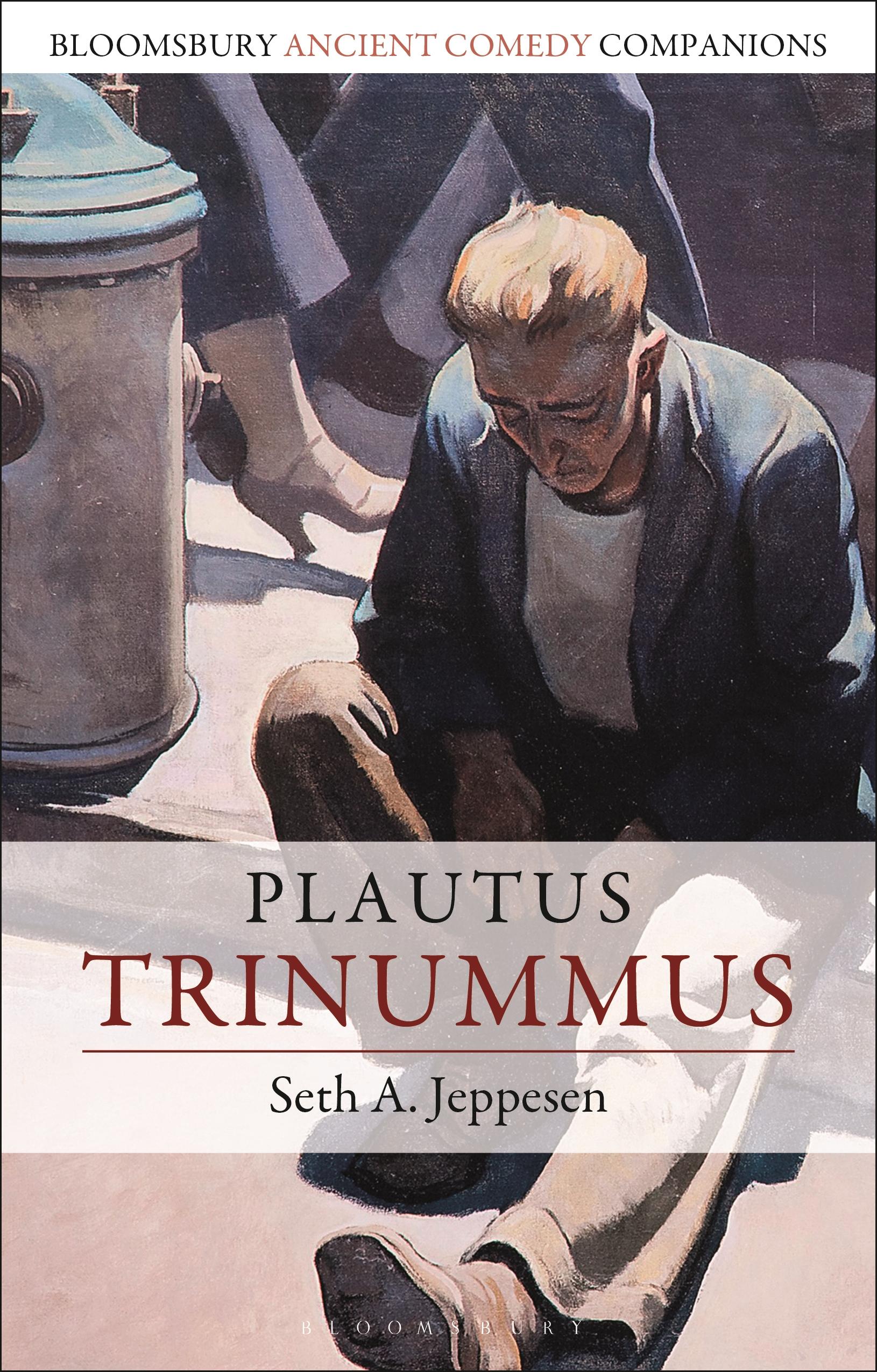
In this first introduction to Plautus' Trinummus, students and non-specialists alike are guided through the themes, context, and enduring humor of this Roman comedy. The play portrays the story of an elaborate game of keep-away involving a hidden treasure, a hot-blooded spendthrift youth, his pious sister, her would-be fiancee, a con-artist, and the most unlikely of comic schemers-a group of overly pious old men.
The conflict of the plot focuses on whether a pair of old men can help their absent friend Charmides by getting a dowry to his daughter without Charmides' wastrel son Lesbonicus first spending the money on the usual comic debauchery. The money is taken from a treasure hidden by Charmides when he left and a sycophant is hired to pretend to bring letters from Charmides along with the cash for the dowry. Comic confusion ensues when Charmides returns from abroad just in time to intercept the con-artist and overturn the scheming of his friends.
Long neglected, Trinummus is one of many Plautine plays that is experiencing a resurgence. This volume elucidates the humor of the play, which is largely based on parody and clever inversions of typical characters and situations from Roman comedy. This discussion is accompanied by an examination of the religious, social, and historical context of the play, as well as its modern reception. The genuine humor of Trinummus has something to say to modern readers, as it showcases how parody can skewer those engaged in pompous moral posturing and presents readers with a playwright who astutely views issues of imperialism and moral justification through a comic lens.
The conflict of the plot focuses on whether a pair of old men can help their absent friend Charmides by getting a dowry to his daughter without Charmides' wastrel son Lesbonicus first spending the money on the usual comic debauchery. The money is taken from a treasure hidden by Charmides when he left and a sycophant is hired to pretend to bring letters from Charmides along with the cash for the dowry. Comic confusion ensues when Charmides returns from abroad just in time to intercept the con-artist and overturn the scheming of his friends.
Long neglected, Trinummus is one of many Plautine plays that is experiencing a resurgence. This volume elucidates the humor of the play, which is largely based on parody and clever inversions of typical characters and situations from Roman comedy. This discussion is accompanied by an examination of the religious, social, and historical context of the play, as well as its modern reception. The genuine humor of Trinummus has something to say to modern readers, as it showcases how parody can skewer those engaged in pompous moral posturing and presents readers with a playwright who astutely views issues of imperialism and moral justification through a comic lens.
Płać wygodnie kartą, Klarną, Apple Pay lub Google Pay. Nie jesteś zadowolony? Zawsze masz 14-dniową gwarancję zwrotu pieniędzy. Więcej przeczytasz w naszych warunkach. Masz pytania? Napisz do nas na hello@memmo.org.
Memmo ułatwia naukę – gdziekolwiek jesteś na świecie. U nas znajdziesz podręczniki i sprytne narzędzia do nauki w jednym miejscu: streszczenia, quizy, podcasty i fiszki. A do tego Ted, Twój kumpel do nauki, który odpowie na wszystko, co Cię nurtuje. Ponad 50 000 studentów już tu się uczy – stworzone, byś uczył się szybciej i mniej stresował.