
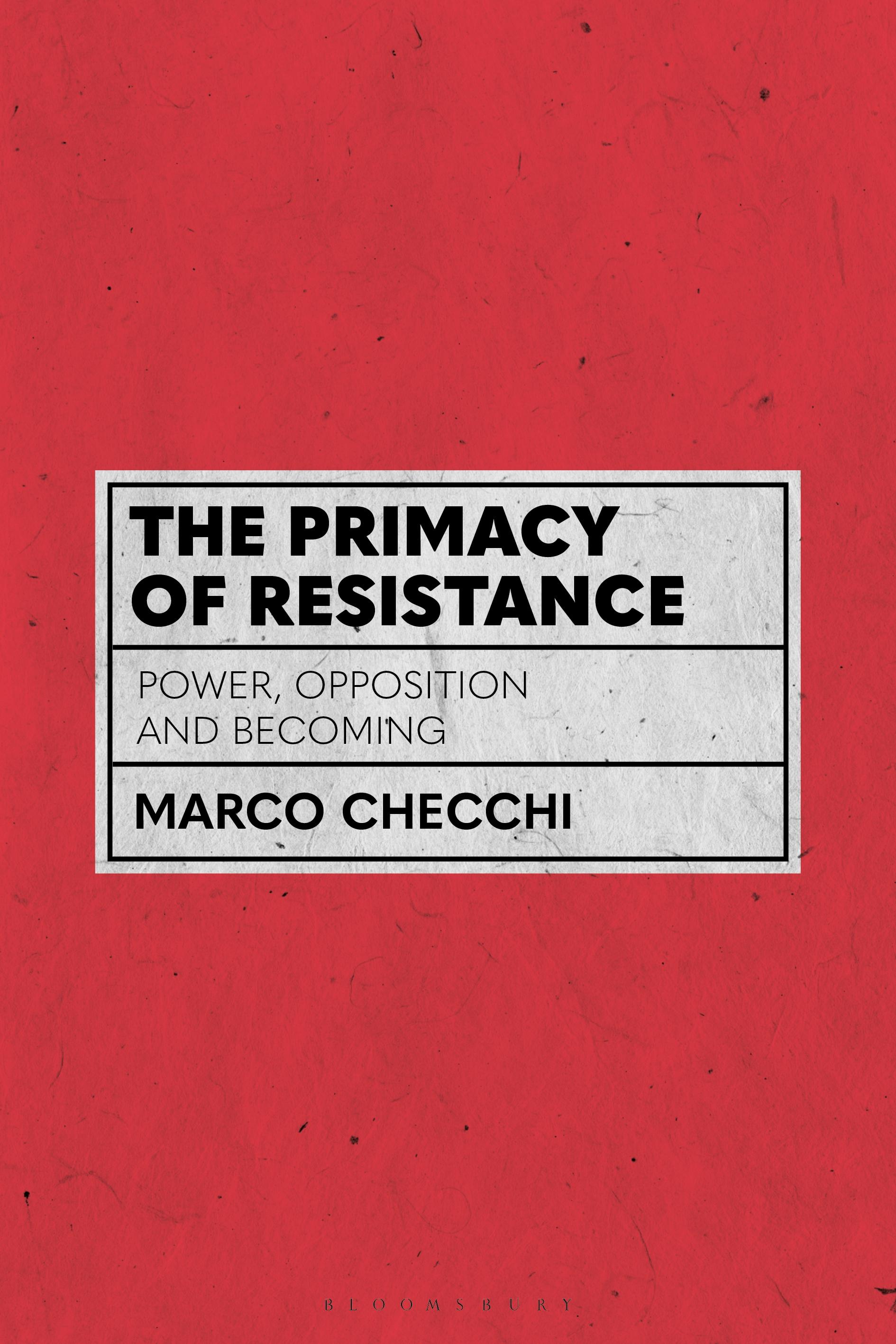
What is at the heart of political resistance?
Whilst traditional accounts often conceptualise it as a reaction to power, this volume (prioritising remarks by Michel Foucault) invites us to think of resistance as primary. The author proposes a strategic analysis that highlights how our efforts need to be redirected towards a horizon of creation and change.
Checchi first establishes a genealogy of two main trajectories of the history of our present: the liberal subject of rights and the neoliberal ideas of human capital and bio-financialisation. The former emerges as a reactive closure of Etienne de la Boétie's discourse on human nature and natural companionship. The other forecloses the creative potential of Autonomist Marxist conceptions of labour, first elaborated by Mario Tronti. The focus of this text then shifts towards contemporary openings. Initially, Checchi proposes an inverted reading of Jacques Rancière's concept of politics as interruption that resonates with Antonio Negri's emphasis on Baruch Spinoza's potential qua resistance. Finally, the author stages a virtual encounter between Gilles Deleuze's ontology of matter and Foucault's account of the primacy of resistance with which the text begins.
Through this series of explorations, The Primacy of Resistance: Power, Opposition and Becoming traces a conceptual trajectory with and beyond Foucault by affirming the affinity between resistance and creation.
Whilst traditional accounts often conceptualise it as a reaction to power, this volume (prioritising remarks by Michel Foucault) invites us to think of resistance as primary. The author proposes a strategic analysis that highlights how our efforts need to be redirected towards a horizon of creation and change.
Checchi first establishes a genealogy of two main trajectories of the history of our present: the liberal subject of rights and the neoliberal ideas of human capital and bio-financialisation. The former emerges as a reactive closure of Etienne de la Boétie's discourse on human nature and natural companionship. The other forecloses the creative potential of Autonomist Marxist conceptions of labour, first elaborated by Mario Tronti. The focus of this text then shifts towards contemporary openings. Initially, Checchi proposes an inverted reading of Jacques Rancière's concept of politics as interruption that resonates with Antonio Negri's emphasis on Baruch Spinoza's potential qua resistance. Finally, the author stages a virtual encounter between Gilles Deleuze's ontology of matter and Foucault's account of the primacy of resistance with which the text begins.
Through this series of explorations, The Primacy of Resistance: Power, Opposition and Becoming traces a conceptual trajectory with and beyond Foucault by affirming the affinity between resistance and creation.
Płać wygodnie kartą, Klarną, Apple Pay lub Google Pay. Nie jesteś zadowolony? Zawsze masz 14-dniową gwarancję zwrotu pieniędzy. Więcej przeczytasz w naszych warunkach. Masz pytania? Napisz do nas na hello@memmo.org.
Memmo ułatwia naukę – gdziekolwiek jesteś na świecie. U nas znajdziesz podręczniki i sprytne narzędzia do nauki w jednym miejscu: streszczenia, quizy, podcasty i fiszki. A do tego Ted, Twój kumpel do nauki, który odpowie na wszystko, co Cię nurtuje. Ponad 50 000 studentów już tu się uczy – stworzone, byś uczył się szybciej i mniej stresował.