
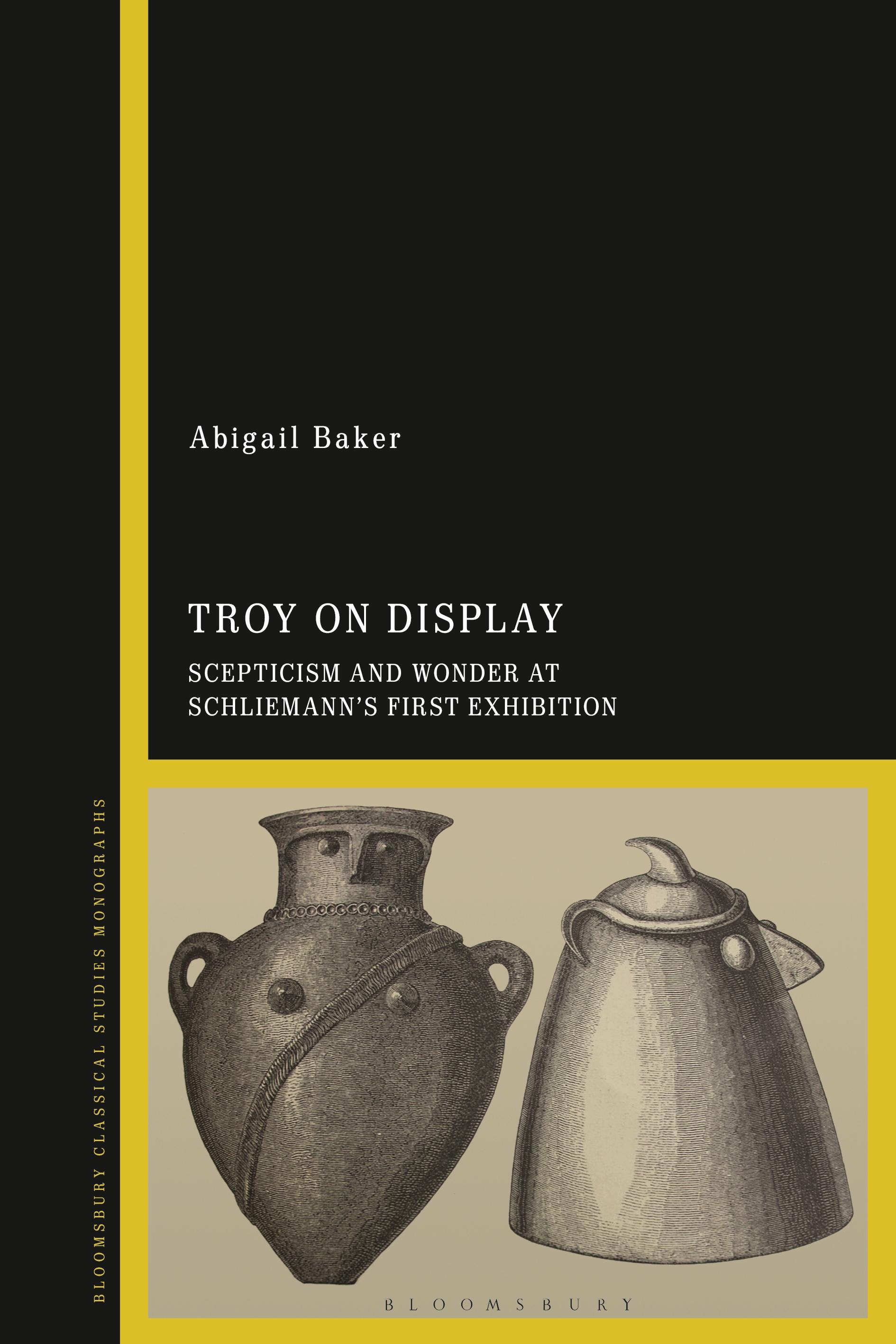
This book explores what visitors saw at the Trojan exhibition and why its contents, including treasure, plain pottery and human remains captured imaginations and divided opinions. When Schliemann's Trojan collection was first exhibited in 1877, no-one had seen anything like it. Schliemann claimed these objects had been owned by participants in the Trojan War and that they were tangible evidence that Homer's epics were true. Yet, these objects did not reflect the heroic past imagined by Victorians, and a fierce controversy broke out about the collection's value and significance.
Schliemann invited Londoners to see the very unclassical objects on display as the roots of classical culture. Artists, poets, historians, race theorists, bankers and humourists took up this challenge, but their conclusions were not always to Schliemann's liking. Troy's appeal lay in its materiality: visitors could apply analytical techniques (from aesthetic appreciation to skull-measuring) to the collection and draw their own conclusions. This book argues for a deep examination of museum exhibitions as a constructed spatial experience, which can transform how the past is seen. This new angle on a famous archaeological discovery shows the museum as a site of controversy, where hard evidence and wild imagination came together to form a lasting image of Troy.
Schliemann invited Londoners to see the very unclassical objects on display as the roots of classical culture. Artists, poets, historians, race theorists, bankers and humourists took up this challenge, but their conclusions were not always to Schliemann's liking. Troy's appeal lay in its materiality: visitors could apply analytical techniques (from aesthetic appreciation to skull-measuring) to the collection and draw their own conclusions. This book argues for a deep examination of museum exhibitions as a constructed spatial experience, which can transform how the past is seen. This new angle on a famous archaeological discovery shows the museum as a site of controversy, where hard evidence and wild imagination came together to form a lasting image of Troy.
Płać wygodnie kartą, Klarną, Apple Pay lub Google Pay. Nie jesteś zadowolony? Zawsze masz 14-dniową gwarancję zwrotu pieniędzy. Więcej przeczytasz w naszych warunkach. Masz pytania? Napisz do nas na hello@memmo.org.
Memmo ułatwia naukę – gdziekolwiek jesteś na świecie. U nas znajdziesz podręczniki i sprytne narzędzia do nauki w jednym miejscu: streszczenia, quizy, podcasty i fiszki. A do tego Ted, Twój kumpel do nauki, który odpowie na wszystko, co Cię nurtuje. Ponad 50 000 studentów już tu się uczy – stworzone, byś uczył się szybciej i mniej stresował.