
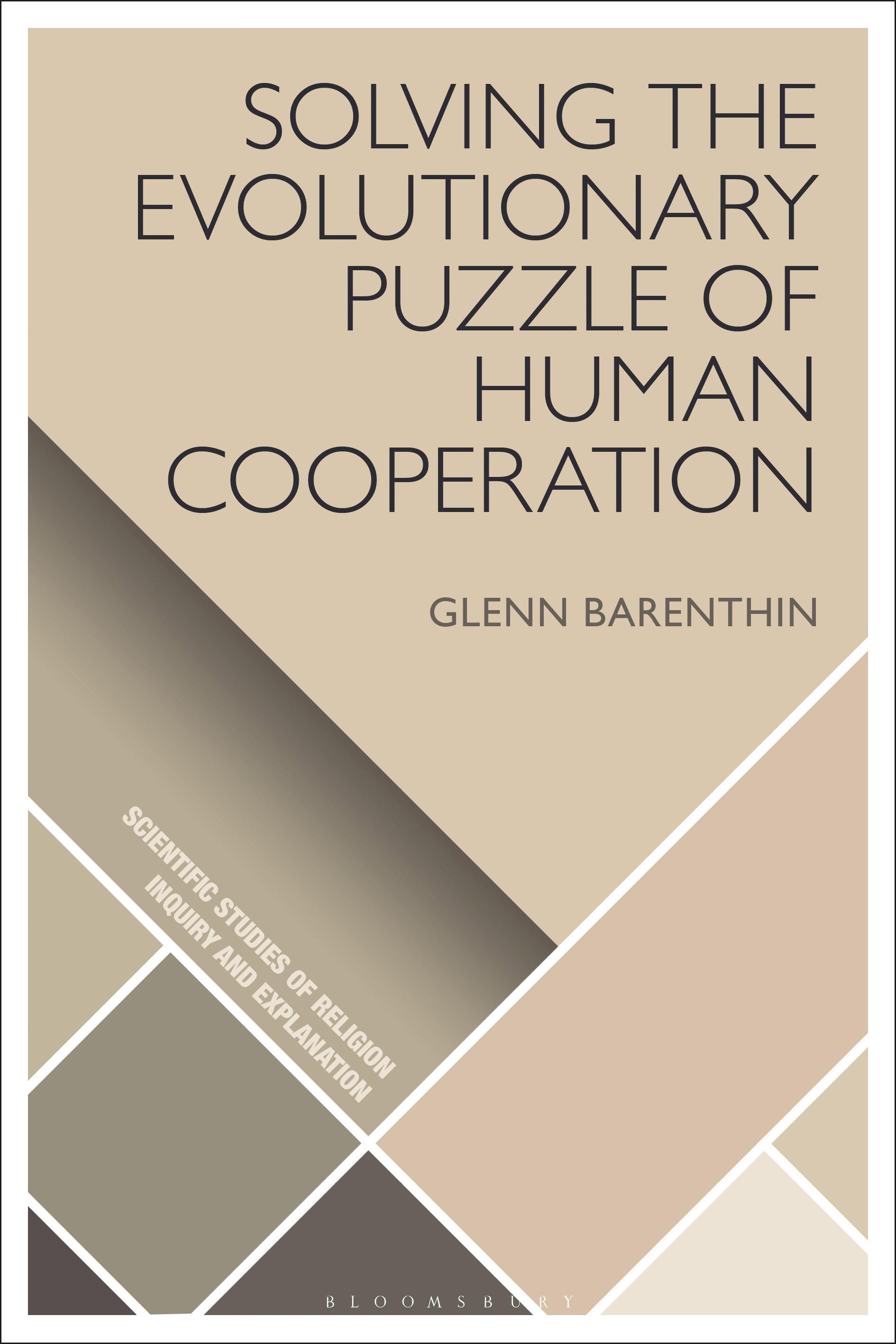
In this book, Glenn Barenthin provides a new solution to a key question in the cognitive and evolutionary study of religion: why do humans cooperate?
What led humans, uniquely among animals, to have large-scale civilizations with unprecedented cooperation? One explanation, propagated by the Big God Proponents (BGP), argues that a moralizing God is the crucial motivator for the pro-social behaviour necessary for large scale civilization. To explore this idea, Barenthin provides a critical assessment of the evidence provided by the BGP, and also discusses the place of God in our moral thinking.
However, using evidence from anthropology, history, cognitive science, psychology and game theory, Barenthin presents a new theory: that the evolutionary pressures faced by our forebears paved the way for emerging humans to engage in what he terms 'thin cooperation'. This type of cooperation requires individuals to comprehend the reasons for their actions, and it is often done with others in mind. Finally, Barenthin argues that humans also have the capacity for 'thick cooperation', which is made possible by those fighting for the rights of strangers in an attempt to make the world a fairer place for a greater number of people.
What led humans, uniquely among animals, to have large-scale civilizations with unprecedented cooperation? One explanation, propagated by the Big God Proponents (BGP), argues that a moralizing God is the crucial motivator for the pro-social behaviour necessary for large scale civilization. To explore this idea, Barenthin provides a critical assessment of the evidence provided by the BGP, and also discusses the place of God in our moral thinking.
However, using evidence from anthropology, history, cognitive science, psychology and game theory, Barenthin presents a new theory: that the evolutionary pressures faced by our forebears paved the way for emerging humans to engage in what he terms 'thin cooperation'. This type of cooperation requires individuals to comprehend the reasons for their actions, and it is often done with others in mind. Finally, Barenthin argues that humans also have the capacity for 'thick cooperation', which is made possible by those fighting for the rights of strangers in an attempt to make the world a fairer place for a greater number of people.
Strony: 248
Kategoria: Samhällsvetenskap
e-ISBN: 9781350106772
Waga przesyłki: 1.2 kg
Wysyłka w ciągu: 1-2 dni
Płać wygodnie kartą, Klarną, Apple Pay lub Google Pay. Nie jesteś zadowolony? Zawsze masz 14-dniową gwarancję zwrotu pieniędzy. Więcej przeczytasz w naszych warunkach. Masz pytania? Napisz do nas na hello@memmo.org.
Memmo ułatwia naukę – gdziekolwiek jesteś na świecie. U nas znajdziesz podręczniki i sprytne narzędzia do nauki w jednym miejscu: streszczenia, quizy, podcasty i fiszki. A do tego Ted, Twój kumpel do nauki, który odpowie na wszystko, co Cię nurtuje. Ponad 50 000 studentów już tu się uczy – stworzone, byś uczył się szybciej i mniej stresował.