
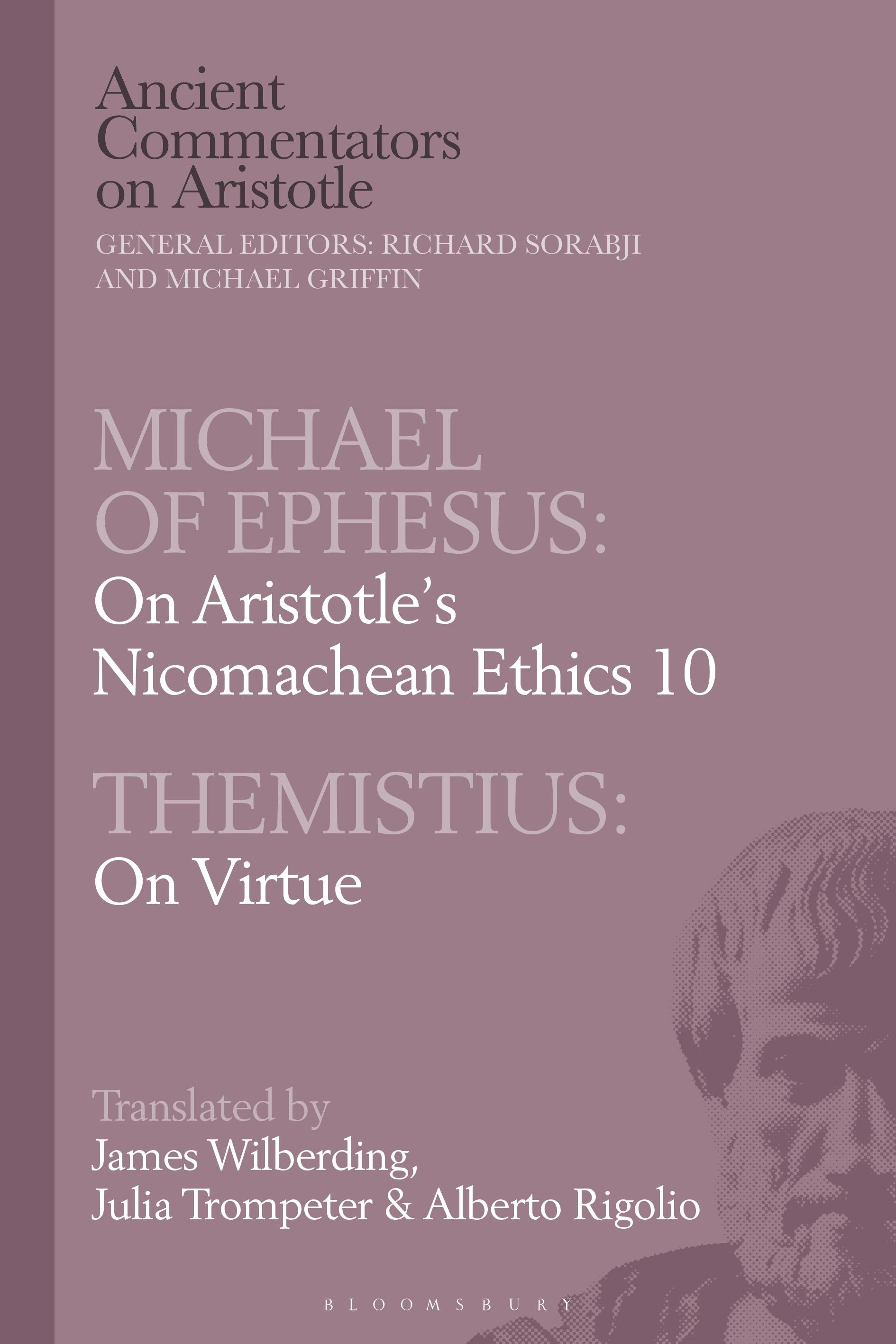
The two texts translated in this volume of the Ancient Commentators on Aristotle series both compare the happiness of the practical life, which is subject to the hazards of fortune, with the happiness of the life of philosophical contemplation, which is subject to fewer needs.
The first is Michael of Ephesus' 12th-century commentary on Book 10 of Aristotle's Nicomachean Ethics, written (alongside his commentaries on Books 5 and 9) to fill gaps in the Neoplatonists' commentaries from the 6th century. He recognizes that lives of practicality and philosophy may be combined, and gives his own account of the superiority of the contemplative.
The second is Themistius' text On Virtue, written in the 4th century AD. He was an important teacher and commentator on Aristotle, an orator and leading civil servant in Constantinople. His philosophical oration is here argued to be written in support of the Emperor Julian's insistence against the misuse of free speech by a Cynic Heraclius, who had satirised him. Julian had previously criticised Themistius but here he combines his political and philosophical roles in seeking to mend relations with his former pupil.
The first is Michael of Ephesus' 12th-century commentary on Book 10 of Aristotle's Nicomachean Ethics, written (alongside his commentaries on Books 5 and 9) to fill gaps in the Neoplatonists' commentaries from the 6th century. He recognizes that lives of practicality and philosophy may be combined, and gives his own account of the superiority of the contemplative.
The second is Themistius' text On Virtue, written in the 4th century AD. He was an important teacher and commentator on Aristotle, an orator and leading civil servant in Constantinople. His philosophical oration is here argued to be written in support of the Emperor Julian's insistence against the misuse of free speech by a Cynic Heraclius, who had satirised him. Julian had previously criticised Themistius but here he combines his political and philosophical roles in seeking to mend relations with his former pupil.
Płać wygodnie kartą, Klarną, Apple Pay lub Google Pay. Nie jesteś zadowolony? Zawsze masz 14-dniową gwarancję zwrotu pieniędzy. Więcej przeczytasz w naszych warunkach. Masz pytania? Napisz do nas na hello@memmo.org.
Memmo ułatwia naukę – gdziekolwiek jesteś na świecie. U nas znajdziesz podręczniki i sprytne narzędzia do nauki w jednym miejscu: streszczenia, quizy, podcasty i fiszki. A do tego Ted, Twój kumpel do nauki, który odpowie na wszystko, co Cię nurtuje. Ponad 50 000 studentów już tu się uczy – stworzone, byś uczył się szybciej i mniej stresował.