
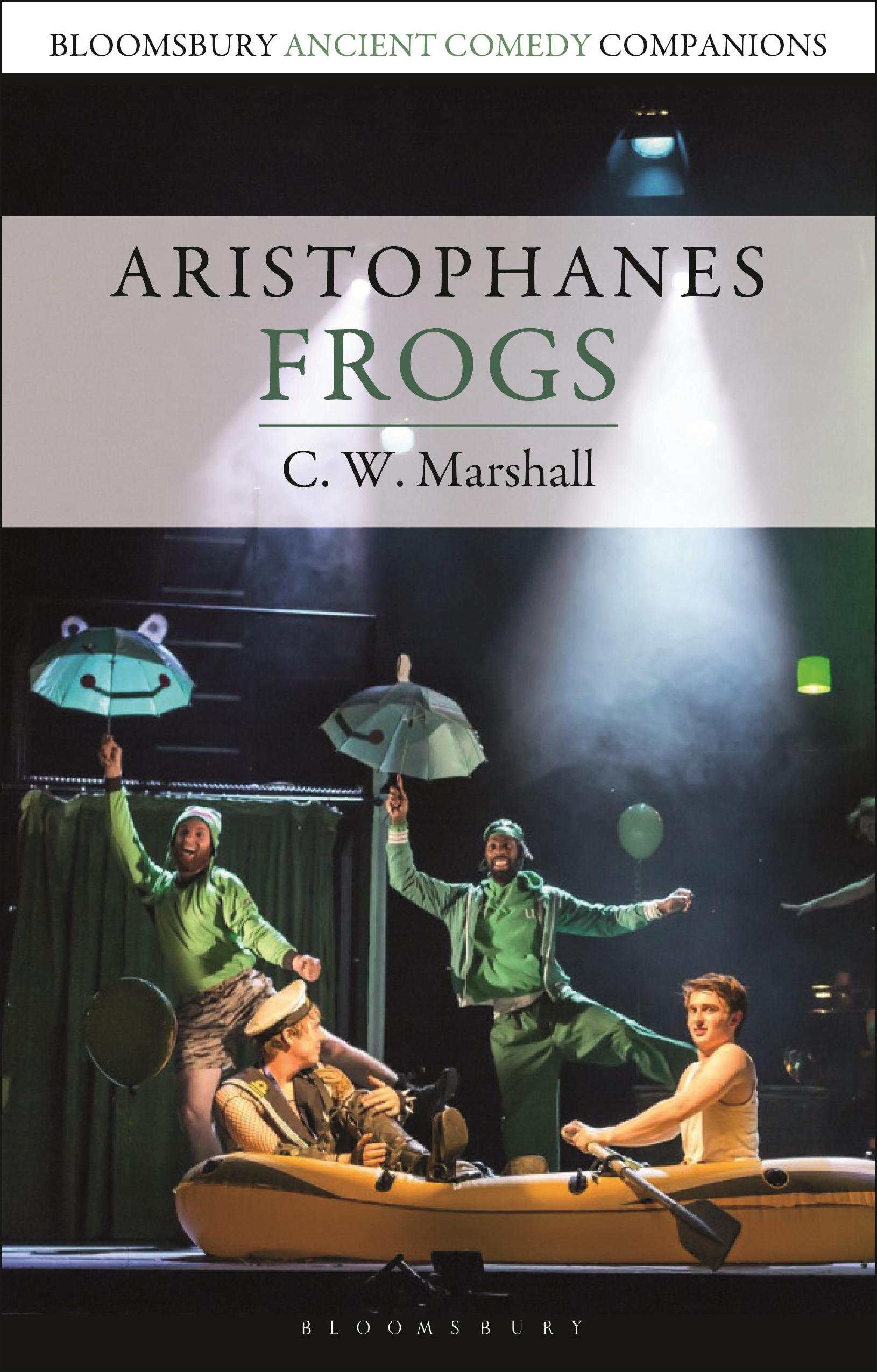
A comedy about tragedy and a play about playmaking, Aristophanes' Frogs (405 BCE) is perhaps the most popular of ancient comedies. This new introduction guides students through the play, its themes and contemporary contexts, and its reception history. Frogs offers sustained engagement with the Athenian literary scene, with the politics of Athens at the end of the Peloponnesian War, and with the religious understanding of the fifth-century city. It presents the earliest direct criticism of theatre and a detailed description of the Underworld, and also dramatizes the place of Mystery cults in the religious life of Athens and shows the political concerns that galvanized the citizens.
It is also genuinely funny, showcasing a range of comic techniques, including literary and musical parody, political invective, grotesque distortion, wordplay, prop comedy, and funny costumes. Frogs has inspired literary works by Henry Fielding, George Bernard Shaw, and Tom Stoppard.
This book explores all of these features in a series of short chapters designed to be accessible to a new reader of ancient comedy. It proceeds linearly through the play, addressing a range of issues, but paying particular attention to stagecraft and performance. It also offers a bold new interpretation of the play, suggesting that the action of Frogs was not the first time Euripides and Aeschylus had competed against each other.
It is also genuinely funny, showcasing a range of comic techniques, including literary and musical parody, political invective, grotesque distortion, wordplay, prop comedy, and funny costumes. Frogs has inspired literary works by Henry Fielding, George Bernard Shaw, and Tom Stoppard.
This book explores all of these features in a series of short chapters designed to be accessible to a new reader of ancient comedy. It proceeds linearly through the play, addressing a range of issues, but paying particular attention to stagecraft and performance. It also offers a bold new interpretation of the play, suggesting that the action of Frogs was not the first time Euripides and Aeschylus had competed against each other.
Płać wygodnie kartą, Klarną, Apple Pay lub Google Pay. Nie jesteś zadowolony? Zawsze masz 14-dniową gwarancję zwrotu pieniędzy. Więcej przeczytasz w naszych warunkach. Masz pytania? Napisz do nas na hello@memmo.org.
Memmo ułatwia naukę – gdziekolwiek jesteś na świecie. U nas znajdziesz podręczniki i sprytne narzędzia do nauki w jednym miejscu: streszczenia, quizy, podcasty i fiszki. A do tego Ted, Twój kumpel do nauki, który odpowie na wszystko, co Cię nurtuje. Ponad 50 000 studentów już tu się uczy – stworzone, byś uczył się szybciej i mniej stresował.