
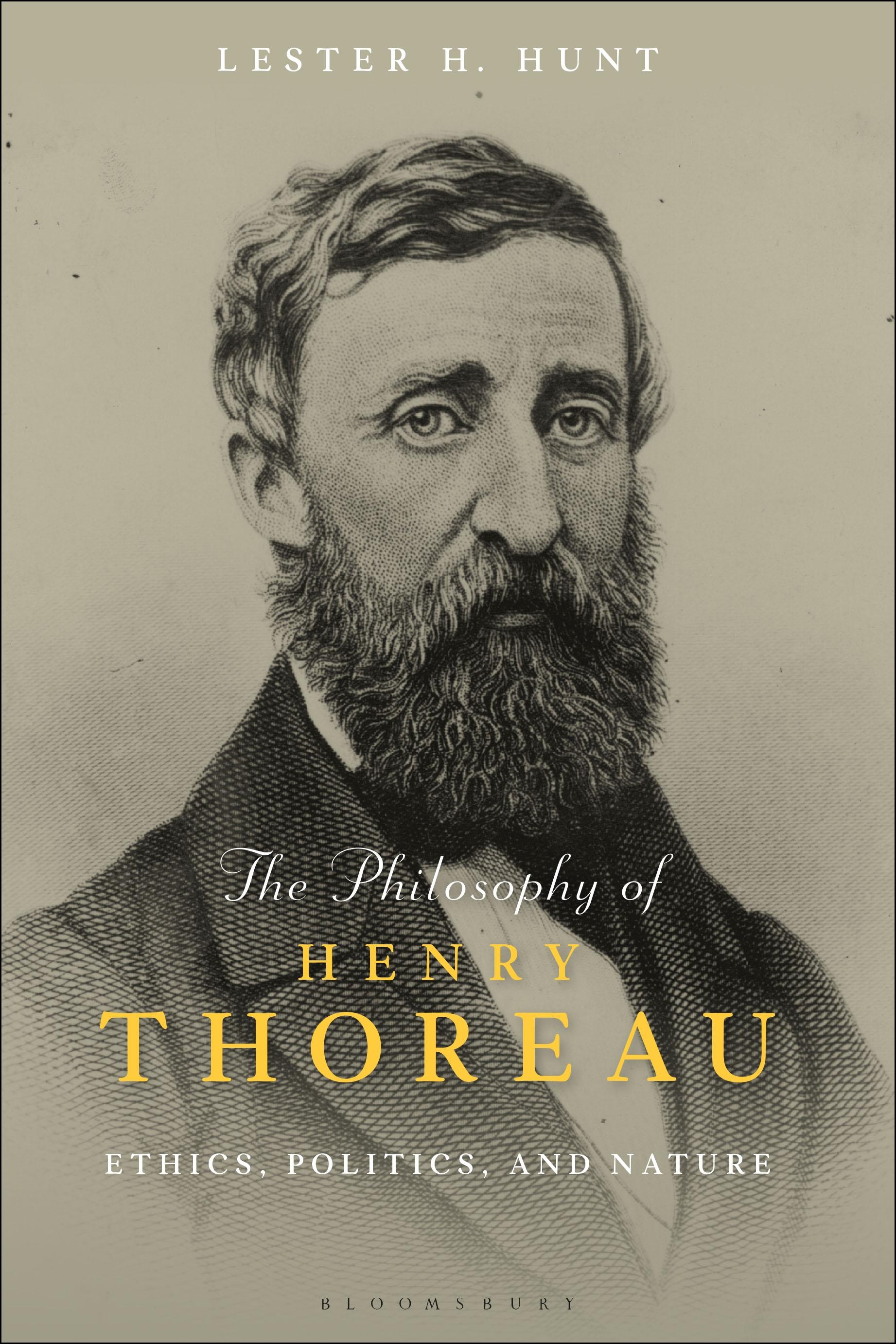
Henry Thoreau is widely considered to be one of the greatest nature writers, among whose best-known works are Walden and Walking. In this book, Lester Hunt shows that his writings have a compelling philosophical dimension as well.
Thoreau seldom argues for his ideas the way other philosophers do. Rather than setting up proofs designed to trap the reader into agreeing with him, he challenges the reader – by means of narratives, jokes, questions, and paradoxes -- to recognize possibilities previously unknown and unexplored.
Thoreau's own explorations led him to several distinctively philosophical theories: an intuitionist metaethics, an ethics based on virtue and self-realization, a politics that is fundamentally individualist and anarchist, and a secular religion in which nature is pre-eminent.
Thoreau seldom argues for his ideas the way other philosophers do. Rather than setting up proofs designed to trap the reader into agreeing with him, he challenges the reader – by means of narratives, jokes, questions, and paradoxes -- to recognize possibilities previously unknown and unexplored.
Thoreau's own explorations led him to several distinctively philosophical theories: an intuitionist metaethics, an ethics based on virtue and self-realization, a politics that is fundamentally individualist and anarchist, and a secular religion in which nature is pre-eminent.
Płać wygodnie kartą, Klarną, Apple Pay lub Google Pay. Nie jesteś zadowolony? Zawsze masz 14-dniową gwarancję zwrotu pieniędzy. Więcej przeczytasz w naszych warunkach. Masz pytania? Napisz do nas na hello@memmo.org.
Memmo ułatwia naukę – gdziekolwiek jesteś na świecie. U nas znajdziesz podręczniki i sprytne narzędzia do nauki w jednym miejscu: streszczenia, quizy, podcasty i fiszki. A do tego Ted, Twój kumpel do nauki, który odpowie na wszystko, co Cię nurtuje. Ponad 50 000 studentów już tu się uczy – stworzone, byś uczył się szybciej i mniej stresował.