
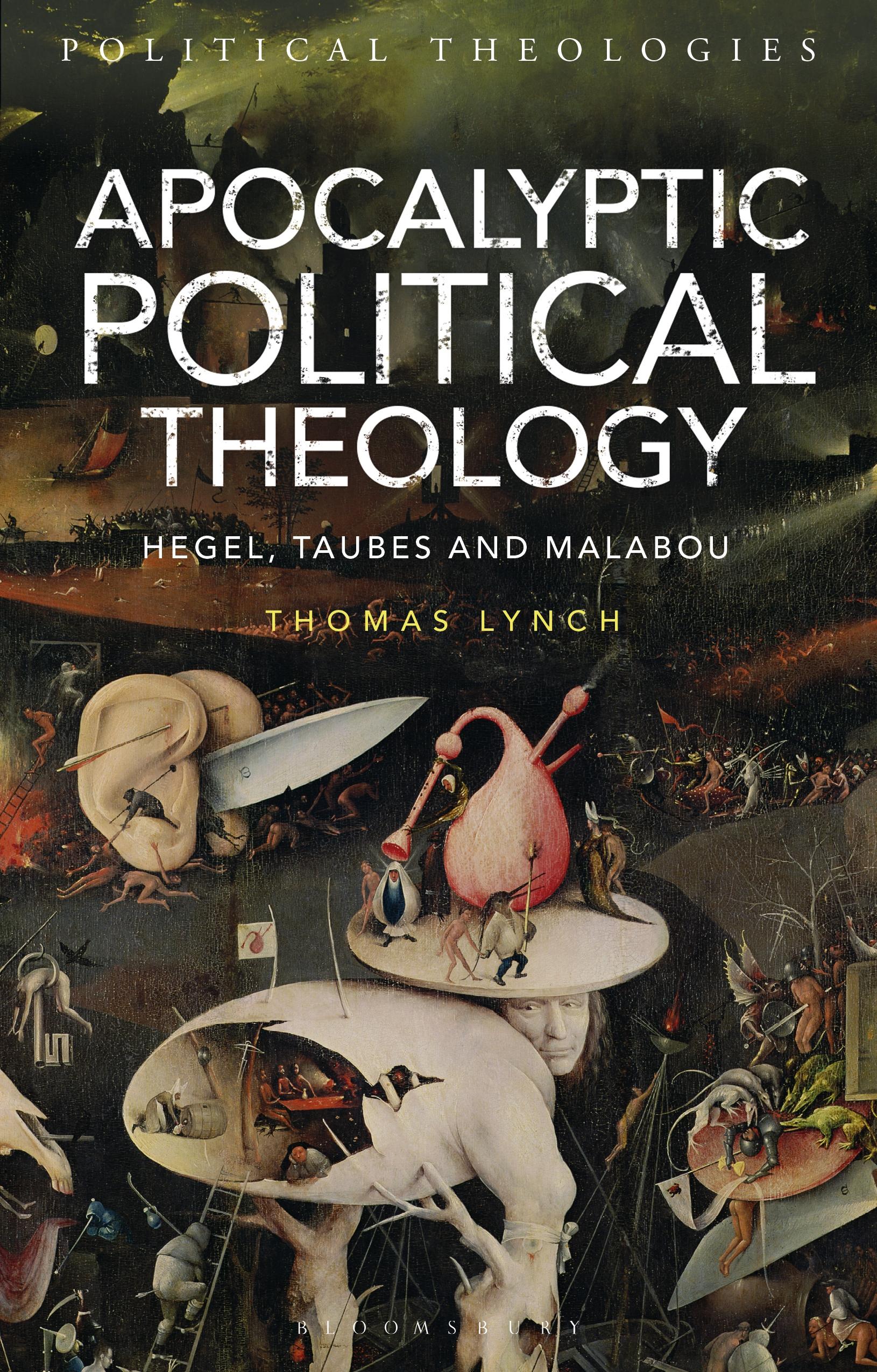
Hegel's philosophy of religion contains an implicit political theology. When viewed in connection with his wider work on subjectivity, history and politics, this political theology is a resource for apocalyptic thinking. In a world of climate change, inequality, oppressive gender roles and racism, Hegel can be used to theorise the hope found in the end of that world.
Histories of apocalyptic thinking draw a line connecting the medieval prophet Joachim of Fiore and Marx. This line passes through Hegel, who transforms the relationship between philosophy and theology by philosophically employing theological concepts to critique the world. Jacob Taubes provides an example of this Hegelian political theology, weaving Christianity, Judaism and philosophy to develop an apocalypticism that is not invested in the world. Taubes awaits the end of the world knowing that apocalyptic destruction is also a form of creation. Catherine Malabou discusses this relationship between destruction and creation in terms of plasticity. Using plasticity to reformulate apocalypticism allows for a form of apocalyptic thinking that is immanent and materialist.
Together Hegel, Taubes and Malabou provide the resources for thinking about why the world should end. The resulting apocalyptic pessimism is not passive, but requires an active refusal of the world.
Histories of apocalyptic thinking draw a line connecting the medieval prophet Joachim of Fiore and Marx. This line passes through Hegel, who transforms the relationship between philosophy and theology by philosophically employing theological concepts to critique the world. Jacob Taubes provides an example of this Hegelian political theology, weaving Christianity, Judaism and philosophy to develop an apocalypticism that is not invested in the world. Taubes awaits the end of the world knowing that apocalyptic destruction is also a form of creation. Catherine Malabou discusses this relationship between destruction and creation in terms of plasticity. Using plasticity to reformulate apocalypticism allows for a form of apocalyptic thinking that is immanent and materialist.
Together Hegel, Taubes and Malabou provide the resources for thinking about why the world should end. The resulting apocalyptic pessimism is not passive, but requires an active refusal of the world.
Strony: 216
Kategoria: Religion & Teologi
e-ISBN: 9781350064751
Waga przesyłki: 1.2 kg
Wysyłka w ciągu: 1-2 dni
Płać wygodnie kartą, Klarną, Apple Pay lub Google Pay. Nie jesteś zadowolony? Zawsze masz 14-dniową gwarancję zwrotu pieniędzy. Więcej przeczytasz w naszych warunkach. Masz pytania? Napisz do nas na hello@memmo.org.
Memmo ułatwia naukę – gdziekolwiek jesteś na świecie. U nas znajdziesz podręczniki i sprytne narzędzia do nauki w jednym miejscu: streszczenia, quizy, podcasty i fiszki. A do tego Ted, Twój kumpel do nauki, który odpowie na wszystko, co Cię nurtuje. Ponad 50 000 studentów już tu się uczy – stworzone, byś uczył się szybciej i mniej stresował.