
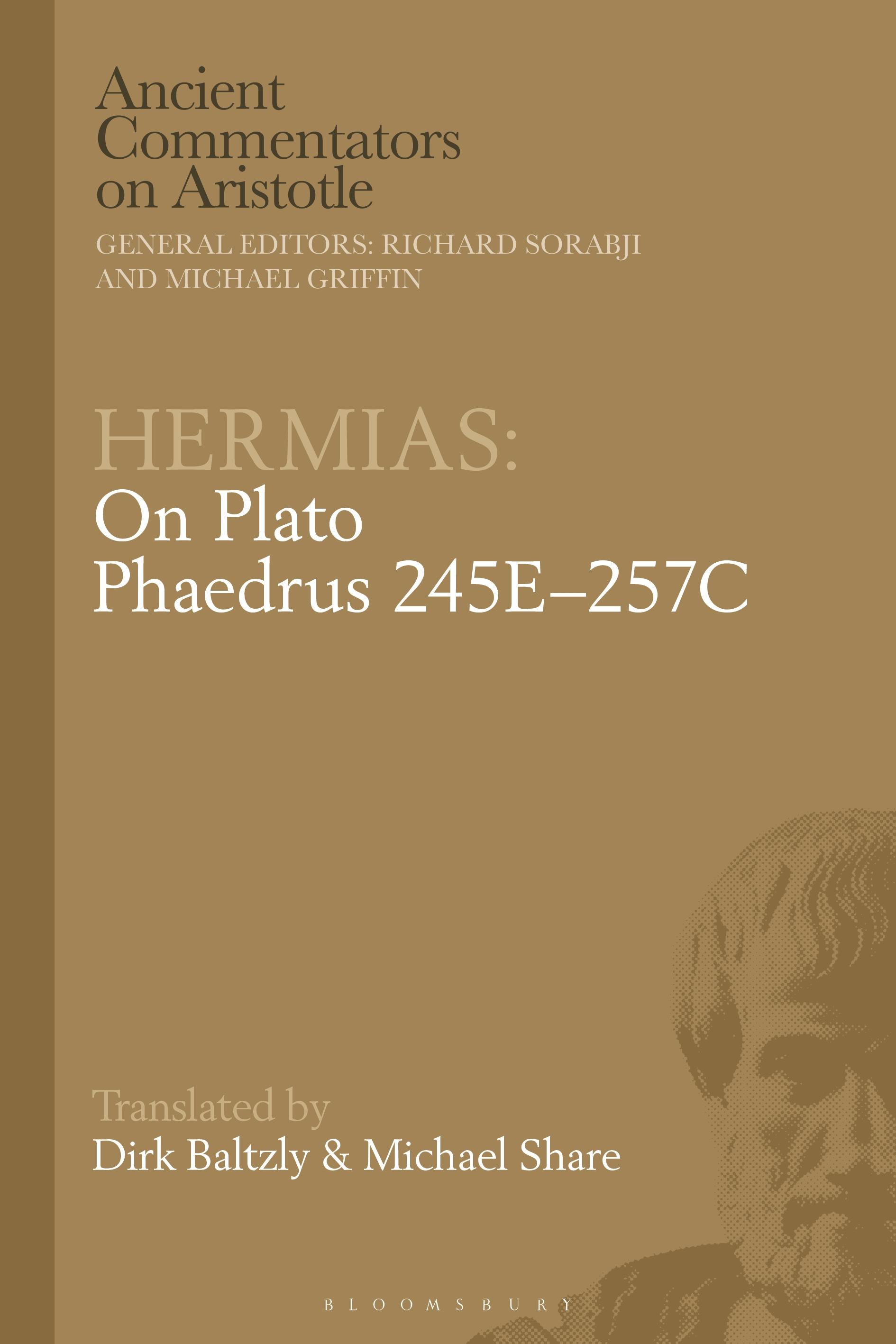
This commentary records, through notes taken by Hermias, Syrianus' seminar on Plato's Phaedrus, one of the world's most influential celebrations of erotic beauty and love. It is the only Neoplatonic commentary on Plato's Phaedrus to have survived in its entirety. Further interest comes from the recorded interventions by Syrianus' pupils - including those by Proclus, his eventual successor as head of the Athenian school, who went on to teach Hermias' father, Ammonius.
The second of two volumes of Hermias' commentary, the chapters translated here begin with a discussion of how the discarnate soul is visualised as a winged chariot team whose charioteer may gain some glimpse of beauty itself, which can explain subsequent erotic longing. This volume provides a translation is accompanied by explanatory notes, an introduction detailing the significance and context of the treatise and a scholarly apparatus including multiple indexes, glossaries and a bibliography.
The second of two volumes of Hermias' commentary, the chapters translated here begin with a discussion of how the discarnate soul is visualised as a winged chariot team whose charioteer may gain some glimpse of beauty itself, which can explain subsequent erotic longing. This volume provides a translation is accompanied by explanatory notes, an introduction detailing the significance and context of the treatise and a scholarly apparatus including multiple indexes, glossaries and a bibliography.
Płać wygodnie kartą, Klarną, Apple Pay lub Google Pay. Nie jesteś zadowolony? Zawsze masz 14-dniową gwarancję zwrotu pieniędzy. Więcej przeczytasz w naszych warunkach. Masz pytania? Napisz do nas na hello@memmo.org.
Memmo ułatwia naukę – gdziekolwiek jesteś na świecie. U nas znajdziesz podręczniki i sprytne narzędzia do nauki w jednym miejscu: streszczenia, quizy, podcasty i fiszki. A do tego Ted, Twój kumpel do nauki, który odpowie na wszystko, co Cię nurtuje. Ponad 50 000 studentów już tu się uczy – stworzone, byś uczył się szybciej i mniej stresował.