
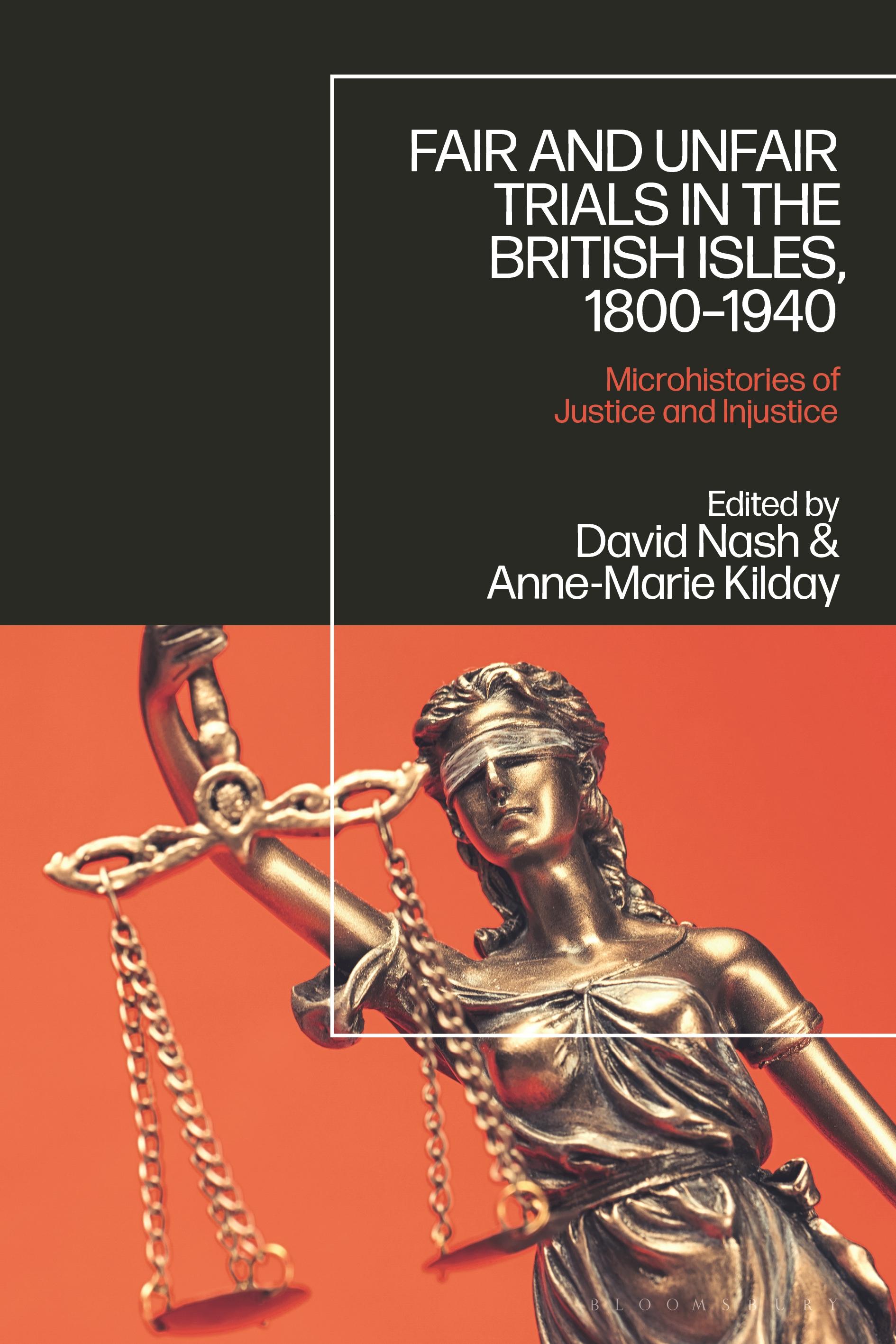
Adopting a microhistory approach, Fair and Unfair Trials in the British Isles, 1800-1940 provides an in-depth examination of the evolution of the modern justice system. Drawing upon criminal cases and trials from England, Scotland, and Ireland, the book examines the errors, procedural systems, and the ways in which adverse influences of social and cultural forces impacted upon individual instances of justice.
The book investigates several case studies of both justice and injustice which prompted the development of forensic toxicology, the implementation of state propaganda and an increased interest in press sensationalism. One such case study considers the trial of William Sheen, who was prosecuted and later acquitted of the murder of his infant child at the Old Baily in 1827, an extraordinary miscarriage of justice that prompted outrage amongst the general public. Other case studies include trials for treason, theft, obscenity and blasphemy. Nash and Kilday root each of these cases within their relevant historical, cultural, and political contexts, highlighting changing attitudes to popular culture, public criticism, protest and activism as significant factors in the transformation of the criminal trial and the British judicial system as a whole.
Drawing upon a wealth of primary sources, including legal records, newspaper articles and photographs, this book provides a unique insight into the evolution of modern criminal justice in Britain.
The book investigates several case studies of both justice and injustice which prompted the development of forensic toxicology, the implementation of state propaganda and an increased interest in press sensationalism. One such case study considers the trial of William Sheen, who was prosecuted and later acquitted of the murder of his infant child at the Old Baily in 1827, an extraordinary miscarriage of justice that prompted outrage amongst the general public. Other case studies include trials for treason, theft, obscenity and blasphemy. Nash and Kilday root each of these cases within their relevant historical, cultural, and political contexts, highlighting changing attitudes to popular culture, public criticism, protest and activism as significant factors in the transformation of the criminal trial and the British judicial system as a whole.
Drawing upon a wealth of primary sources, including legal records, newspaper articles and photographs, this book provides a unique insight into the evolution of modern criminal justice in Britain.
Płać wygodnie kartą, Klarną, Apple Pay lub Google Pay. Nie jesteś zadowolony? Zawsze masz 14-dniową gwarancję zwrotu pieniędzy. Więcej przeczytasz w naszych warunkach. Masz pytania? Napisz do nas na hello@memmo.org.
Memmo ułatwia naukę – gdziekolwiek jesteś na świecie. U nas znajdziesz podręczniki i sprytne narzędzia do nauki w jednym miejscu: streszczenia, quizy, podcasty i fiszki. A do tego Ted, Twój kumpel do nauki, który odpowie na wszystko, co Cię nurtuje. Ponad 50 000 studentów już tu się uczy – stworzone, byś uczył się szybciej i mniej stresował.