
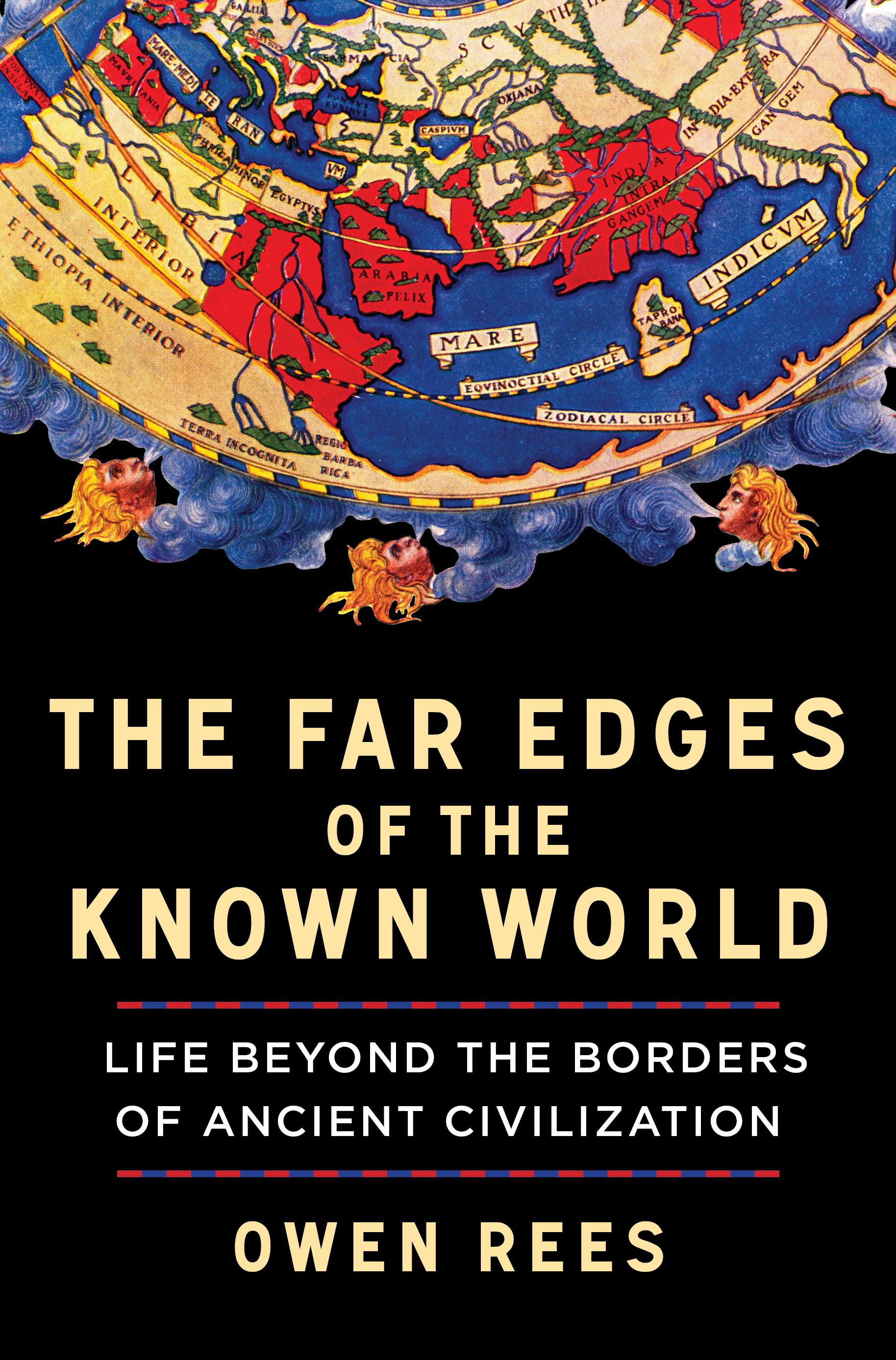
A revisionist history of the ancient world that shifts our focus from Athens and Rome to the long-ignored societies on the borders.
When Ovid was exiled from Rome to a border town on the Black Sea, he despaired at his bleak and barbarous new surroundings. Like many Greeks and Romans, Ovid thought the outer reaches of his world was where civilization ceased to exist. Our own fascination with the Greek and Roman world has for centuries followed this perspective, shrouding cultures at the far reaches of their influence in myth. But what was it like to live on the edges of these empires, on the boundaries of the known world?
In The Far Edges of the Known World, ancient historian Owen Rees draws on archaeological excavations to reveal these so-called borders as thriving multicultural spaces. This is where the boundaries of “civilized” and “barbarian” began to dissipate; where traditional rules didn’t always apply; where different cultures intermarried; and where nomadic tribes built their own cities. Transporting readers through historical spheres of influence, Rees journeys from the sandy caravan routes of Morocco to the freezing winters of the northern Black Sea, from the Red River valley of Vietnam to the rain-lashed forts south of Hadrian’s Wall. Beyond well-remembered figures like Cleopatra and Caesar, Rees introduces us to the everyday people who called the borderlands home. We meet an enterprising sex worker in Egypt’s Naucratis, gambling soldiers at Hadrian’s Wall in England, a Greco-Buddhist monk hailing from the Ganges, and more. As Rees shows, exchanges of trends, ideas, even religious practices were happening all over the world.
The Far Edges of the Known World offers us a vibrant new lens to see and understand the ancient world.
Płać wygodnie kartą, Klarną, Apple Pay lub Google Pay. Nie jesteś zadowolony? Zawsze masz 14-dniową gwarancję zwrotu pieniędzy. Więcej przeczytasz w naszych warunkach. Masz pytania? Napisz do nas na hello@memmo.org.
Memmo ułatwia naukę – gdziekolwiek jesteś na świecie. U nas znajdziesz podręczniki i sprytne narzędzia do nauki w jednym miejscu: streszczenia, quizy, podcasty i fiszki. A do tego Ted, Twój kumpel do nauki, który odpowie na wszystko, co Cię nurtuje. Ponad 50 000 studentów już tu się uczy – stworzone, byś uczył się szybciej i mniej stresował.