
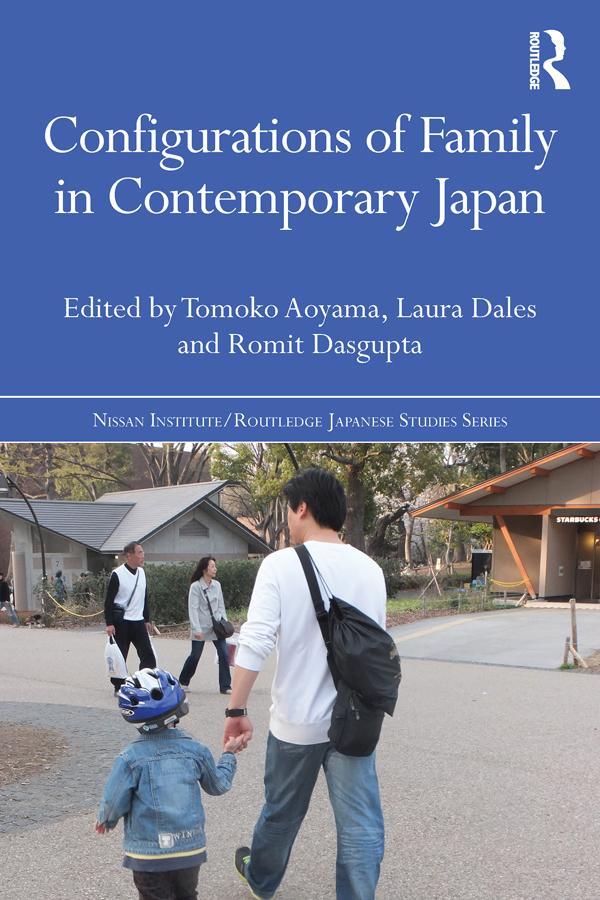
The middle-class nuclear family model has long dominated discourses on family in Japan. Yet there have always been multiple configurations of family and kinship, which, in the context of significant socio-economic and demographic shifts since the 1990s, have become increasingly visible in public discourse. This book explores the meanings and practices of "family" in Japan, and brings together research by scholars of literature, gender studies, media and cultural studies, sociology and anthropology. While the primary focus is the "Japanese" family, it also examines the experience and practice of family beyond the borders of Japan, in such settings as Brazil, Australia, and Bali. The chapters explore key issues such as ageing, single households, non-heterosexual living arrangements and parenting. Moreover, many of the issues addressed, such as the growing diversity of family, the increase in single-person households, and the implications of an ageing society, are applicable to other mature, late-industrial societies.
Employing both multi- and inter-disciplinary approaches, this book combines textual analysis of contemporary television, film, literature, manga, anime and other media with empirical and ethnographic studies of families in Japan and in transnational spaces. As such, it will be of great interest to students and scholars working across a number of fields including Japanese culture and society, sociology of family, gender studies, film and media studies, literature and cultural studies, and gerontology.
Płać wygodnie kartą, Klarną, Apple Pay lub Google Pay. Nie jesteś zadowolony? Zawsze masz 14-dniową gwarancję zwrotu pieniędzy. Więcej przeczytasz w naszych warunkach. Masz pytania? Napisz do nas na hello@memmo.org.
Memmo ułatwia naukę – gdziekolwiek jesteś na świecie. U nas znajdziesz podręczniki i sprytne narzędzia do nauki w jednym miejscu: streszczenia, quizy, podcasty i fiszki. A do tego Ted, Twój kumpel do nauki, który odpowie na wszystko, co Cię nurtuje. Ponad 50 000 studentów już tu się uczy – stworzone, byś uczył się szybciej i mniej stresował.