
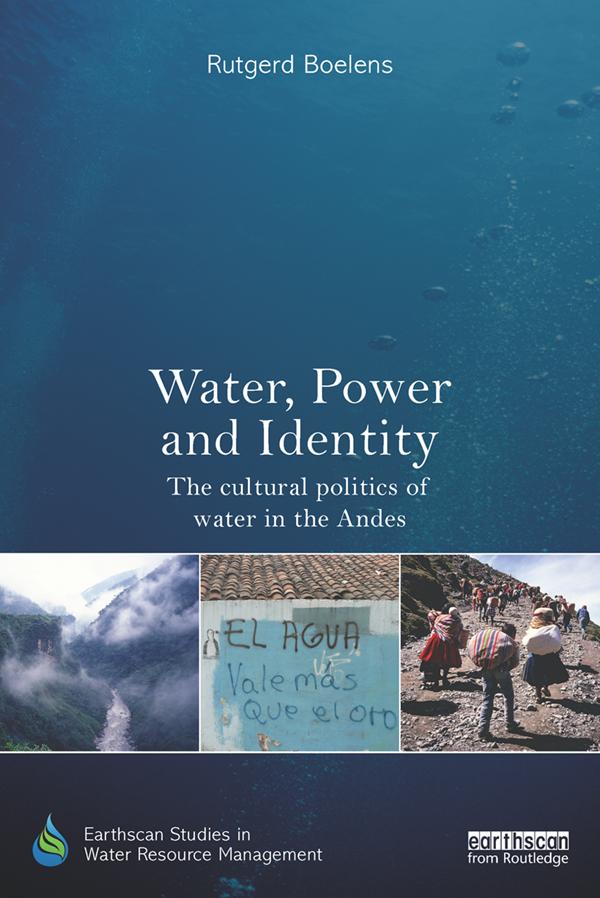
This book addresses two major issues in natural resource management and political ecology: the complex conflicting relationship between communities managing water on the ground and national/global policy-making institutions and elites; and how grassroots defend against encroachment, question the self-evidence of State-/market-based water governance, and confront coercive and participatory boundary policing (‘normal’ vs. ‘abnormal’).
The book examines grassroots building of multi-layered water-rights territories, and State, market and expert networks’ vigorous efforts to reshape these water societies in their own image – seizing resources and/or aligning users, identities and rights systems within dominant frameworks. Distributive and cultural politics entwine. It is shown that attempts to modernize and normalize users through universalized water culture, ‘rational water use’ and de-politicized interventions deepen water security problems rather than alleviating them. However, social struggles negotiate and enforce water rights. User collectives challenge imposed water rights and identities, constructing new ones to strategically acquire water control autonomy and re-moralize their waterscapes.
The author shows that battles for material control include the right to culturally define and politically organize water rights and territories. Andean illustrations from Peru, Ecuador, Bolivia and Chile, from peasant-indigenous life stories to international policy-making, highlight open and subsurface hydro-social networks. They reveal how water justice struggles are political projects against indifference, and that engaging in re-distributive policies and defying ‘truth politics,’ extends context-particular water rights definitions and governance forms.
Płać wygodnie kartą, Klarną, Apple Pay lub Google Pay. Nie jesteś zadowolony? Zawsze masz 14-dniową gwarancję zwrotu pieniędzy. Więcej przeczytasz w naszych warunkach. Masz pytania? Napisz do nas na hello@memmo.org.
Memmo ułatwia naukę – gdziekolwiek jesteś na świecie. U nas znajdziesz podręczniki i sprytne narzędzia do nauki w jednym miejscu: streszczenia, quizy, podcasty i fiszki. A do tego Ted, Twój kumpel do nauki, który odpowie na wszystko, co Cię nurtuje. Ponad 50 000 studentów już tu się uczy – stworzone, byś uczył się szybciej i mniej stresował.