
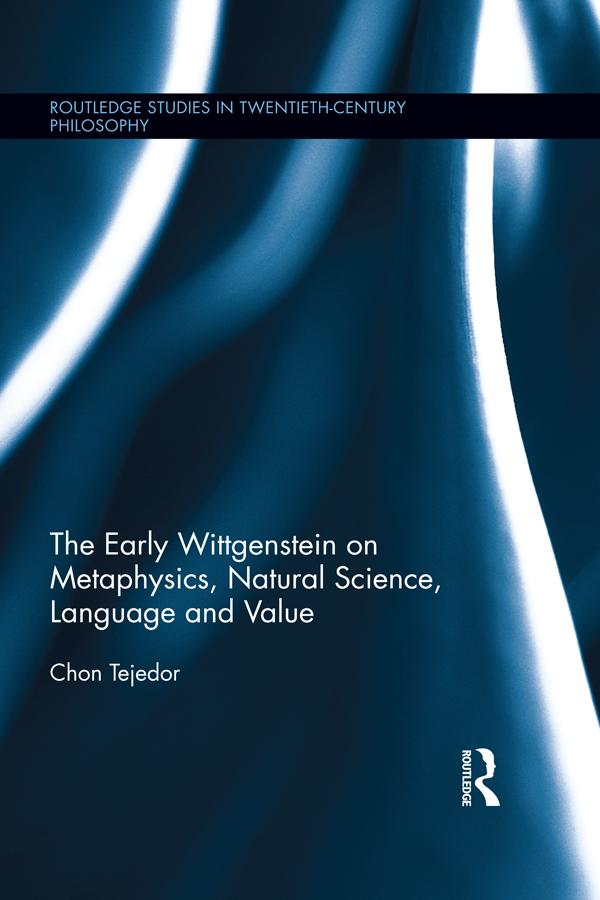
This book advances a reading of Wittgenstein’s Tractatus that moves beyond the main interpretative options of the New Wittgenstein debate. It covers Wittgenstein’s approach to language and logic, as well as other areas unduly neglected in the literature, such as his treatment of metaphysics, the natural sciences and value. Tejedor re-contextualises Wittgenstein’s thinking in these areas, plotting its evolution in his diaries, correspondence and pre-Tractatus texts, and developing a fuller picture of its intellectual background. This broadening of the angle of view is central to the interpretative strategy of her book: only by looking at the Tractatus in this richer light can we address the fundamental questions posed by the New Wittgenstein debate – questions concerning the method of the Tractatus, its approach to nonsense and the continuity in Wittgenstein’s philosophy. Wittgenstein’s early work remains insightful, thought-inspiring and relevant to contemporary philosophy of language and science, metaphysics and ethics. Tejedor’s ground-breaking work ultimately conveys a surprisingly positive message concerning the power for ethical transformation that philosophy can have, when it is understood as an activity aimed at increasing conceptual clarification and awareness.
Płać wygodnie kartą, Klarną, Apple Pay lub Google Pay. Nie jesteś zadowolony? Zawsze masz 14-dniową gwarancję zwrotu pieniędzy. Więcej przeczytasz w naszych warunkach. Masz pytania? Napisz do nas na hello@memmo.org.
Memmo ułatwia naukę – gdziekolwiek jesteś na świecie. U nas znajdziesz podręczniki i sprytne narzędzia do nauki w jednym miejscu: streszczenia, quizy, podcasty i fiszki. A do tego Ted, Twój kumpel do nauki, który odpowie na wszystko, co Cię nurtuje. Ponad 50 000 studentów już tu się uczy – stworzone, byś uczył się szybciej i mniej stresował.