
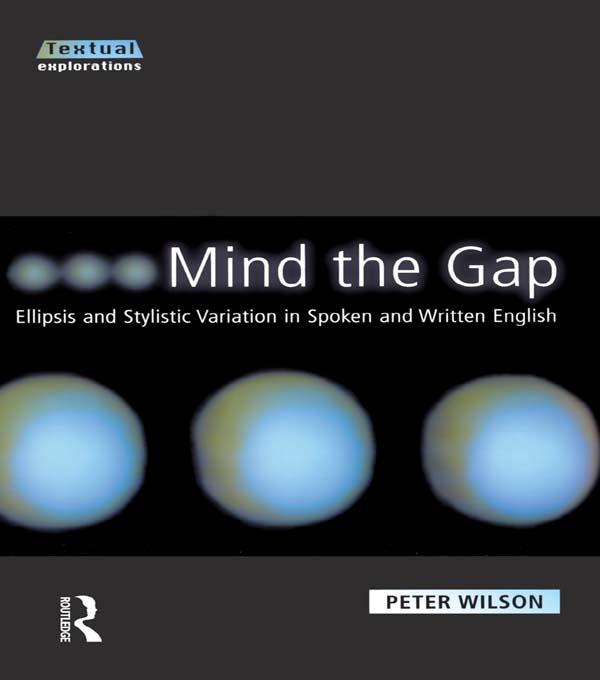
We rarely speak or even write in the complete sentences that are often held to be the ideal form of linguistic communication. Language is, in fact, full of gaps, because speakers and writers operate in contexts which allow bits of language to be understood rather than expressed. This book systematically analyses this inherent gappiness of language, known as ellipsis, and provides an account of the different contexts, both linguistic and situational, which affect its use. Peter Wilson draws on a wide variety of examples of spoken and written English, and both literary and non-literary to present a comprehensive classification of elliptical language that ranges from the conversational fragment and the advertisement to the dialogue of Shakespeare and imagist poetry. Mind the Gap shows how ellipsis is a feature of major structural and stylistic importance to our understanding of spoken and written language, and will be of interest to undergraduate students of linguistics, literature, communication and the interrelations between them..
Płać wygodnie kartą, Klarną, Apple Pay lub Google Pay. Nie jesteś zadowolony? Zawsze masz 14-dniową gwarancję zwrotu pieniędzy. Więcej przeczytasz w naszych warunkach. Masz pytania? Napisz do nas na hello@memmo.org.
Memmo ułatwia naukę – gdziekolwiek jesteś na świecie. U nas znajdziesz podręczniki i sprytne narzędzia do nauki w jednym miejscu: streszczenia, quizy, podcasty i fiszki. A do tego Ted, Twój kumpel do nauki, który odpowie na wszystko, co Cię nurtuje. Ponad 50 000 studentów już tu się uczy – stworzone, byś uczył się szybciej i mniej stresował.