
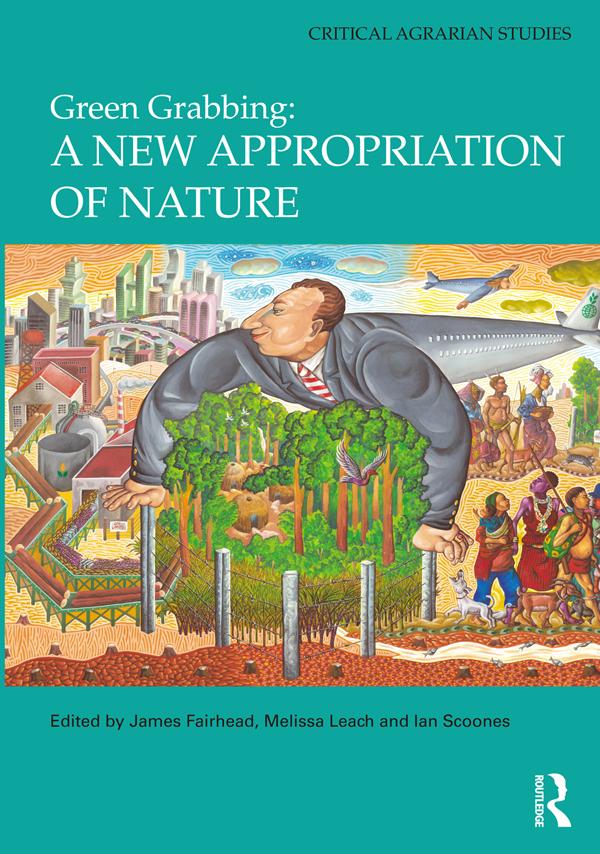
Across the world, ecosystems are for sale. ‘Green grabbing’ – the appropriation of land and resources for environmental ends – is an emerging process of deep and growing significance. A vigorous debate on ‘land grabbing’ already highlights instances where ‘green’ credentials are called upon to justify appropriations of land for food or fuel. Yet in other cases, environmental green agendas are the core drivers and goals of grabs. Green grabs may be drivn by biodiversity conservation, biocarbon sequestration, biofuels, ecosystem services or ecotourism, for example. In some cases theyse agendas involve the wholesale alienation of land, and in others the restructuring of rules and authority in the access, use and management of resources that may have profoundly alienating effects.
Green grabbing builds on well-known histories of colonial and neo-colonial resource alienation in the name of the environment. Yet it involves novel forms of valuation, commodification and markets for pieces and aspects of nature, and an extraordinary new range of actors and alliances. This book draws together seventeen original cases from African, Asian and Latin American settings to ask: To what extent and in what ways do ‘green grabs’ constitute new forms of appropriation of nature? What political and discursive dynamics underpin ‘green grabs’? How and when do appropriations on the ground emerge out of circulations of green capital? What are the implications for ecologies, landscapes and livelihoods? Who is gaining and who is losing? How are agrarian social relations, rights and authority being restructured, and in whose interests?
This book was published as a special issue of the Journal of Peasant Studies.
Płać wygodnie kartą, Klarną, Apple Pay lub Google Pay. Nie jesteś zadowolony? Zawsze masz 14-dniową gwarancję zwrotu pieniędzy. Więcej przeczytasz w naszych warunkach. Masz pytania? Napisz do nas na hello@memmo.org.
Memmo ułatwia naukę – gdziekolwiek jesteś na świecie. U nas znajdziesz podręczniki i sprytne narzędzia do nauki w jednym miejscu: streszczenia, quizy, podcasty i fiszki. A do tego Ted, Twój kumpel do nauki, który odpowie na wszystko, co Cię nurtuje. Ponad 50 000 studentów już tu się uczy – stworzone, byś uczył się szybciej i mniej stresował.