
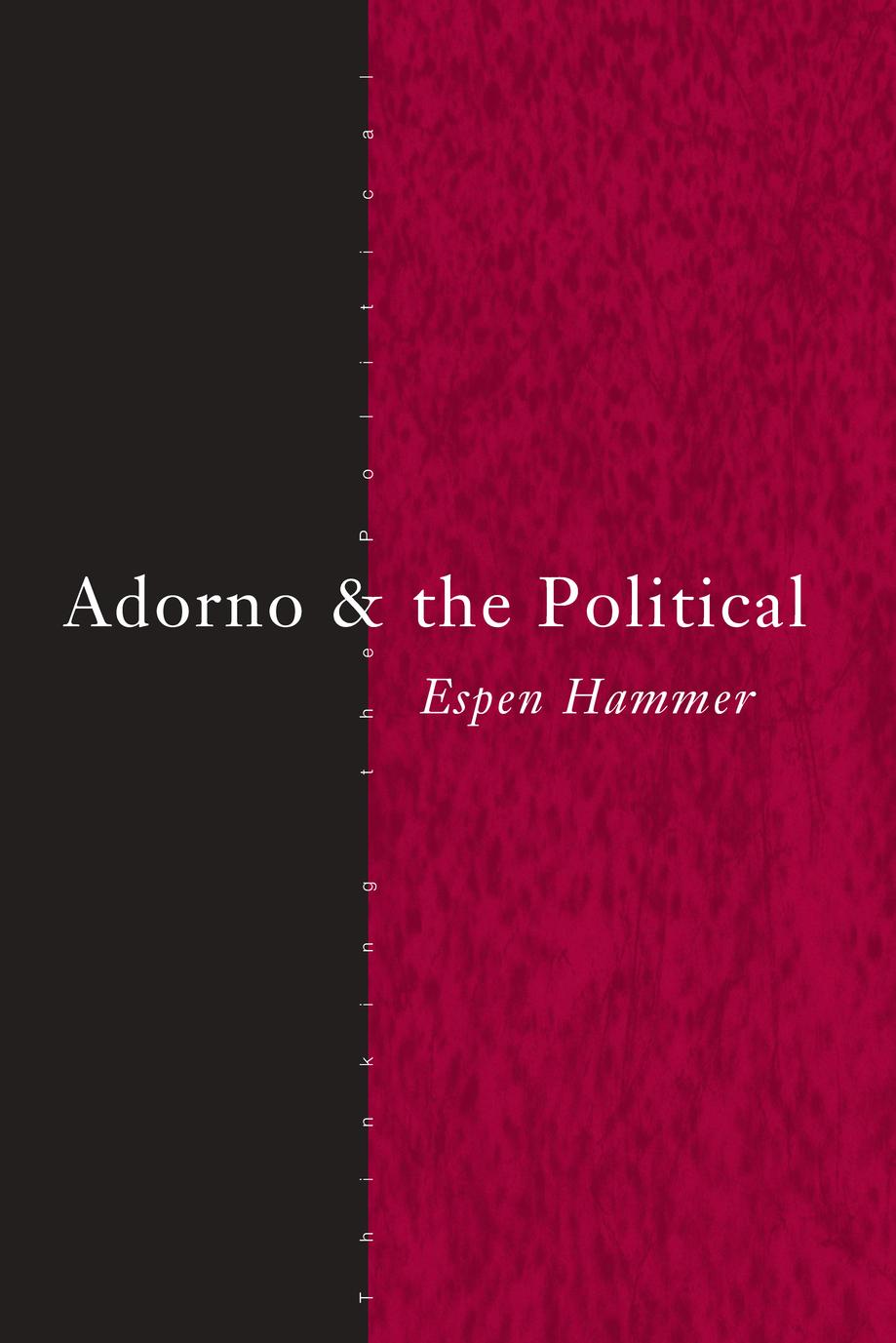
Interest in Theodor W. Adorno continues to grow in the English-speaking world as the significance of his contribution to philosophy, social and cultural theory, as well as aesthetics is increasingly recognized. Espen Hammer’s lucid book is the first to properly analyze the political implications of his work, paying careful attention to Adorno’s work on key thinkers such as Kant, Hegel and Benjamin.
Examining Adorno’s political experiences and assessing his engagement with Marxist as well as liberal theory, Hammer looks at the development of Adorno’s thought as he confronts Fascism and modern mass culture. He then analyzes the political dimension of his philosophical and aesthetic theorizing. By addressing Jürgen Habermas’s influential criticisms, he defends Adorno as a theorist of autonomy, responsibility and democratic plurality. He also discusses Adorno’s relevance to feminist and ecological thinking. As opposed to those who see Adorno as someone who relinquished the political, Hammer’s account shows his reflections to be, on the most fundamental level, politically motivated and deeply engaged.
This invigorating exploration of a major political thinker is a useful introduction to his thought as a whole, and will be of interest to scholars and students in the fields of philosophy, sociology, politics and aesthetics.
Płać wygodnie kartą, Klarną, Apple Pay lub Google Pay. Nie jesteś zadowolony? Zawsze masz 14-dniową gwarancję zwrotu pieniędzy. Więcej przeczytasz w naszych warunkach. Masz pytania? Napisz do nas na hello@memmo.org.
Memmo ułatwia naukę – gdziekolwiek jesteś na świecie. U nas znajdziesz podręczniki i sprytne narzędzia do nauki w jednym miejscu: streszczenia, quizy, podcasty i fiszki. A do tego Ted, Twój kumpel do nauki, który odpowie na wszystko, co Cię nurtuje. Ponad 50 000 studentów już tu się uczy – stworzone, byś uczył się szybciej i mniej stresował.