
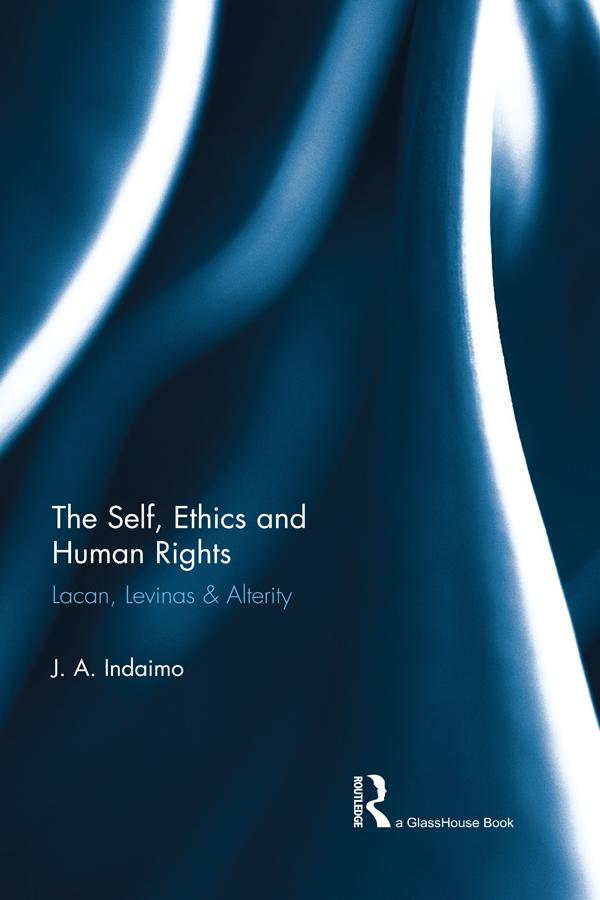
This book explores how the notion of human identity informs the ethical goal of justice in human rights. Within the modern discourse of human rights, the issue of identity has been largely neglected. However, within this discourse lies a conceptualisation of identity that was derived from a particular liberal philosophy about the ‘true nature’ of the isolated, self-determining and rational individual. Rights are thus conceived as something that are owned by each independent self, and that guarantee the exercise of its autonomy. Critically engaging this subject of rights, this book considers how recent shifts in the concept of identity and, more specifically, the critical humanist notion of ‘the other’, provides a basis for re-imagining the foundation of contemporary human rights. Drawing on the work of Jacques Lacan and Emmanuel Levinas, an inter-subjectivity between self and other ‘always already’ marks human identity with an ethical openness. And, this book argues, it is in the shift away from the human self as a ‘sovereign individual’ that human rights have come to reflect a self-identity that is grounded in the potential of an irreducible concern for the other.
Płać wygodnie kartą, Klarną, Apple Pay lub Google Pay. Nie jesteś zadowolony? Zawsze masz 14-dniową gwarancję zwrotu pieniędzy. Więcej przeczytasz w naszych warunkach. Masz pytania? Napisz do nas na hello@memmo.org.
Memmo ułatwia naukę – gdziekolwiek jesteś na świecie. U nas znajdziesz podręczniki i sprytne narzędzia do nauki w jednym miejscu: streszczenia, quizy, podcasty i fiszki. A do tego Ted, Twój kumpel do nauki, który odpowie na wszystko, co Cię nurtuje. Ponad 50 000 studentów już tu się uczy – stworzone, byś uczył się szybciej i mniej stresował.