
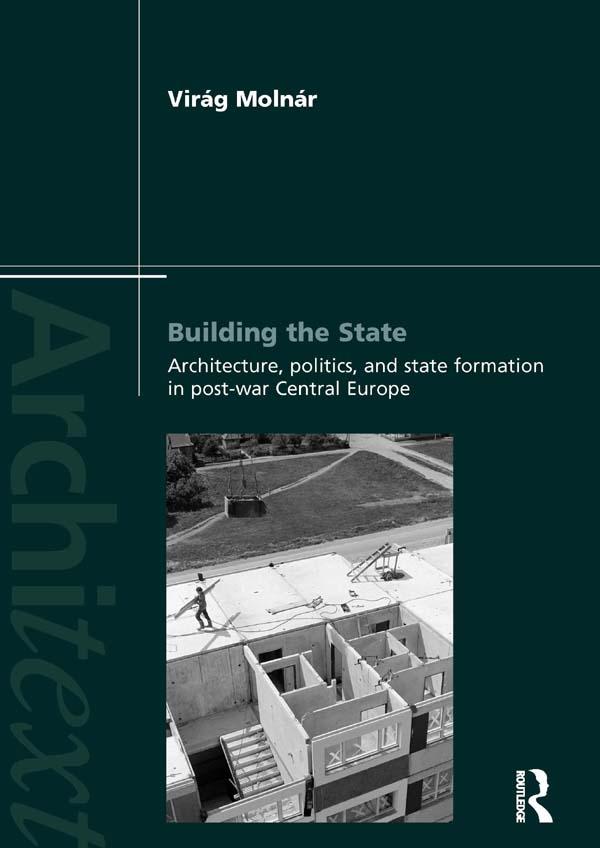
The built environment of former socialist countries is often deemed uniform and drab, an apt reflection of a repressive regime. Building the State peeks behind the grey façade to reveal a colourful struggle over competing meanings of the nation, Europe, modernity and the past in a divided continent.
Examining how social change is closely intertwined with transformations of the built environment, this volume focuses on the relationship between architecture and state politics in postwar Central Europe using examples from Hungary and Germany. Built around four case studies, the book traces how architecture was politically mobilized in the service of social change, first in socialist modernization programs and then in the postsocialist transition.
Building the State does not only offer a comprehensive survey of the diverse political uses of architecture in postwar Central Europe but is the first book to explore how transformations of the built environment can offer a lens into broader processes of state formation and social change.
Płać wygodnie kartą, Klarną, Apple Pay lub Google Pay. Nie jesteś zadowolony? Zawsze masz 14-dniową gwarancję zwrotu pieniędzy. Więcej przeczytasz w naszych warunkach. Masz pytania? Napisz do nas na hello@memmo.org.
Memmo ułatwia naukę – gdziekolwiek jesteś na świecie. U nas znajdziesz podręczniki i sprytne narzędzia do nauki w jednym miejscu: streszczenia, quizy, podcasty i fiszki. A do tego Ted, Twój kumpel do nauki, który odpowie na wszystko, co Cię nurtuje. Ponad 50 000 studentów już tu się uczy – stworzone, byś uczył się szybciej i mniej stresował.