
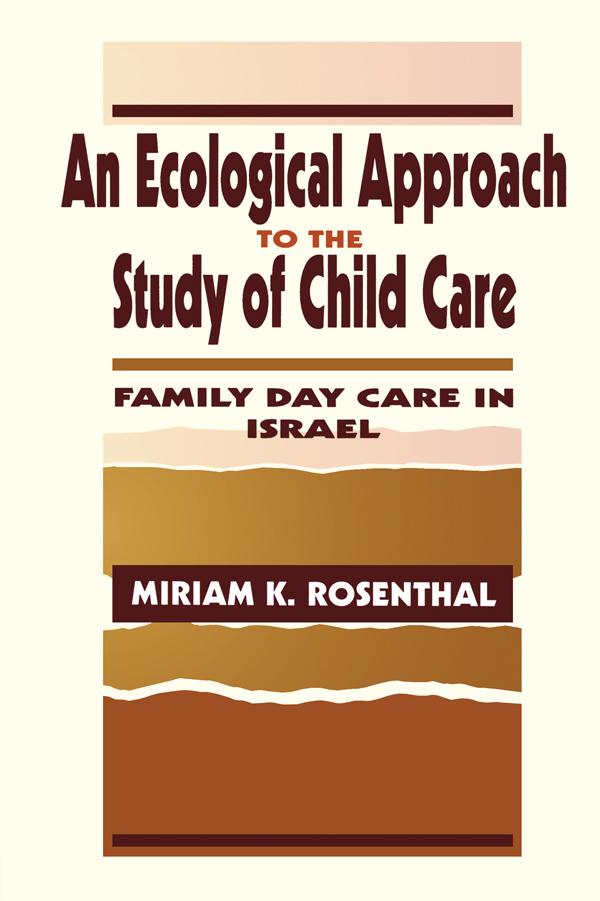
A new type of childhood is experienced these days by many children in industrial societies that provide child care services. The studies summarized in this book stem from a conceptual model based on an ecological approach to the study of development. The family day care system in Israel is presented as a "case study" for the discussion of issues derived from this conceptual model -- issues which are of central concern to the investigation of child care in any society.
This book establishes how historical and socio-economic processes:
*influence the values and goals set by the society for its children, and its social policy concerning child care service;
*are interpreted by parents and early childhood educators;
*relate to different definitions of "quality care."
Unique in its integrative analysis of the daily experiences of infants and toddlers in family day care, this volume examines cultural and social policy issues, family background and parental beliefs, caregiver's background and beliefs, the nature of the child care environment, and the child's personal characteristics.
Its "theoretical" and "applied" orientation is important to researchers interested in the study of out-of-home-care for young children, as well as educators, developmental psychologists, sociologists, and social workers interested in the study of environmental influences on the child development. The ecological model and the applied implications of the study are of special relevance to practitioners in the field of early childhood.
Płać wygodnie kartą, Klarną, Apple Pay lub Google Pay. Nie jesteś zadowolony? Zawsze masz 14-dniową gwarancję zwrotu pieniędzy. Więcej przeczytasz w naszych warunkach. Masz pytania? Napisz do nas na hello@memmo.org.
Memmo ułatwia naukę – gdziekolwiek jesteś na świecie. U nas znajdziesz podręczniki i sprytne narzędzia do nauki w jednym miejscu: streszczenia, quizy, podcasty i fiszki. A do tego Ted, Twój kumpel do nauki, który odpowie na wszystko, co Cię nurtuje. Ponad 50 000 studentów już tu się uczy – stworzone, byś uczył się szybciej i mniej stresował.