
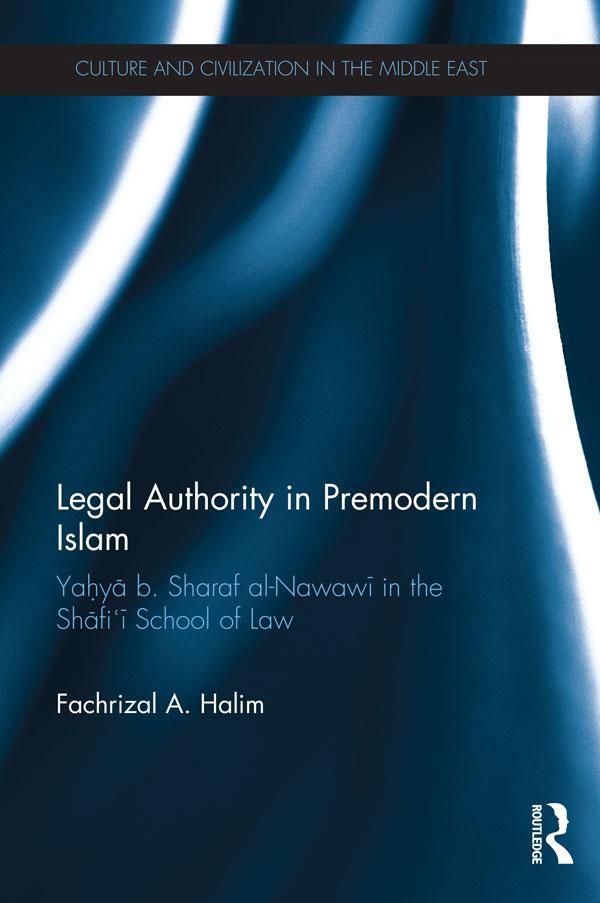
Offering a detailed analysis of the structure of authority in Islamic law, this book focuses on the figure of Yahyā b. Sharaf al-Nawawī, who is regarded as the chief contributor to the legal tradition known as the Shāfi'ī madhhab in traditional Muslim sources, named after Muhammad b. Idrīs al-Shāfi'ī (d. 204/820), the supposed founder of the school of law.
Al-Nawawī’s legal authority is situated in a context where Muslims demanded to stabilize legal disposition that is consistent with the authority of the madhhab, since in premodern Islamic society, the ruling powers did not produce or promulgate law, as was the case in other, monarchic civilizations. Al-Nawawī’s place in the long-term formation of the madhhab is significant for many reasons but for one in particular: his effort in reconciling the two major interpretive communities among the Shāfi'ites, i.e., the tarīqas of the Iraqians and Khurasanians. This book revisits the history of the Shāfi'ī school in the pre-Nawawic era and explores its later development in the post-Nawawic period.
Presenting a comprehensive picture of the structure of authority in Islamic law, specifically within the Shafi’ite legal tradition, this book is an essential resource for students and scholars of Islamic Studies, History and Law.
Płać wygodnie kartą, Klarną, Apple Pay lub Google Pay. Nie jesteś zadowolony? Zawsze masz 14-dniową gwarancję zwrotu pieniędzy. Więcej przeczytasz w naszych warunkach. Masz pytania? Napisz do nas na hello@memmo.org.
Memmo ułatwia naukę – gdziekolwiek jesteś na świecie. U nas znajdziesz podręczniki i sprytne narzędzia do nauki w jednym miejscu: streszczenia, quizy, podcasty i fiszki. A do tego Ted, Twój kumpel do nauki, który odpowie na wszystko, co Cię nurtuje. Ponad 50 000 studentów już tu się uczy – stworzone, byś uczył się szybciej i mniej stresował.