
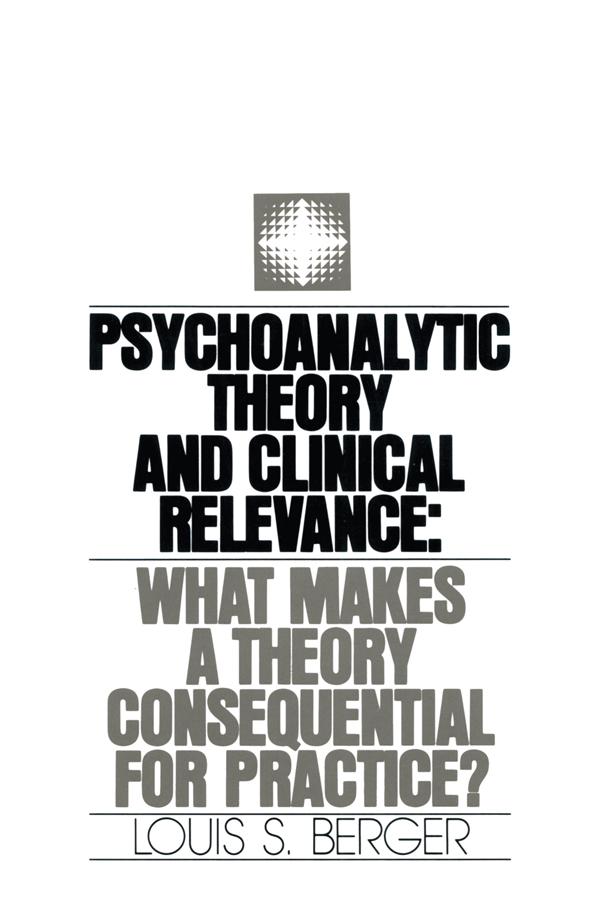
In this provocative contribution to both psychoanalytic theory and the philosophy of science, Louis Berger grapples with the nature of "consequential" theorizing, i.e., theorizing that is relevant to what transpires in clinical practice. By examining analysis as a genre of "state process formalism" - the standard format of scientific theories - Berger demonstrates why contemporary theorizing inevitably fails to explain crucial aspects of practice. His critique, in this respect, pertains both to the formal structure of psychoanalytic explanation and the technical language through which this structure gains expression.
The pragmatic recommendations that issue from this critique are illustrated with respect to a number of perennial problem areas besetting analysis and cognate disciplines. In a discussion that encompases theories of affect, issues in family therapy, the nature of first-language acquisition, and the philisophical topics of free will and determinism, Berger shows that certain systems of representation (including ordinary language) can describe the psychological realm adequately, and that such systems necessarily follow modern physics in rejecting naive assumptions about the separability of theory and practice. His proposals culminate in a "nonhierarchical" conception of psychoanalytic theory that assigns a separate status to the clinically pragmatic level of theorizing.
In both his critique of contemporary analysis and his reconstructive proposals, Berger fuses into a highly readable argument a fascinating range of insights culled from epistemology, linguistics, physics, logic, computer science, history, and aesthetics. More impressively still, he demonstrates how an investigation of psychoanalytic theory can serve as a vehicle for examining pervasive epistemological issues in both philosophy and the social sciences.
Płać wygodnie kartą, Klarną, Apple Pay lub Google Pay. Nie jesteś zadowolony? Zawsze masz 14-dniową gwarancję zwrotu pieniędzy. Więcej przeczytasz w naszych warunkach. Masz pytania? Napisz do nas na hello@memmo.org.
Memmo ułatwia naukę – gdziekolwiek jesteś na świecie. U nas znajdziesz podręczniki i sprytne narzędzia do nauki w jednym miejscu: streszczenia, quizy, podcasty i fiszki. A do tego Ted, Twój kumpel do nauki, który odpowie na wszystko, co Cię nurtuje. Ponad 50 000 studentów już tu się uczy – stworzone, byś uczył się szybciej i mniej stresował.